The choice between weighing ingredients and measuring them by cups can transform the outcome of a recipe. Digital kitchen scales are one of the most valuable tools a home cook or baker can own. They deliver accurate, repeatable results, are affordable and take up very little counter space. So why doesn’t everyone use them?
As a British baker I was trained to weigh ingredients using the metric system. When I first explored recipes online, many were American and written in cups, pints and “sticks” of butter. Those unfamiliar units left me confused and frustrated. Fannie Farmer introduced the dry measuring cup in 1896 and it remains a staple for many cooks. Yet digital scales are easier, quicker and far more reliable once you get used to them.
I keep a set of measuring cups for convenience, but I rely on scales for consistency. Professional bakers have long encouraged home cooks to adopt scales and for recipe developers to include metric weights. Here’s why weighing is the better option and how to do it efficiently.
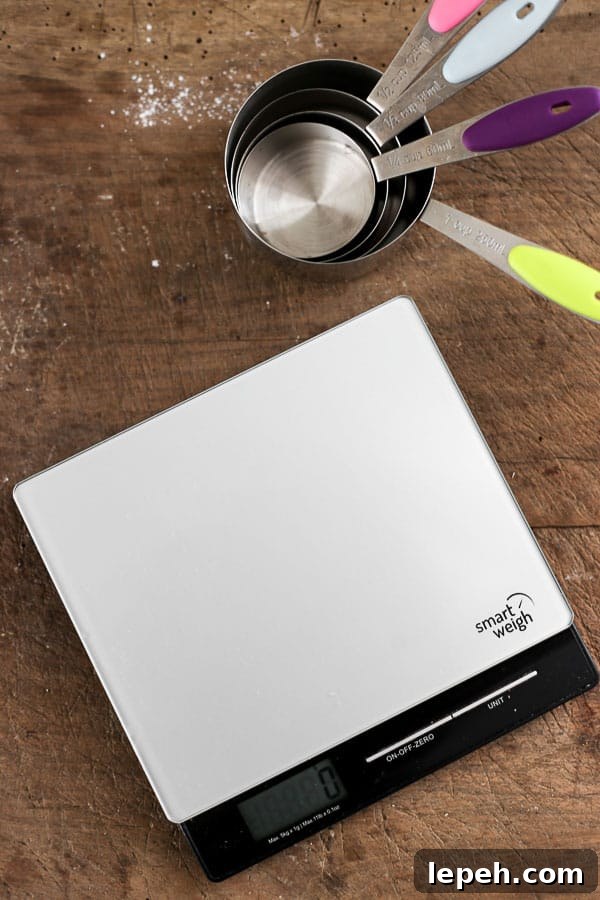
Why should you use digital scales?
The size of the measuring cup is not universal
Not all “cups” are the same. You must know which standard the recipe uses; otherwise quantities can vary enough to affect results. That’s less important for a salad, but critical for baking.
US standard cup = 240 ml
Metric cup (used in Australia, Canada) = 250 ml
The UK generally uses metric measurements rather than cups. Tip: UK or metric measuring cups aren’t directly compatible with US cup recipes.
Measuring cups are not accurate
Different people measure the same ingredient in different ways. For example, with flour the correct method is to spoon it loosely into a measuring cup and level it off. Many people instead dip the cup into the bag, packing the flour and increasing the amount.
Experiments have shown a wide range in the weight of a “cup” of flour measured by different people — enough to change the texture of a sponge cake. The same discrepancy applies to chopped vegetables, leafy greens and other items where packing or chop size varies.
Digital scales remove that variability. If a recipe calls for 100 g of an ingredient, you get 100 g every time (assuming the scales are calibrated).
Less washing up
Using measuring cups often means multiple utensils to wash between ingredients. With digital scales you can weigh directly into the mixing bowl using the tare function, dramatically reducing cleanup. I usually manage with one or two mixing bowls and my scales.
How do you weigh ingredients for baking?
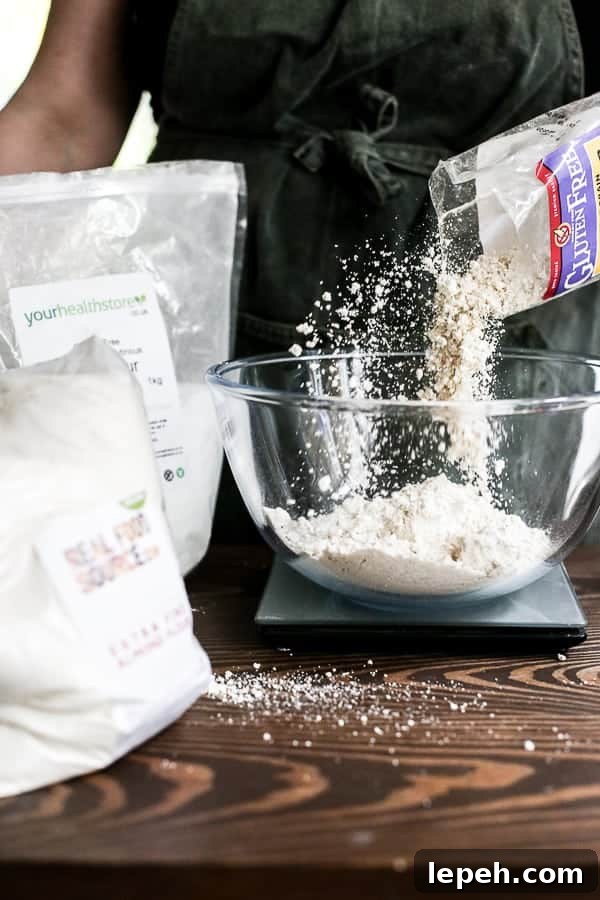
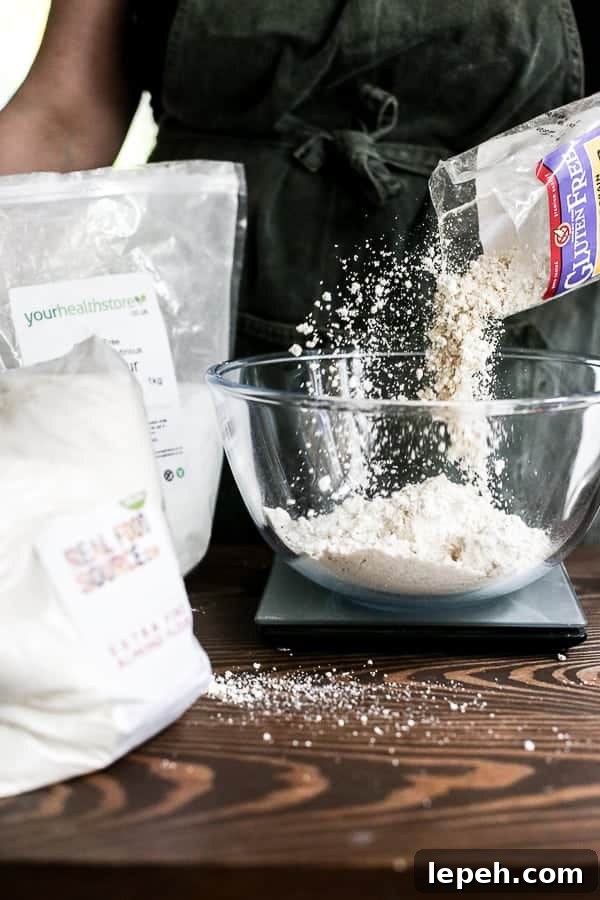
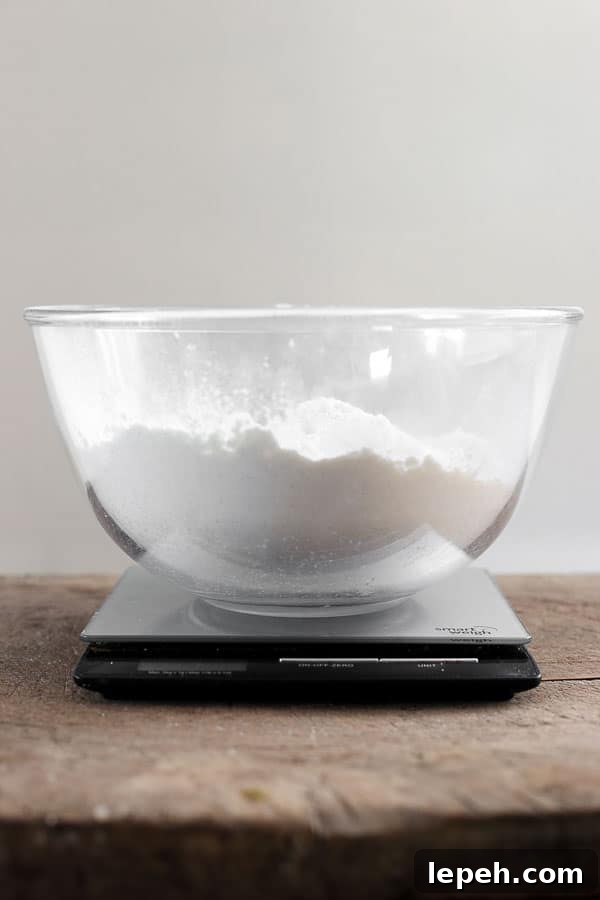
Digital kitchen scales with a tare function make many recipes one-bowl jobs. I typically weigh dry ingredients in one bowl and wet ingredients in another, but you can add ingredients sequentially into the same bowl using tare.
What is the tare function?
Tare sets the scale to zero after placing a container on it. Put your mixing bowl on the scales, press tare, and the bowl’s weight won’t be included. This technique is essential when weighing multiple ingredients in the same bowl, such as different flours in gluten-free baking.
- Place the mixing bowl on the scales.
- Press tare so the display reads zero.
- Pour the first ingredient to the required weight.
- Press tare again and add the next ingredient to its specified weight.
- Repeat until all ingredients are added, then combine.
TIP – Use metal mixing bowls
Choose lightweight bowls so you don’t exceed the scales’ capacity. Metal bowls are light, durable and easy to clean; plastic bowls can absorb odors and oils over time.
Are digital scales expensive?
Good digital kitchen scales are affordable — around £10 for a reliable set. I keep a spare set for peace of mind, though battery issues are usually a matter of preparedness rather than product failure.
Other uses for kitchen scales
Scales are useful beyond initial ingredient measurement. I use mine throughout cooking and baking for consistent portioning and controlled results.
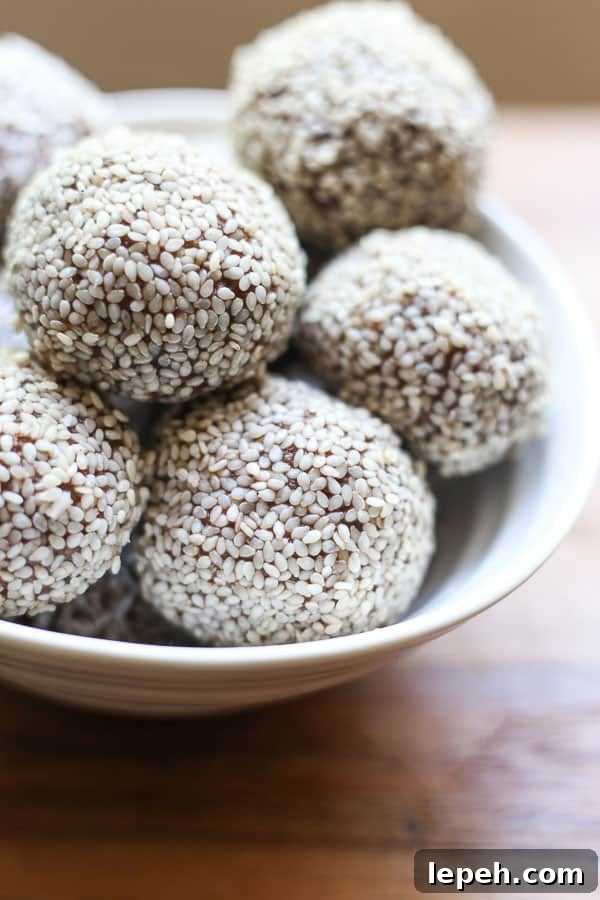
Uniformity
If you want truffles, energy balls, buns or burger patties to be the same size, weigh each portion before shaping. Consistent weight produces consistent results in texture, cook time and presentation.
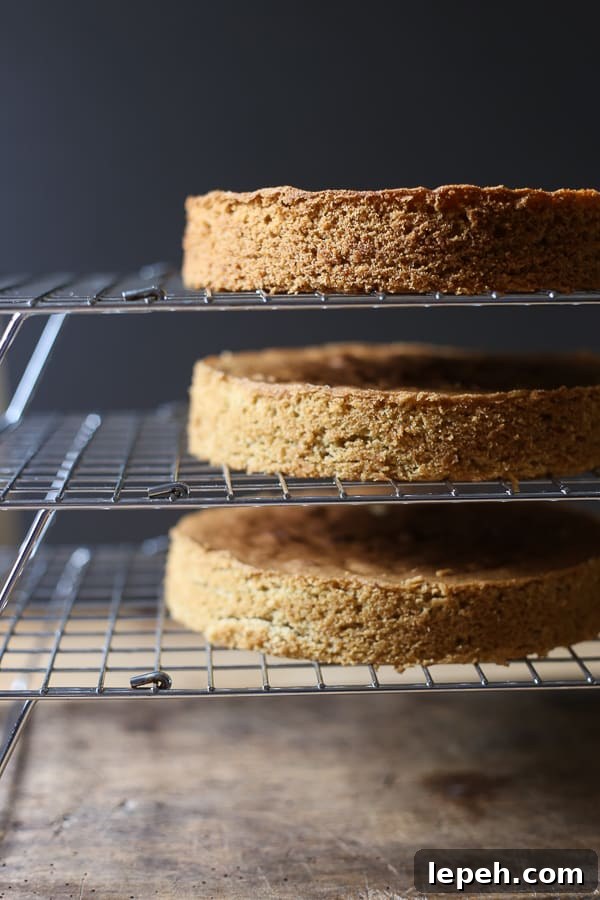
Even cake layers
To make layers of equal size and weight, weigh batter into lined cake tins:
- Place a lined and greased tin on the scales and press tare.
- Weigh half the batter into the tin.
- Place the second lined tin on the scales, press tare, and weigh the remaining batter into it.
This ensures both layers bake evenly and the finished cake is level.
Weighing liquid
I prefer to weigh liquids rather than use jugs or cups. It’s faster and more accurate. For convenience I often weigh liquids in a jug on the scales so I can pour easily.
For thin liquids like water or milk, 1 cup (240 ml) equates closely to 240 g, making weight measurement straightforward. Denser liquids such as oil, cream or yoghurt have different densities, so follow the recipe’s suggested measurement method in those cases.
TIP: You can weigh water directly from the tap. Place the jug on the scales, press tare and fill until the desired weight is reached.
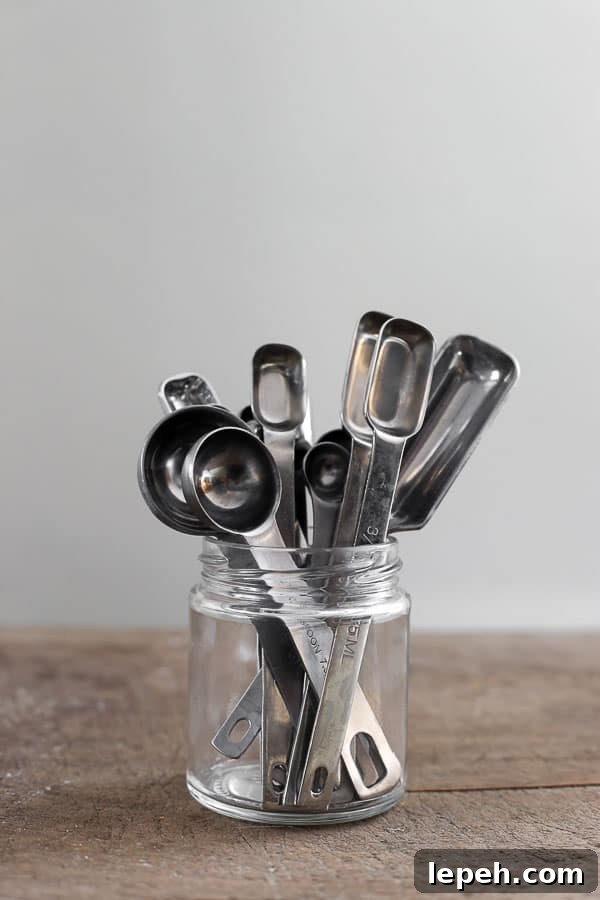
Why are measuring spoons used?
While I favour the metric system, I do use measuring spoons for very small amounts that inexpensive scales struggle to measure accurately — baking powder, bicarbonate of soda, vanilla, citrus zest, herbs, salt and spices.
High-precision scales exist for tiny quantities, but measuring spoons are usually quicker and sufficiently accurate for these ingredients.
TIP: To measure sticky ingredients like honey or peanut butter, brush the inside of the spoon with a little oil to help the contents release cleanly.
How do you convert recipes from volume to weight?
I taught myself to convert cups to grams when trying American recipes. Knowing a recipe’s country of origin is important because cup sizes differ. Many conversion tools and apps simplify the process, and basic baking conversions quickly become familiar.
Below are common approximations that I use regularly:
| 1 cup plain flour (most gf flours) | 120 g |
| 1 cup caster sugar | 225 g |
| 1 cup brown sugar | 200 g |
| 1 cup butter | 227 g |
| 1 stick butter | 115 g |
| 1 cup milk | 240 g |
| 1 cup honey | 350 g |
| 1 tablespoon | 15 g |
| 1 teaspoon | 5 g |
Converting from weight back to volume can produce awkward fractional amounts and may require trial and error. Conversion apps and online tools are helpful when you don’t want to calculate manually.
One small linguistic note: we often refer to scales in the plural because of the historic pair of scales. Modern digital scales are a single device, but the terminology has stuck. For me the switch to digital scales was a genuine game changer.
If you like this post then you may like these other baking tips:
- Why I Don’t Bake With Xanthan Gum
- The Ultimate Guide to Gluten-Free Cakes