Master Gluten-Free Flours and How They Work Together in Baking
Not sure which gluten-free flour to use—almond, coconut, rice? They don’t all behave the same. This guide explains common gluten-free flours, starches, and gums, how they interact in baking, and how to create your own all-purpose gluten-free flour blend.
Disclaimer: This post contains affiliate links. I may earn a small commission if you make a purchase, at no extra cost to you. I only recommend products I use and trust.
When I began my gluten-free journey, I initially felt overwhelmed—then confused by the variety of flours available. It’s common to wonder which flour does what and whether any of them can substitute directly for wheat flour.
Wheat flour contains gluten and other structural components that naturally bind and give texture. Most gluten-free “cup-for-cup” flours recreate that functionality by combining three elements: grains, starches, and gums. You need a balance of these to approximate wheat’s behavior in baking.
The Best Gluten-Free All-Purpose Flours Are Blends
Blends combine multiple ingredients to achieve the right texture and performance. Below are commonly used options you’ll find in many grocery stores.
Grain Flours
- Oat flour
- Millet flour
- Sorghum flour
- Brown rice flour
- White rice flour
- Quinoa flour
- Teff flour
- Cassava flour (a root that behaves more like a grain)
- Buckwheat flour
Starches
- Potato starch
- Arrowroot starch
- Cornstarch
- Tapioca starch
Gums and Binding Agents
- Xanthan gum
- Guar gum
- Psyllium husk (not a gum but acts similarly)
- Flax or chia gel (not gums but useful as binders)
Nut and Bean Flours (Grain Alternatives)
- Almond flour
- Coconut flour
- Hazelnut flour
- Chickpea (garbanzo) flour
Experimenting with different flours can be fun, but understanding their roles helps you blend intelligently for the best results.
Basic Ratio for Grains and Starches
A reliable starting ratio is:
1 part starch to 2 parts grain (1:2 ratio)
So, for every 1 cup of starch use 2 cups of grain flour. Add gum sparingly—about 1 teaspoon xanthan gum per 3 cups of combined grain and starch. If using psyllium husk, add it per recipe rather than into the dry flour blend.
A good starting point for a cup-for-cup all-purpose gluten-free flour:
66% grain, 33% starch, and a trace of gum (<0.1%).
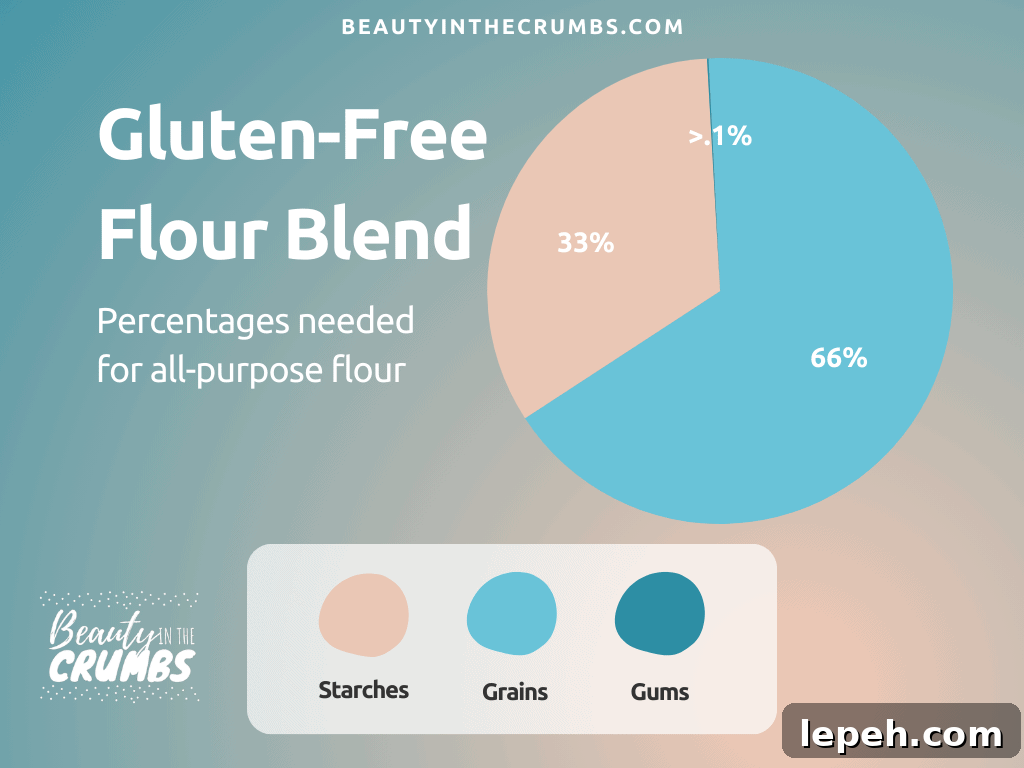
You can achieve these percentages using a variety of grains and starches based on availability and taste preferences.
Keep It Simple
To make gluten-free baking manageable, I keep a small selection of staple ingredients that cover most recipes:
- Brown rice flour
- Potato starch
- Tapioca starch
- Xanthan gum
- Arrowroot starch
- Almond flour
- Coconut flour
These ingredients are versatile, widely available, and cost-effective. They allow me to bake most recipes without a large pantry of obscure flours.
Why these staples?
- Versatility: They work well across cakes, cookies, muffins, and breads.
- Availability: Easy to source at local stores or online.
- Cost-effectiveness: They offer good value and broad usability.
My favorite all-purpose gluten-free flour blend
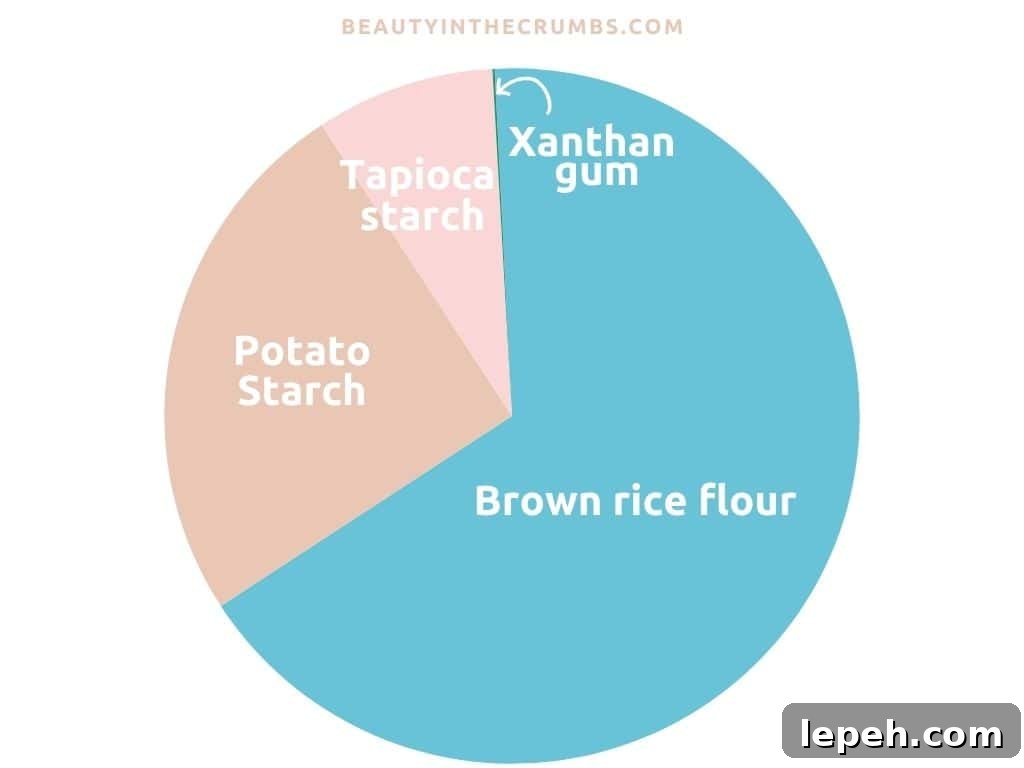
- 6 cups brown rice flour
- 2 cups potato starch
- 1 cup tapioca starch
- 1 tablespoon xanthan gum
This blend performs well as a cup-for-cup substitute in many recipes. If you prefer a printable label or exact measurements for smaller batches, seek a recipe resource or printable that matches your needs.
Using Millet, Oat, and Sorghum Flours
These flours are dense and provide structure, making them great in muffins and scones. They work best when combined with rice flour—try a blend with roughly two-thirds rice flour and one-third of a denser grain.
- 4 cups brown rice flour
- 2 cups sorghum, millet, or oat flour (or a mix)
- 2 cups potato starch
- 1 cup tapioca starch
- 1 tablespoon xanthan gum
Using Almond and Coconut Flours
Almond and coconut flours behave very differently than grain flours and require recipe-specific adjustments.
Almond flour is dense and usually needs eggs or strong binders. It can replace up to 25–33% of an all-purpose gluten-free blend in many recipes. You can also substitute almond flour for a portion of brown rice flour in a blend to add richness.
Coconut flour absorbs a lot of liquid and expands, often making batters dry or crumbly if not adjusted. It typically requires more eggs or moisture and pairs well with almond flour. Both flours are best used in recipes written for them rather than swapped directly into standard gluten-free recipes.
Using Bean Flours
Bean flours, like chickpea (garbanzo) flour, have a strong flavor that some bakers enjoy and others find too pronounced for sweet baking. If you want to include bean flour in a blend, use it sparingly and balance it with neutral flours:
- 1 cup garbanzo bean flour
- 5 cups brown rice flour
- 2 cups potato starch
- 1 cup tapioca starch
- 1 tablespoon xanthan gum
Summary
- To mimic wheat flour, combine grains, starches, and a small amount of gum or binder.
- A reliable all-purpose ratio is roughly 60–66% grain flour, 33–39% starch, and a minimal amount of gum.
- Almond and coconut flours are valuable additions but require recipes tailored to their unique properties.
Questions or insights?
If you have questions or want to share your experience, leave a comment or send an email. Happy baking!