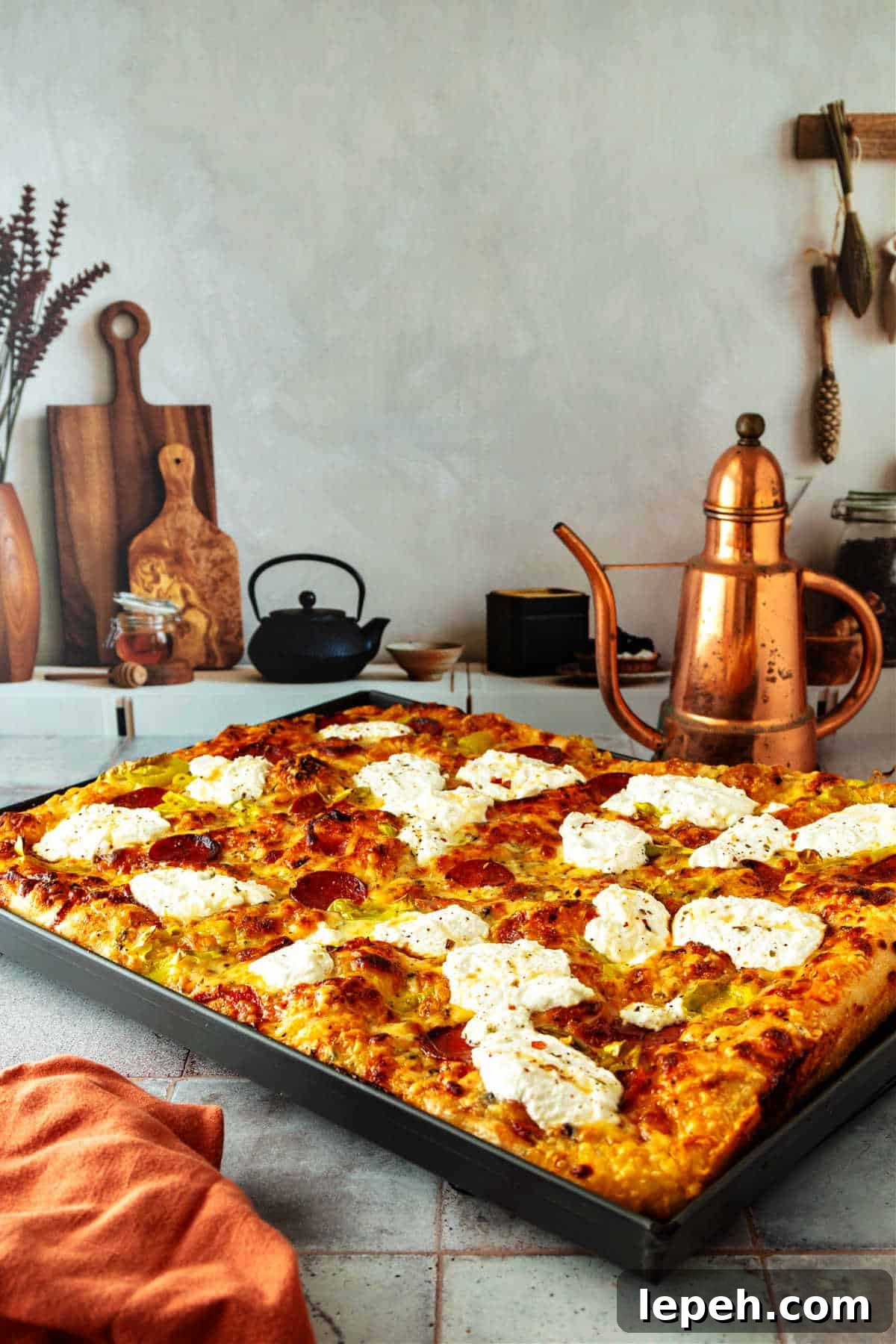
Today I’m excited to share my grandma pizza dough recipe along with a rich homemade pizza sauce to go with it.
Inspired by Peter Reinhart’s Perfect Pan Pizza, I’ve adapted and simplified techniques to create an easy-to-make, high-hydration dough that yields a crisp, golden bottom and a light, airy interior. If you like thicker crusts, this pan pizza is one of my favorites.
What Is Grandma Pizza?
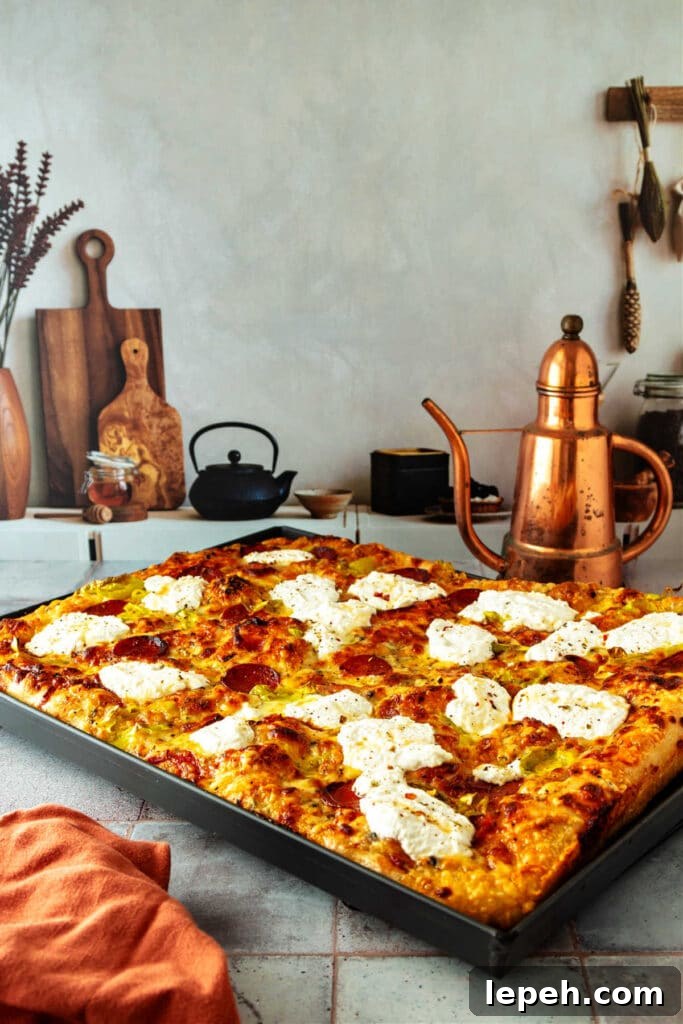
Grandma pizza originated on Long Island and is an Italian-American classic rather than a traditional Italian style. It’s baked in a well-oiled, parchment-lined half sheet pan so the bottom crust essentially fries in olive oil to a crisp, burnished brown while the interior remains pillowy and light.
Because the crust is such a highlight, go light on toppings so you can taste the dough’s texture and flavor.
What Is So Great About This Recipe?
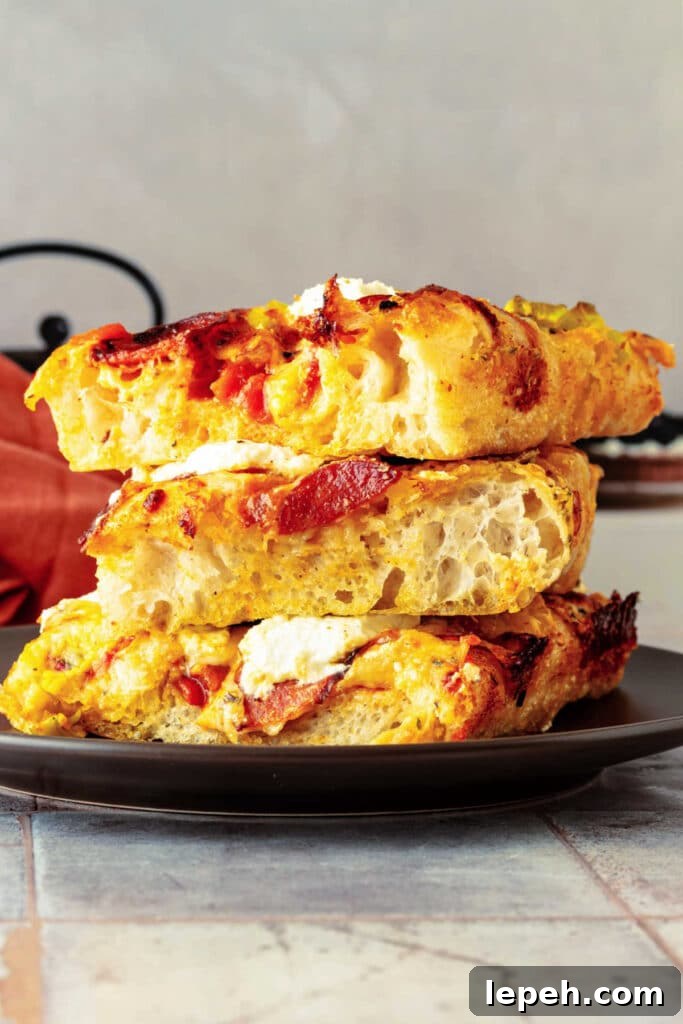
This version uses just a few pantry ingredients and no special equipment. It produces a crust that is crisp on the outside, chewy and airy inside. Highlights:
- No mixer required
- No kneading — just simple stretch-and-folds or coil folds
- High hydration for an open, tender crumb
- Great flavor and forgiving technique
How To Make Grandma Pizza Dough
Ingredients
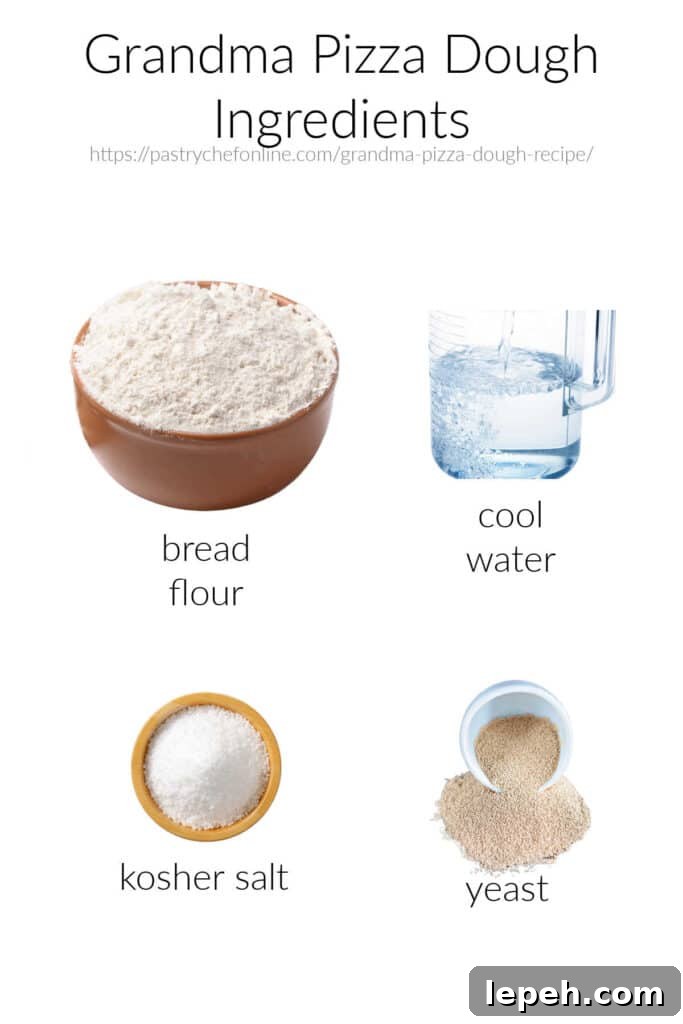
- Bread flour — or high-protein all-purpose; adjust water slightly if you use AP
- Cool water — this dough is very wet, almost a thick batter
- Kosher salt — controls fermentation and adds flavor
- Instant yeast — or active dry (proof in warm water first)
No oil is necessary in the dough. The olive oil used for panning gives the crust flavor and crispness, and omitting oil from the dough tends to produce a lighter, chewier crumb.
A Note About Hydration
This dough is about 83% hydration by weight, which makes it loose but manageable. When handling it, oil your hands or wet them with cold water instead of adding flour — wet hands prevent sticking and preserve the dough’s hydration.
Wet your hands or rub them with a little oil before handling — the dough will barely stick if your hands are wet.
Procedure
Making the dough is straightforward:
- Stir together flour, instant yeast, and salt in a large bowl.
- Add cool water and mix until you have a shaggy dough, about a minute.
- Oil a work surface and place the dough on it. With oiled hands, press the dough into an approximately 15″ square.
- Use a bench scraper to fold the dough into thirds like a letter, then fold into thirds the other way. Cover the dough with the mixing bowl and let rest 20 minutes.
- Repeat the press-and-fold sequence three more times at 20-minute intervals (for a total of four rounds).
- After the final fold, oil the dough, place it in a lightly oiled bowl, cover, and refrigerate at least overnight and up to 3–4 days.
If your kitchen is cool (around 65–67°F), you can also give it a long, slow counter rise and shape the next day.
Alternate Technique: Coil Folds
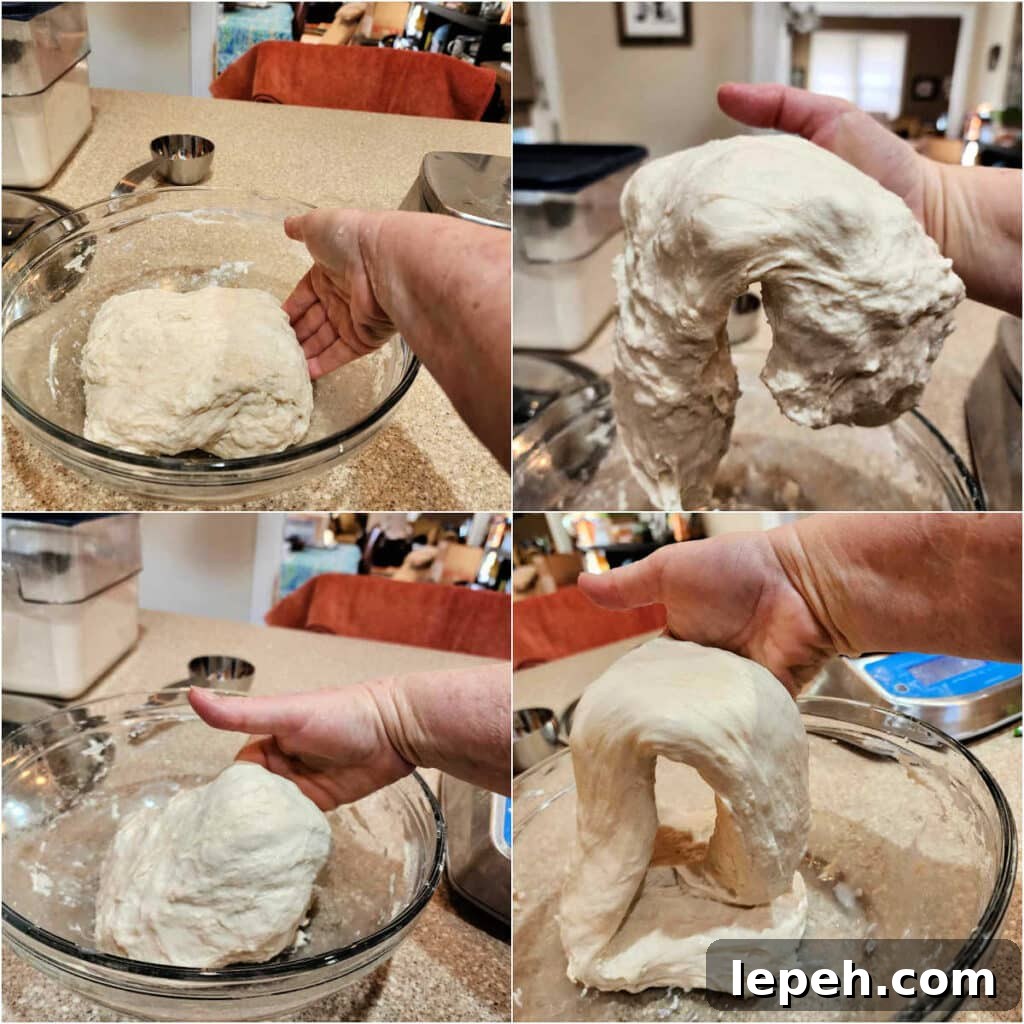
For a very wet dough, coil folds in the mixing bowl are an excellent alternative:
- Wet your hands thoroughly and reach under the dough, lift straight up, and let the hanging portion fold down toward the front of the bowl, then rotate and repeat. Each lift roughly folds the dough into thirds.
- Repeat at 90-degree angles to complete one coil fold. Rest the dough 20 minutes, then repeat for a total of four coil folds.
- After the last fold, drizzle oil over the dough, cover, and refrigerate.
Shaping the Dough
Shaping is simple but benefits from patience. Gluten will resist stretching and may spring back — rest the dough as needed.
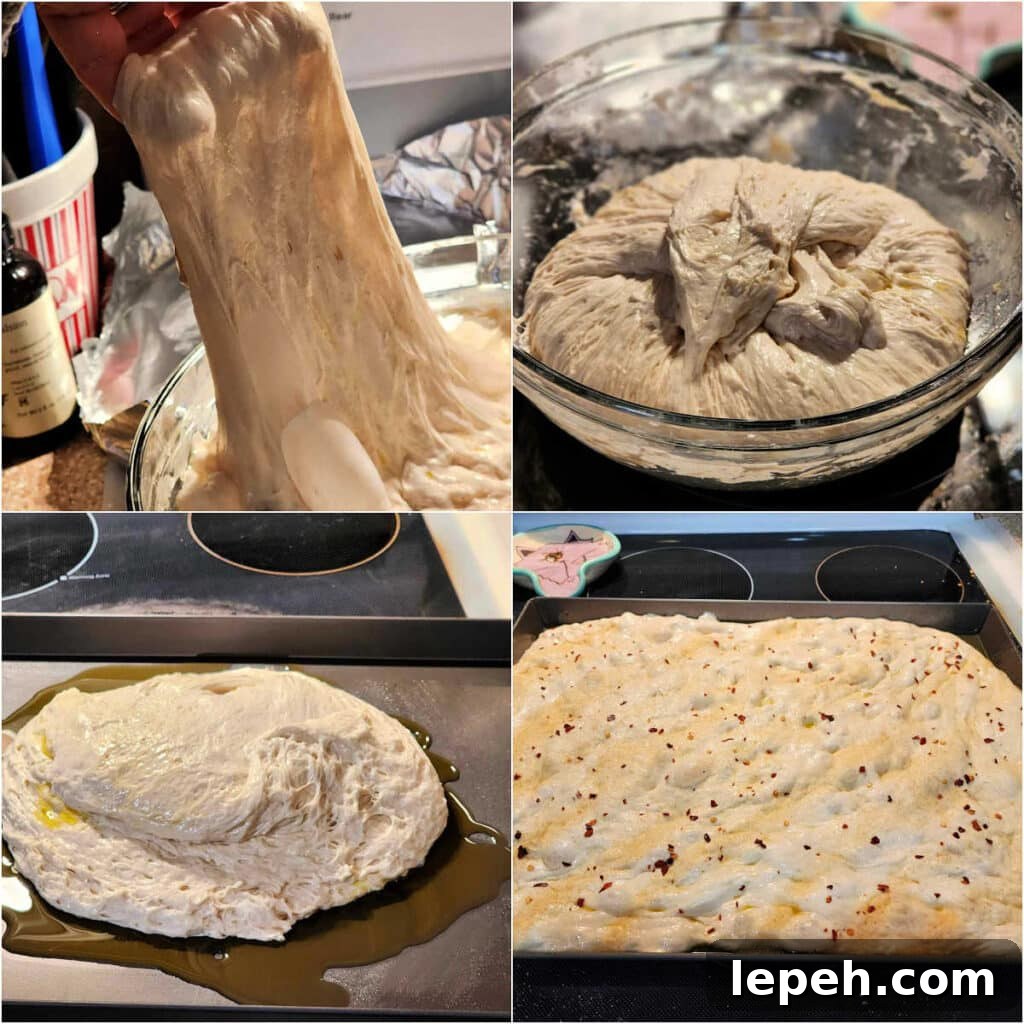
- Deflate the chilled dough slightly by folding the edges into the center.
- Generously oil your half-sheet or Lloyd pan with about 1/4 cup olive oil. Place the dough in the center and use your fingertips to dimple and coax it outward.
- Allow the dough to rest 20 minutes between rounds of dimpling if needed. When the dough covers the pan, sprinkle minced garlic or garlic powder and, if desired, red pepper flakes.
- Cover and let the pan rise at room temperature for about 3 hours. Add sauce and toppings sparingly to avoid weighing the crust down.
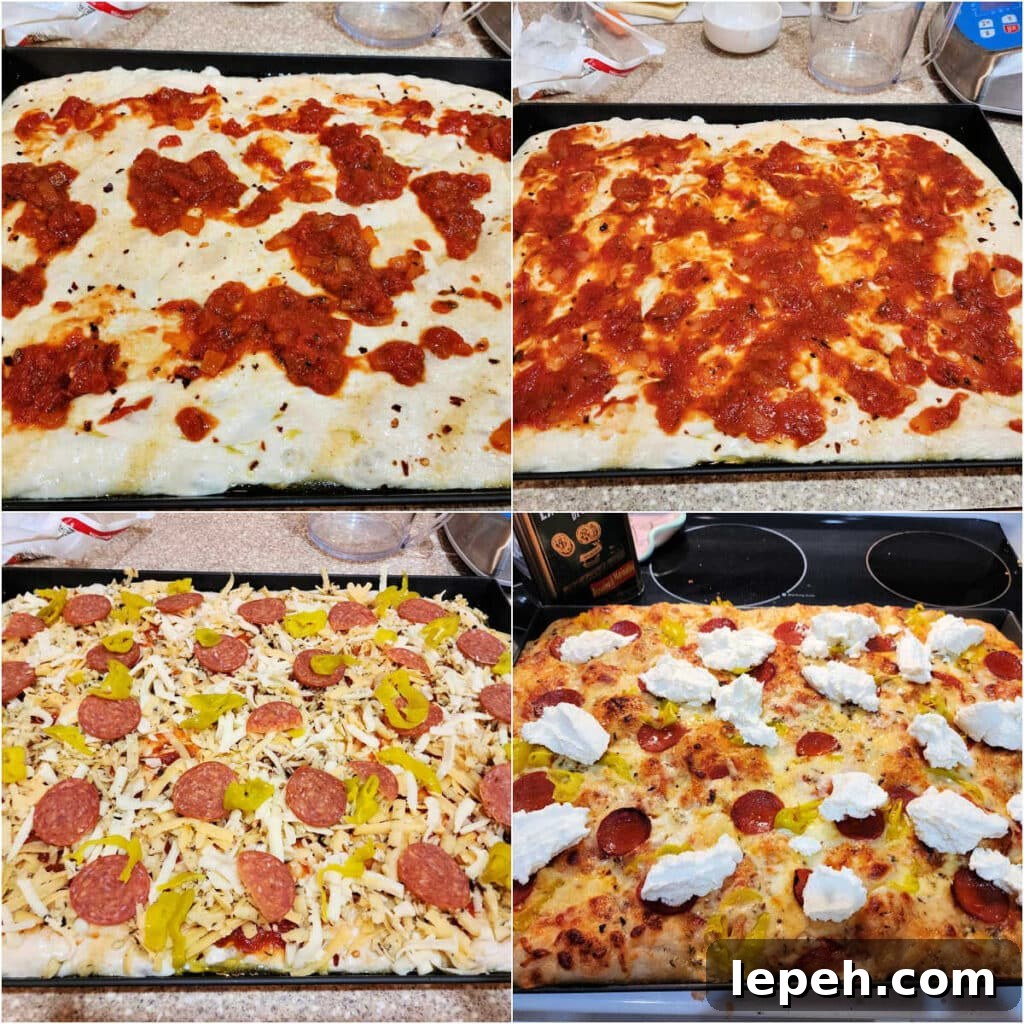
I like to par-bake the pie for 10 minutes, add fresh ricotta if using, and finish baking until the crust is golden and the bottom is nicely browned.
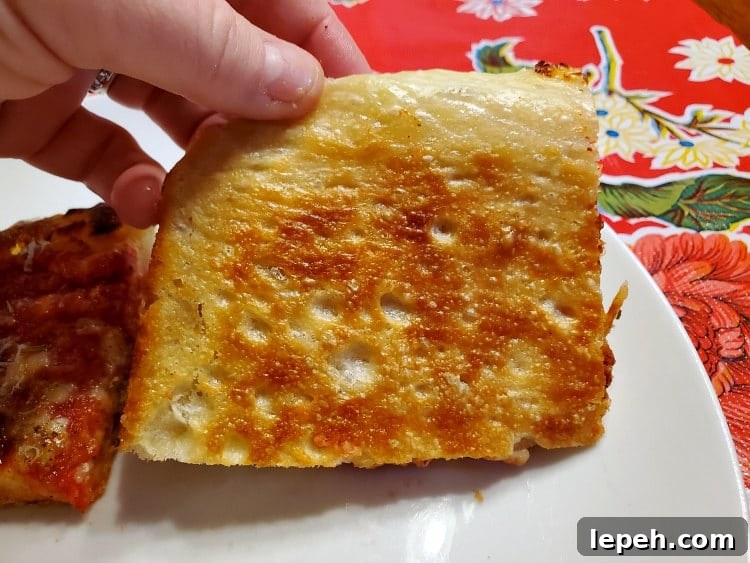
The Bottom Crust Basically Fries in Olive Oil!
Because the dough bakes in a pool of olive oil on the pan, the underside fries to a crisp, golden-brown finish. That caramelized bottom is one of the best parts of grandmother-style pizza.
Specialty Equipment
A dark Lloyd pan is ideal because its color directs heat to the crust and minimizes sticking; no parchment is usually required. If you don’t have a Lloyd pan, a parchment-lined half-sheet pan works well.
More Pizza Topping Ideas
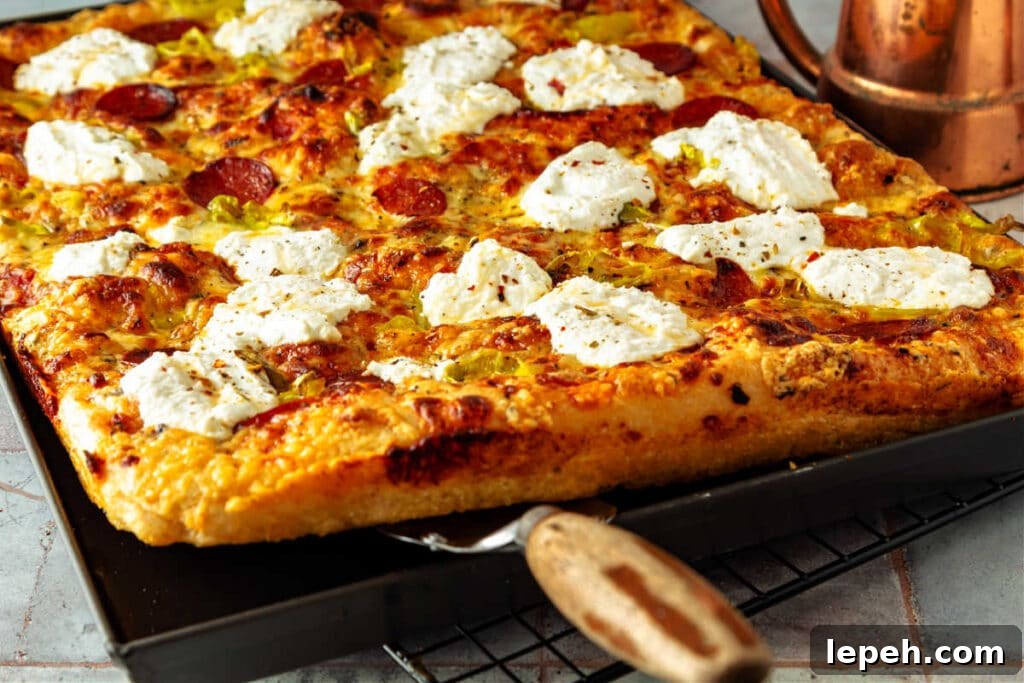
This crust pairs beautifully with many toppings. On this pizza I used a blend of brick cheese, mozzarella, and mushroom gouda, plus pepperoni, pepperoncini, and dollops of ricotta. Other ideas include sausage and peppers, bacon with pickled peppers, or pulled pork. Remember: lighter topping layers let the crust shine and help the pie bake through evenly.
Questions?
If you have questions about technique or timing, leave a comment and I’ll respond. If you prefer, email me directly at the address in the recipe card.
Grandma Pizza Dough Recipe
Equipment
- Large mixing bowl
- Bench scraper
- Half-sheet or Lloyd pan
- Pizza wheel or large cutter
Ingredients
- 500 g bread flour (about 17.65 oz or ~4 cups)
- 10 g kosher salt (about 2 teaspoons)
- 5 g instant yeast (1 teaspoon)
- 415 g cool water (about 14.65 oz or slightly generous 1 3/4 cups)
- Olive oil for folding/stretching (a couple teaspoons) and 1/4 cup for panning
- 2 teaspoons minced garlic for panning (or garlic powder)
Instructions
- In a large bowl, stir together the flour, instant yeast, and salt.
- Add the cool water and mix until a shaggy dough forms, about a minute.
- Rub a couple teaspoons of oil on a clean counter. Plop the dough onto the oiled surface, oil your fingers, and press the dough into a roughly 15″ square.
- Use a bench knife or your hands to fold the dough into thirds like a letter, then fold into thirds the other way. Cover with a bowl and rest 20 minutes.
- Repeat the press-and-fold sequence three more times, resting about 20 minutes between each fold (total of four rounds).
- After the final fold, place the dough in a lightly oiled bowl, oil the top, cover, and refrigerate for at least overnight and up to 3 days.
Alternate: Coil Folds
- With hands very wet, lift the dough in the bowl and fold it into thirds by lowering and releasing so the dough overlaps. Turn the bowl and repeat to complete one coil fold.
- Rest 20 minutes and repeat 3 more times. After the 4th fold, drizzle oil over the dough, cover, and refrigerate.
To Pan and Bake
- About four hours before baking, line a half-sheet pan with parchment if needed and pour 1/4 cup olive oil into the pan, spreading it evenly. If using a Lloyd pan, parchment is usually unnecessary.
- Scrape the chilled dough into the center of the oiled pan. Use fingertips to dimple and coax it toward the edges. Cover and let rise at room temperature for about 3 hours.
- Once the dough fills the pan, sprinkle garlic or garlic powder over the crust and let rest, covered, for an additional hour. Top lightly as desired and allow another hour of rest if needed.
- Place a rack low in the oven with a baking stone or steel and heat the oven to 500°F for the last hour of the rise.
- Bake the pizza for 10 minutes, rotate, add any delicate toppings, then bake another 5–8 minutes until the edges are golden and the bottom is nicely browned from the oil.
- Remove, rest 5 minutes, loosen any sticking bits with a thin flexible spatula, and transfer to a cutting board. Slice into 12–16 pieces.
Notes
- The dough can wait in the refrigerator for up to 3 days before using.
- You can make thin-crust pizzas with this dough (roughly three 12″ pizzas from one batch).
- Use the dough to make focaccia in a 9″ x 13″ pan — dimple deeply and drizzle with olive oil and toppings.
Nutrition (approx.)
Serving size: ~77.5 g — Calories: 185 kcal — Carbs: 32 g — Protein: 4.5 g — Fat: 4.2 g — Sodium: 324 mg

Hi, y’all! I hope you enjoyed this recipe and found the instructions helpful. If you like my style, consider signing up for my newsletter for occasional updates about new recipes and behind-the-scenes notes.
There you have it: a reliable, straightforward grandma pizza dough that bakes up crisp, golden, and delightfully airy. Thanks for spending time here — enjoy your pizza!