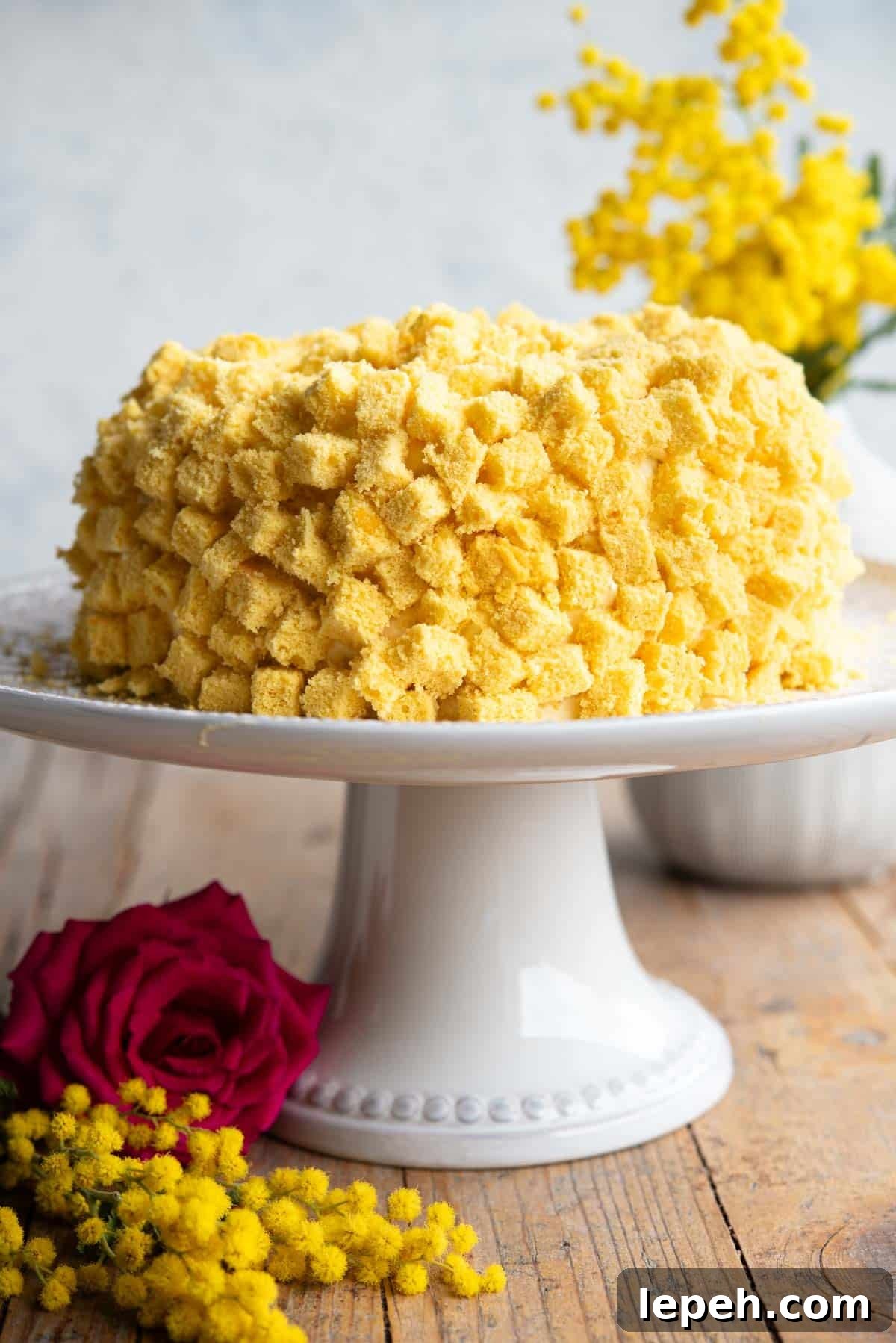
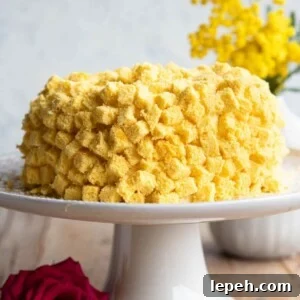
Torta Mimosa is an elegant Italian cake made to resemble the mimosa flower, traditionally served in Italy for International Women’s Day. It features a light Pan di Spagna sponge soaked with a simple sugar syrup and liqueur, then layered and filled with a smooth blend of crema pasticcera (pastry cream) and Chantilly cream for a delicate, creamy texture.
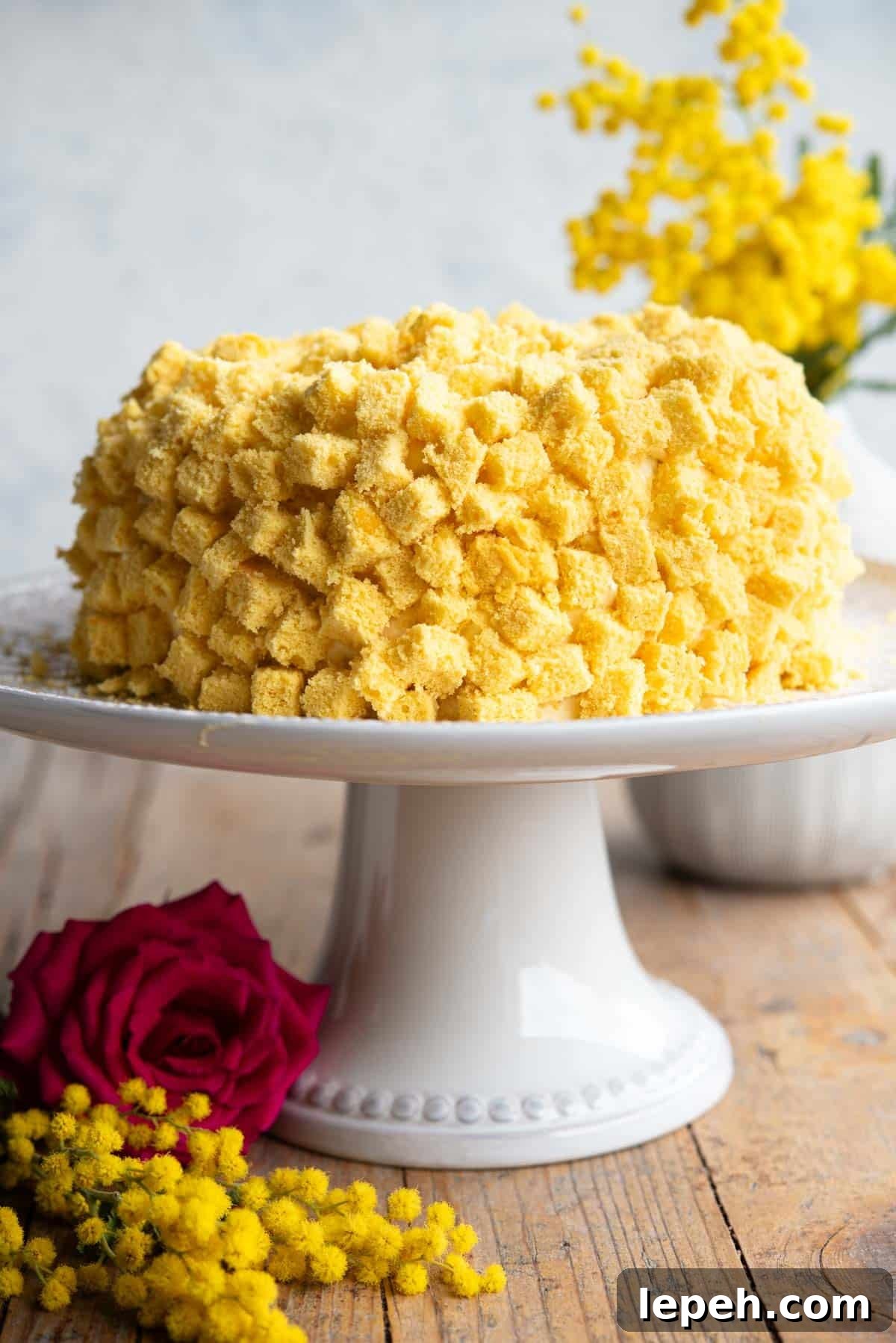
In Italy, sprigs of mimosa flowers are given to women on March 8th to mark International Women’s Day, and the Mimosa cake is a common celebratory dessert at this time. The sponge used is Pan di Spagna, a very light sponge made by whipping eggs and sugar to incorporate air, which gives the cake its tender crumb.
The baked sponges are brushed with a lightly sweetened syrup often flavored with Strega or Limoncello, then layered with a filling made by folding whipped cream into cold pastry cream, creating a silky Chantilly-style filling. The cake is finished by covering the exterior with tiny cubes or crumbs of sponge to evoke the look of mimosa blossoms.
Below you’ll find detailed notes on ingredients, step-by-step instructions with photos, helpful tips, variations and a video. For a printable recipe, see the recipe block at the end of the post.
Ingredients
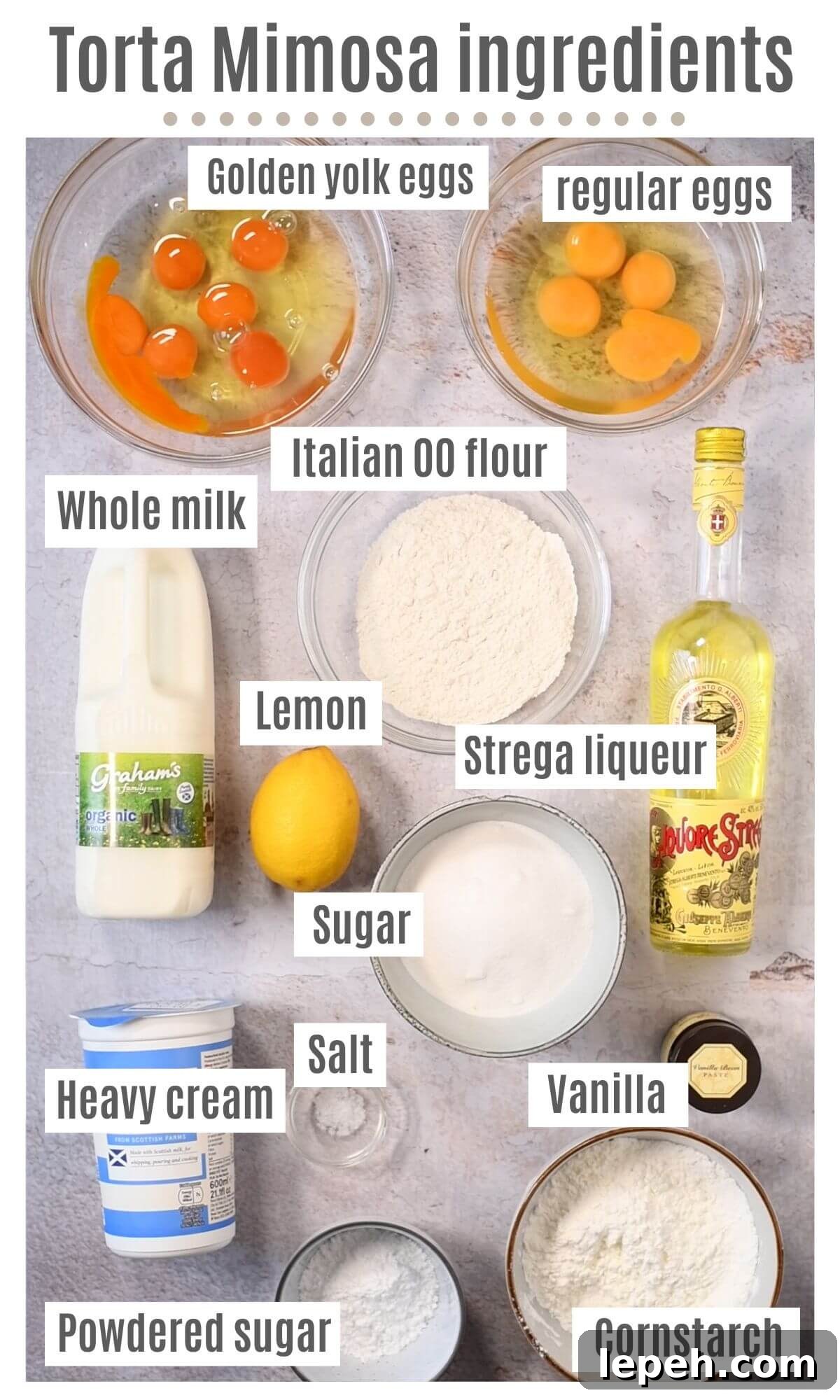
Ingredient notes and substitutions
- Eggs with deep golden yolks – give the sponge a warm yellow tone without food coloring. Regular eggs work fine; the cake will be paler.
- Sugar – caster (extra-fine) sugar gives the best texture, but granulated sugar is acceptable.
- Italian 00 flour – can be substituted with all-purpose flour.
- Vanilla – use vanilla bean paste, a scraped vanilla pod, or pure vanilla extract. Avoid artificial vanilla essence if possible.
- Liqueur – Strega gives a classic flavour; Limoncello is a citrusy alternative. Omit if you prefer a non-alcoholic syrup.
Step by step photos and instructions
To make the sponge
Grease two 8-inch (20 cm) cake pans with butter, line the bottoms with baking parchment and lightly flour the sides. Preheat the oven to 160°C (320°F) static.
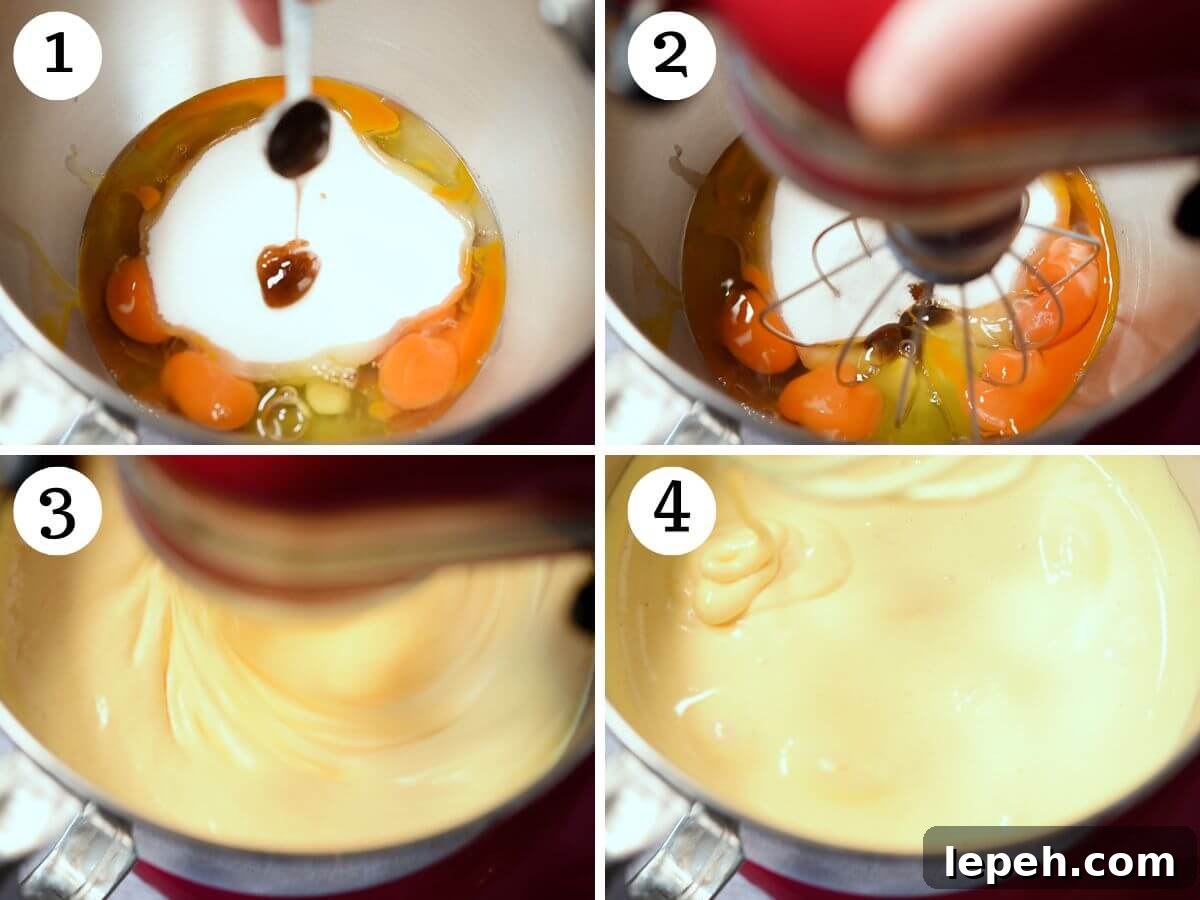
Place 6 eggs, sugar, vanilla and a pinch of salt in a stand mixer and whisk on medium speed for 15–20 minutes until the mixture is pale, thick and ribbons appear when the beater is lifted.
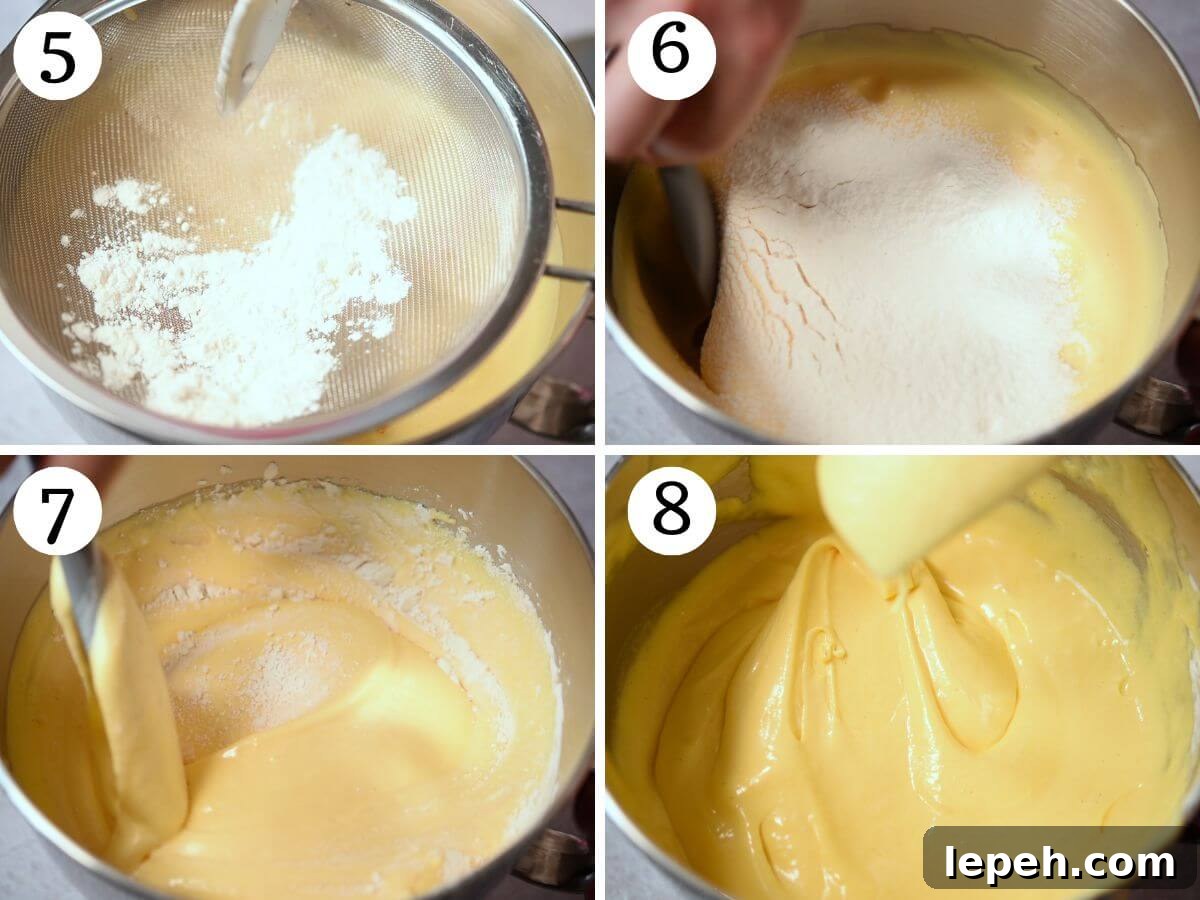
Gently sift the flour and cornstarch into the whipped eggs a tablespoon or two at a time, folding carefully after each addition until fully incorporated. Divide the batter evenly between the prepared pans and bake on the bottom shelf for about 40 minutes.
When the cakes are done, turn off the oven and leave the door slightly ajar with the cakes inside for 5 minutes, then remove and cool in the tins for 5–10 minutes before turning them out onto a wire rack to cool completely.
Make the pastry cream
Tip: prepare the pastry cream while the cakes are baking so it has time to cool.
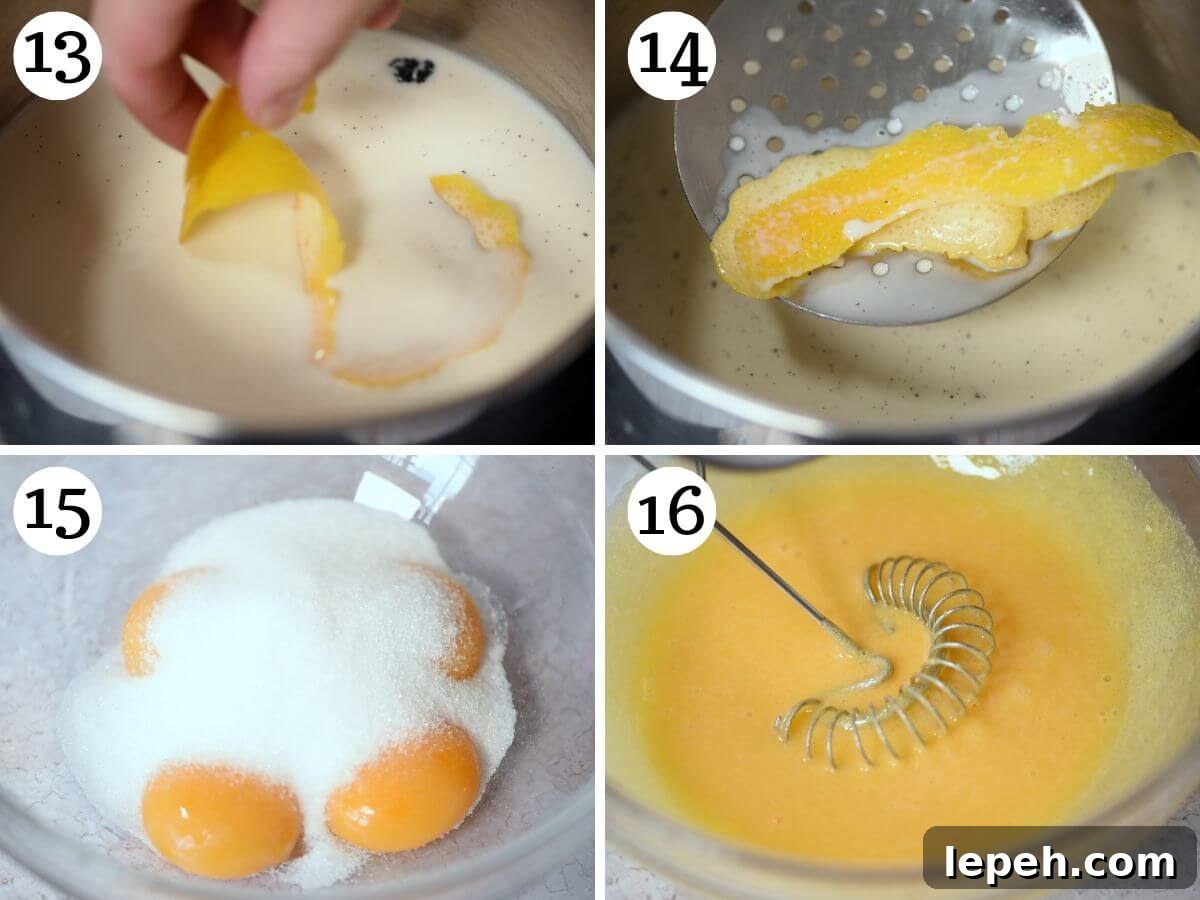
Warm the milk with vanilla and the lemon peel in a saucepan just to a simmer, then remove from the heat. In a separate bowl, whisk the egg yolks with sugar until combined, then whisk in the cornstarch until smooth.
Temper the egg mixture by gradually whisking in the hot milk, then return everything to the saucepan. Cook over medium-low heat, whisking constantly until the mixture thickens and coats the back of a spoon. Transfer to a shallow dish to cool quickly and press plastic wrap onto the surface to prevent a skin forming.
Make the sugar water
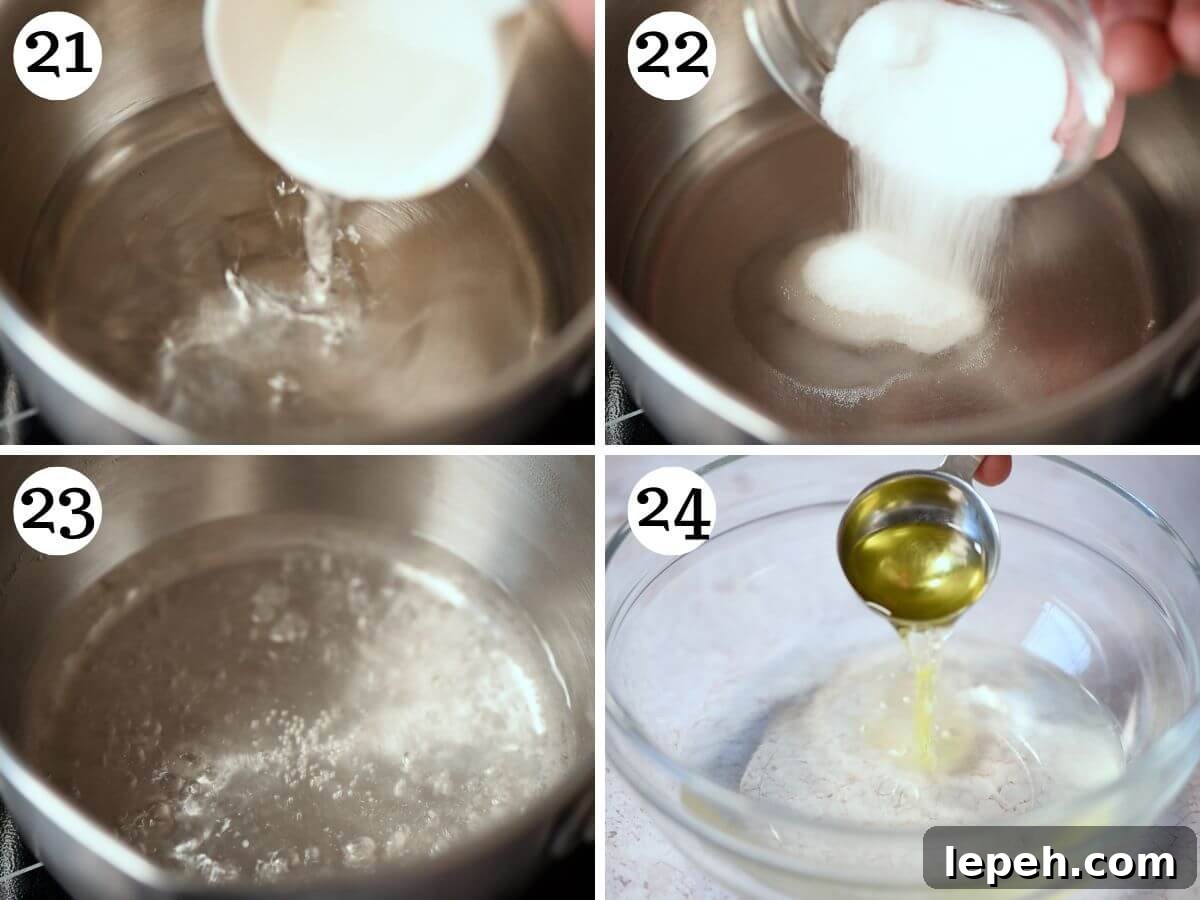
Combine ½ cup (125 ml) water and 2 tablespoons sugar in a small saucepan. Bring to a boil, then simmer until the sugar dissolves. Cool the syrup, then stir in 2 tablespoons Strega or Limoncello if using.
Make the Chantilly cream
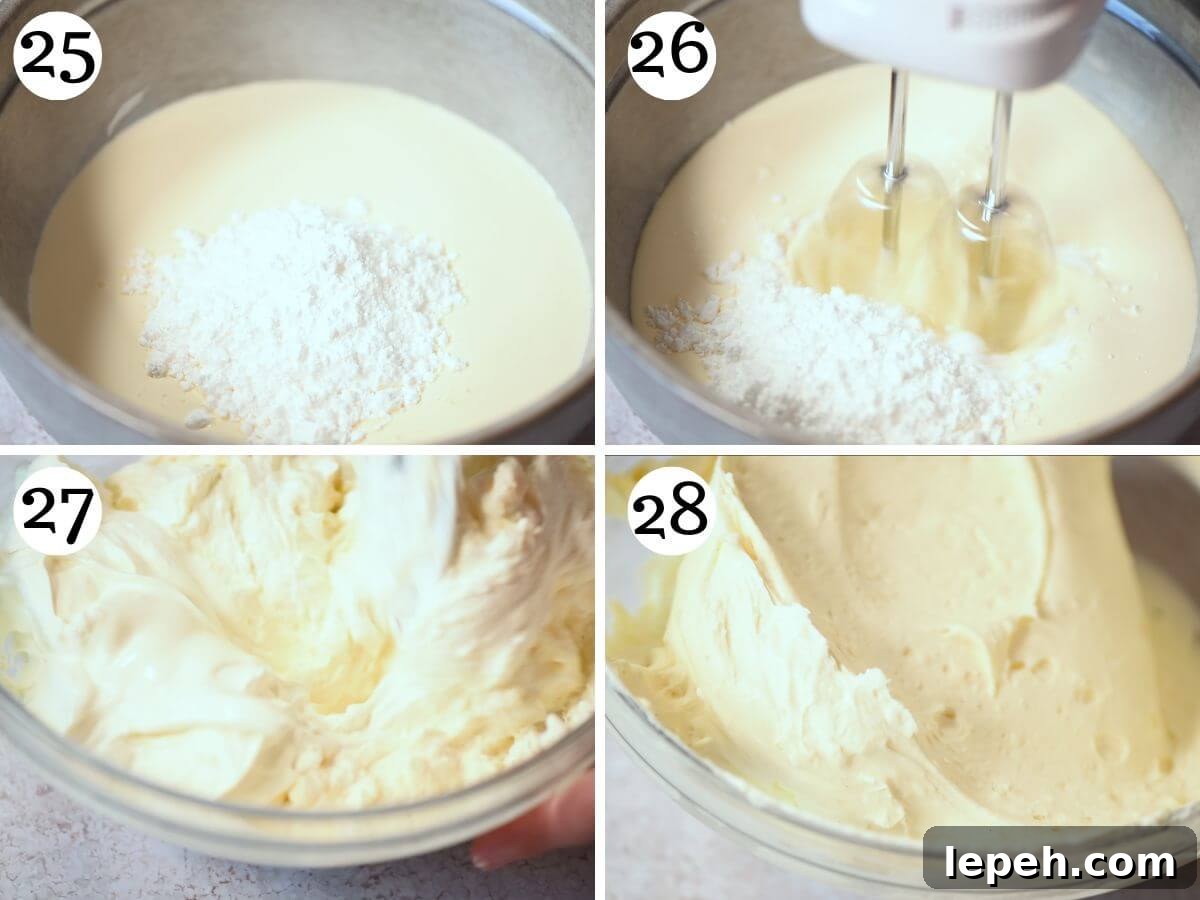
Whip 450 ml (2 cups) heavy cream with 5 tablespoons (55 g) powdered sugar to stiff peaks. Make sure not to overwhip.
Fold the cold pastry cream into the whipped cream in three additions until smooth and homogeneous. Chill until ready to assemble.
Assembling the cake
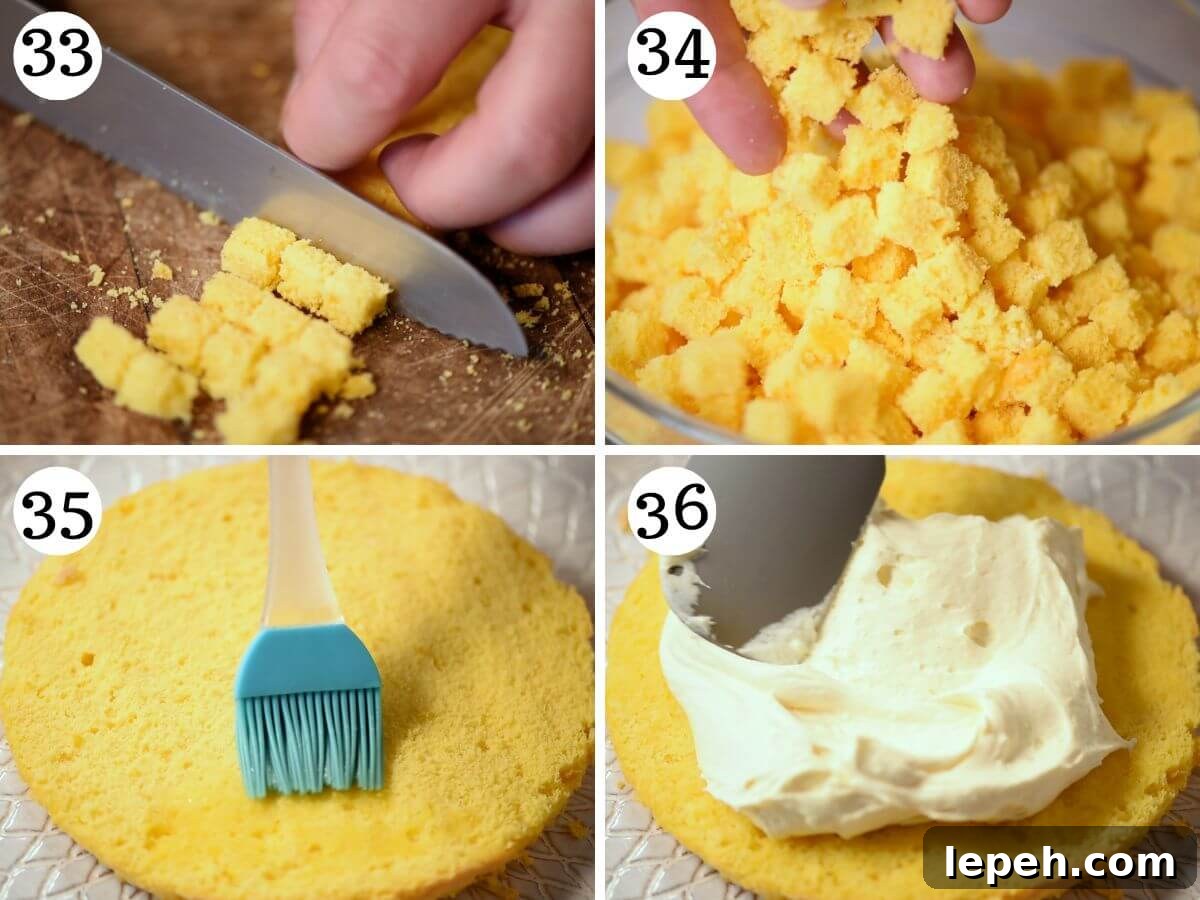
Trim the top crust from one sponge and cut it into three even layers. Remove the top and side crusts from the second sponge, slice it, then cut the slices into three lengthwise strips and dice into small 1 cm cubes to use for the cake covering.
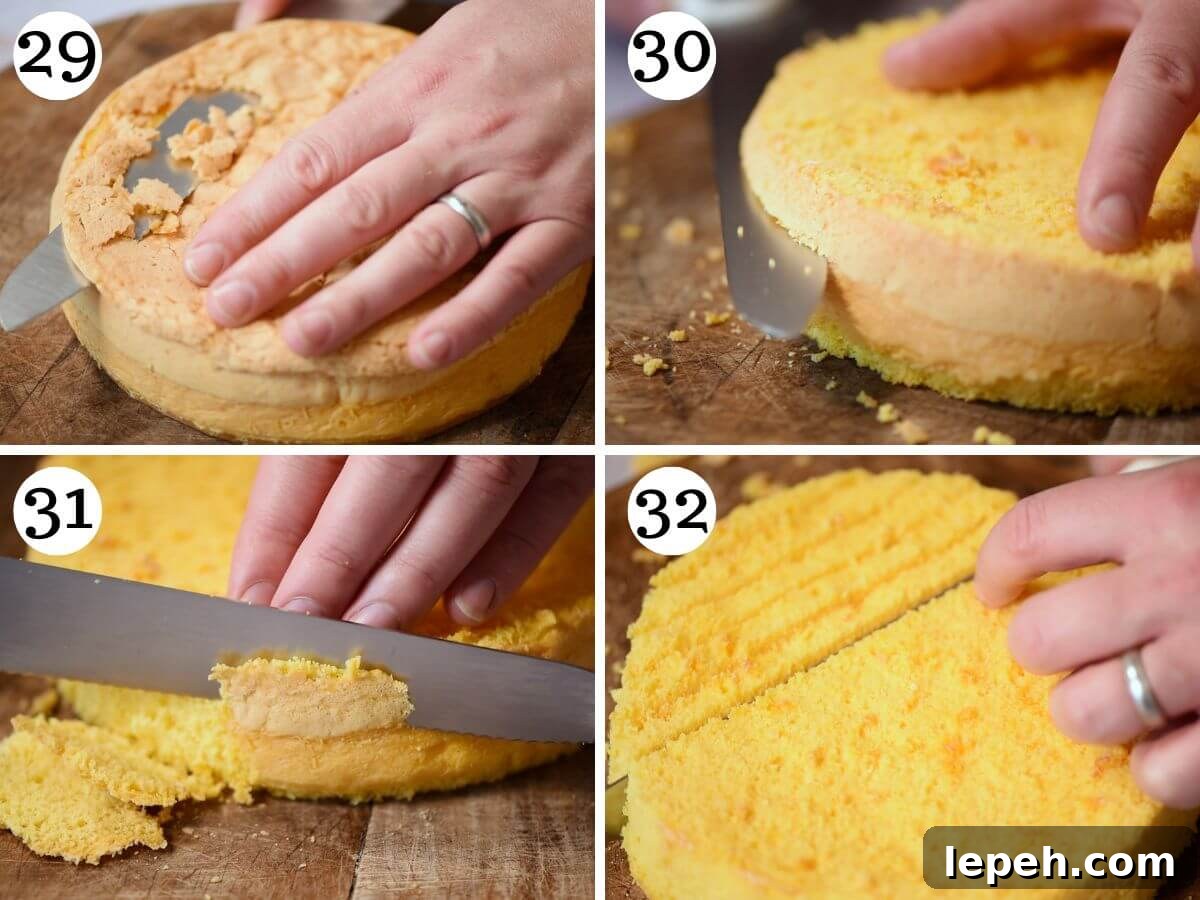
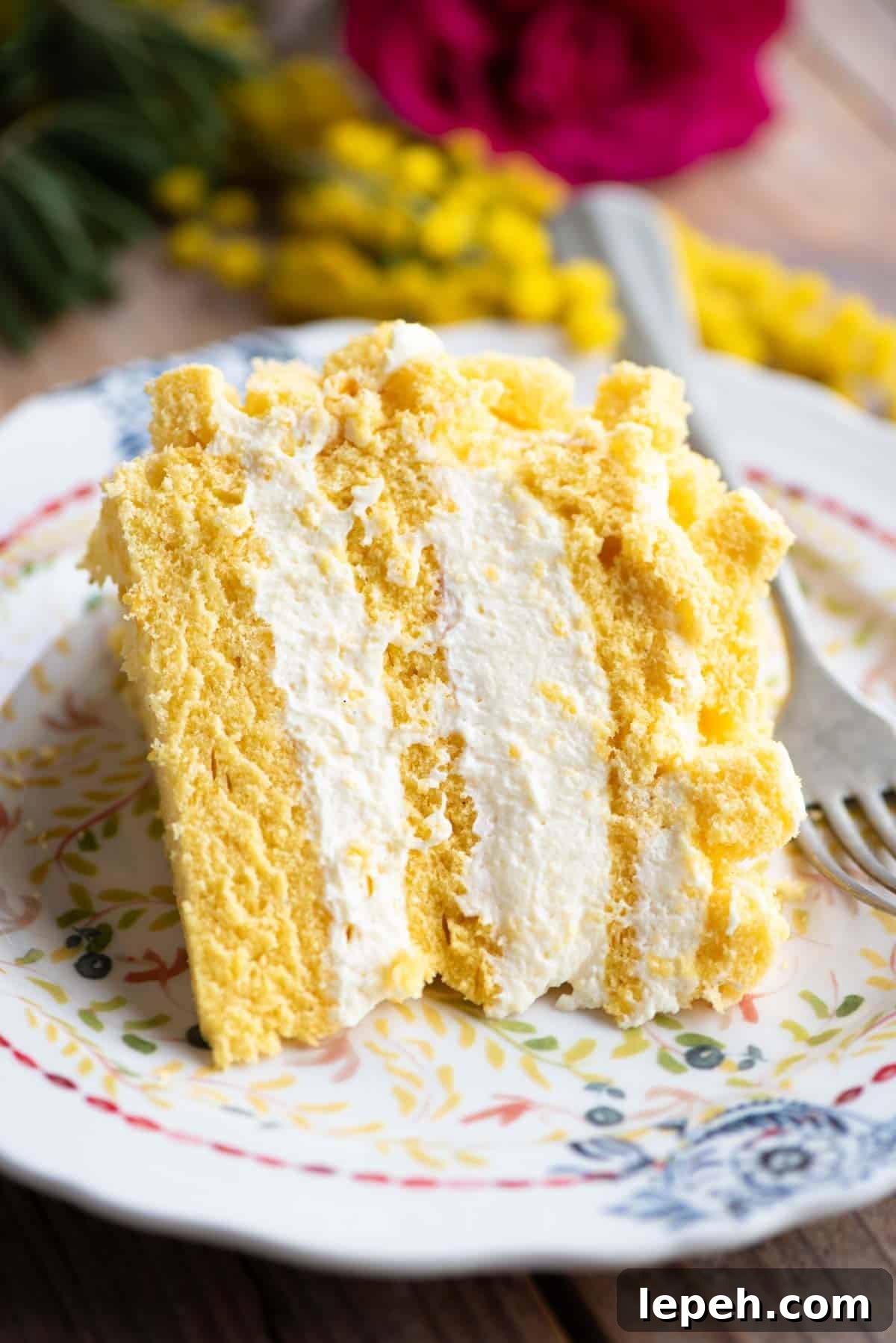
Place the bottom layer on a serving plate, brush with sugar syrup and spread one third of the filling evenly. Top with the next sponge layer, repeat with syrup and filling, then add the final layer. Cover the top and sides with the remaining cream, then press the small sponge cubes or crumbs all over the exterior so the cake resembles mimosa blossoms.
Once covered in sponge cubes or crumbs, chill the cake for a few hours to set the filling, then serve at room temperature for best flavor.
Ways to decorate your mimosa cake
There are two popular finishes that both create the look of mimosa flowers:
- Cubes – cut the second sponge into small cubes and attach them to the frosted cake for a textured, blossom-like finish.
- Crumbs – crumble the sponge into fine crumbs and gently press them onto the frosted cake for a softer, more uniform look.
Recipe tips and FAQs
- Read through the whole recipe first – a Mimosa cake has several components, so reviewing the steps and photos or video before starting makes the process smoother.
- Yellow sponge – eggs with deep orange yolks produce a richer color. If unavailable, a touch of yellow food coloring is optional.
- Prepare cake tins properly – grease and line bottoms, lightly butter the sides and dust with flour, removing any excess.
- Don’t open the oven door – bake the sponges for the full time to prevent them from collapsing, then let them rest briefly in the turned-off oven with the door ajar before removing.
- Keep sponge cubes moist – the layers are soaked with syrup to remain tender, but the small cubes on top can dry out; reserve some syrup to re-moisten them if needed.
Yes. You can prepare each component ahead of time (sponge, syrup and pastry cream) or assemble the cake 1–2 days in advance. Keep it refrigerated.
Store the cake covered in the refrigerator for up to 3 days. Note that the sponge cubes may dry out over time.
More Italian desserts to try
Italian Desserts
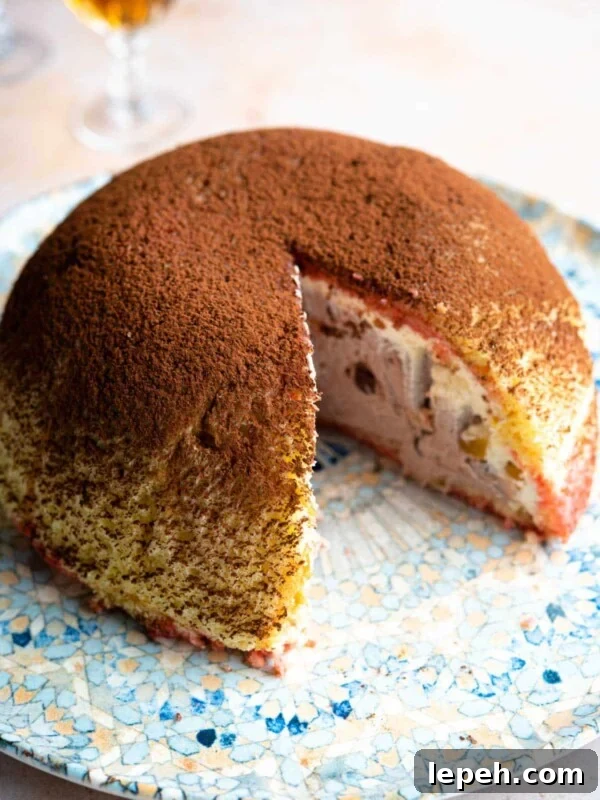
Zuccotto (Sponge Cake with Ricotta Filling)
Breakfast
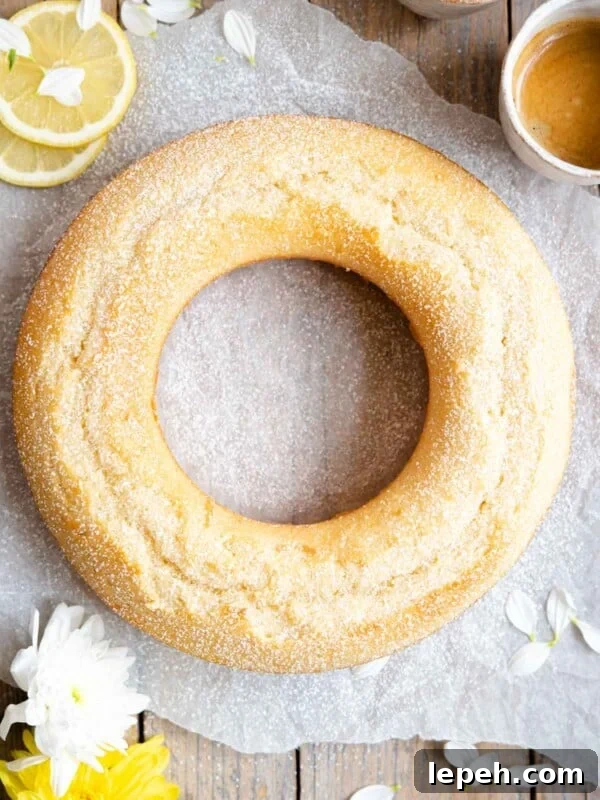
Italian Breakfast Bundt Cake – Ciambella Allo Yogurt
Italian Desserts
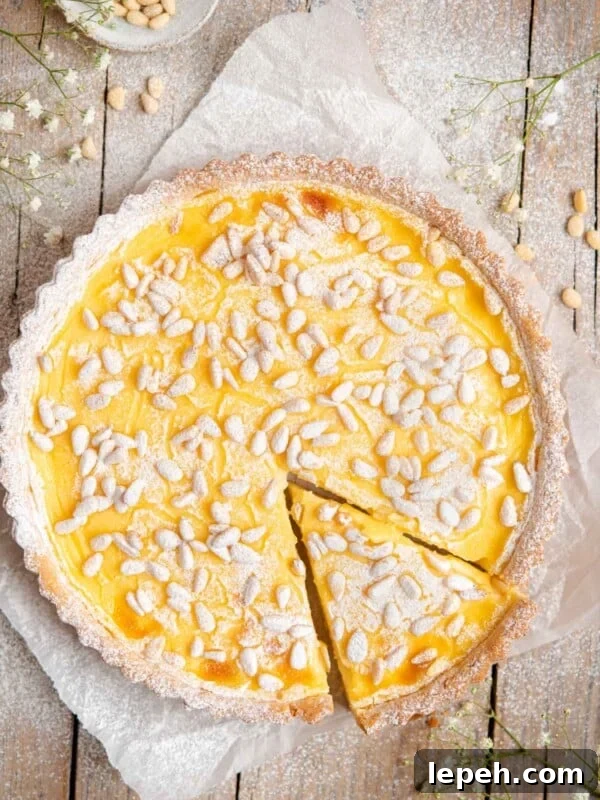
Torta della Nonna: Italian Custard Tart
Italian Desserts
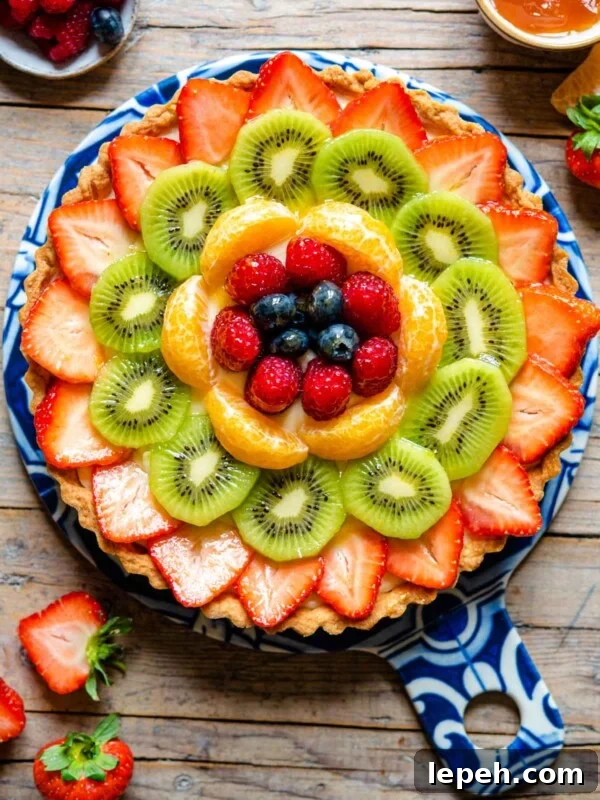
Crostata di Frutta (Italian Fruit Tart)
If you try this Mimosa Cake recipe or any recipe from the blog, please leave a rating and a comment to let us know how it turned out.
Step By Step Photos Above
Most recipes include step-by-step photos, tips and a video to help you get the best result.
Torta Mimosa (Italian Mimosa Cake)
By Emily
Equipment
- 2 x 8 inch (20 cm) springform cake pans
- Baking parchment
- Stand mixer or electric whisk
Ingredients
For the sponge (Pan di Spagna)
- 6 medium eggs (300 g)
- 130 g (1 cup) Italian 00 flour (or all-purpose)
- 130 g (1 cup) cornstarch
- 260 g (1.5 cups) caster sugar
- 1 teaspoon vanilla bean paste or extract
- 1 pinch salt
- Butter for greasing
For the pastry cream (Crema Pasticcera)
- 4 egg yolks
- 70 g (1/3 cup) caster or granulated sugar
- 30 g (1/4 cup) cornstarch
- 500 ml (2 cups + 2 tbsp) whole milk
- Peel of 1 lemon
- 1 teaspoon vanilla
Chantilly cream
- 450 ml (2 cups) heavy cream
- 5 tablespoons powdered sugar (55 g)
Sugar water
- 125 ml (1/2 cup) water
- 2 tablespoons caster or granulated sugar
- 2 tablespoons Strega or Limoncello (optional)
Instructions
To make the sponge
- Grease and line two 8-inch pans, preheat oven to 160°C (320°F) static.
- Whisk eggs, sugar, vanilla and salt on medium speed for 15–20 minutes until pale and thick.
- Sift in flour and cornstarch gradually and fold gently until combined.
- Divide batter between pans and bake on the bottom shelf for about 40 minutes. Let rest in the turned-off oven with the door ajar for 5 minutes.
- Cool in tins briefly, then transfer to a wire rack to cool completely.
Make the pastry cream
- Warm milk with vanilla and lemon peel to a simmer, then remove from heat.
- Whisk yolks with sugar until combined, then whisk in cornstarch.
- Slowly whisk hot milk into the yolk mixture, return to the saucepan and cook on medium-low, whisking until thickened. Cool with plastic wrap on the surface.
Make the sugar water
- Boil water and sugar until dissolved, cool, then add liqueur if using.
Make the Chantilly cream
- Whip heavy cream with powdered sugar to stiff peaks. Fold cold pastry cream into the whipped cream in three additions. Chill until needed.
Assembling the cake
- Trim the top crust from one sponge and slice it into three layers.
- Remove crusts from the second sponge and cut into small 1 cm cubes.
- Brush each sponge layer with sugar syrup, spread filling between layers, and cover the outside with remaining cream.
- Press sponge cubes or crumbs all over the cake to resemble mimosa flowers. Chill before serving.
Notes
- Read the full recipe and review photos or video before starting to make the process easier.
- If you want a more yellow sponge and can’t find deep yolk eggs, use a small amount of yellow food coloring.
- Do not open the oven door during the bake time to avoid the sponges collapsing; let them rest briefly in the oven once switched off.
- Store the cake in the fridge for up to 3 days; re-moisten the top cubes with reserved syrup if they begin to dry out.
Helpful Info for All Recipes
- I typically use extra virgin olive oil in savoury recipes unless stated otherwise.
- When using canned tomatoes I recommend quality brands for best flavour.
- All vegetables are medium sized unless noted.
- Recipes are tested using a fan (convection) oven unless otherwise stated.
Nutrition
Nutrition information is automatically calculated and should be used as an approximation.