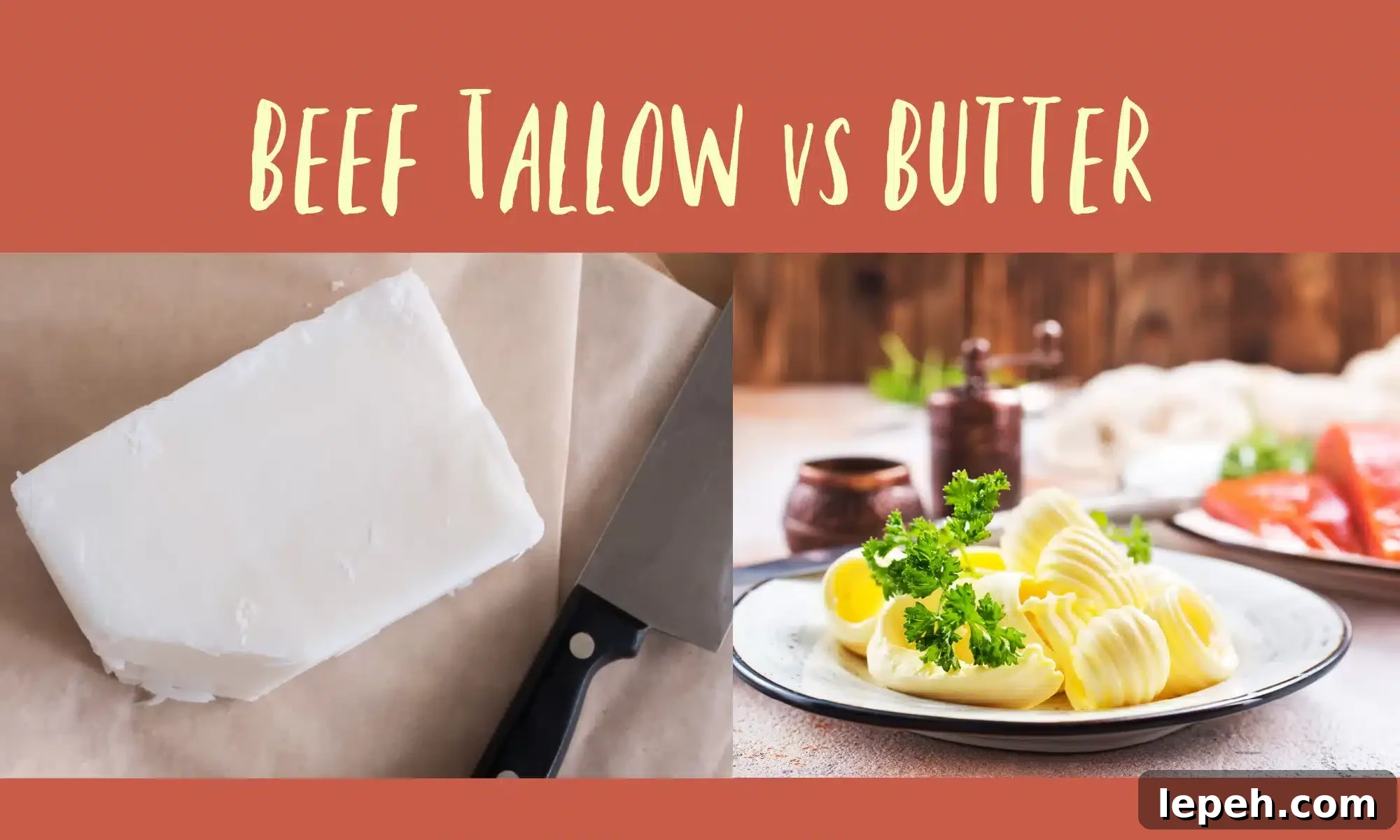
Want a fun fact? Both beef tallow and butter can be spread on bread, and each brings its own character to the table.
Although both are animal fats, they differ in flavor, culinary uses, and nutritional traits. Beef tallow, rendered from beef fat, carries a pronounced savory, umami profile that shines in searing, roasting, and savory pastries. Butter offers a creamy, rich mouthfeel prized in baking, sauces, and simple applications like spreading on toast or finishing vegetables.
Which is better depends on the recipe and the flavor you want. Below is a clear comparison to help you choose.
Comparing beef tallow vs butter
| Beef tallow | Butter | |
| Solid or Liquid? | Solid | Solid |
| Smoke Point (Fahrenheit) | 400 degrees | 300–350 degrees |
| Primary Fat | Saturated | Saturated |
| Taste | Beefy, umami | Buttery, creamy |
| Good for Cooking… | Raw, low heat, medium heat | Raw, low heat |
| Common allergens | Mammalian meat allergy (MMA) | Lactose, casein |
| Gluten-free? | Yes | Yes |
| Keto? | Yes | Yes |
| Paleo? | Yes | No |
| Vegan? | No | No |
Key differences
Both fats are animal-derived, but beef tallow and butter deliver different flavor experiences and culinary strengths. Beef tallow brings a savory, meaty depth that complements roasted and seared dishes, while butter contributes creamy, slightly sweet dairy notes that work especially well in baked goods and delicate sauces.
Allergen-wise, butter contains lactose and casein, while beef tallow can be problematic for people with mammalian meat allergy. Neither is vegan, but both are gluten-free and compatible with low-carb or ketogenic diets. Beef tallow also fits within many paleo approaches, while butter generally does not.
Smoke point matters in cooking. Butter’s lower smoke point makes it best for low-heat applications, finishing, and baking. Clarified butter (ghee) raises the smoke point, but plain butter will brown or burn more easily. Beef tallow has a higher smoke point, so it handles medium-heat searing and roasting more confidently and promotes good caramelization without breaking down as quickly.
Baking and cooking with beef tallow vs butter
Beef tallow excels in savory cooking: searing steaks, frying potatoes, making burgers, or enriching savory pastries. Its umami notes deepen the flavor of hearty dishes and help achieve a crisp, well-browned surface. Tallow is less common in sweet baking, but it can lend interesting savory character to certain savory pies or biscuits.
Butter is highly versatile and used across sweet and savory recipes. It lends structure and tenderness to cakes and cookies, creates silky sauces, and enriches vegetables and eggs. Salted and unsalted varieties give cooks flexibility—salted butter adds seasoning, while unsalted allows precise control over salt. Butter’s flavor also varies by cream source and production method, offering subtle differences between brands and regions.
Can beef tallow and butter be substituted for each other?
They can be substituted in many cases, but expect different results. Beef tallow makes a good butter substitute in dishes that benefit from savory richness—frying, roasting, or savory baked goods. Using tallow instead of butter will change the flavor toward beefy, umami notes.
Butter can replace beef tallow in many recipes, especially where a creamy, dairy flavor is acceptable or desired. The texture and flavor will differ, so adjust seasoning and expectations accordingly.
Common substitutes: lard is a close alternative to beef tallow for rendered-animal-fat needs, while ghee closely matches butter’s cooking performance (with a higher smoke point). Neutral oils like avocado or high-oleic vegetable oils work for high-heat cooking when a non-dairy, mild-tasting fat is needed.
Nutrition: Beef tallow vs butter
Per tablespoon, beef tallow and butter are calorie-dense and primarily composed of saturated fat. Beef tallow provides around 115 calories per tablespoon, while butter is about 102 calories per tablespoon. Both contain some monounsaturated and polyunsaturated fats and varying amounts of cholesterol.
Compared side by side, butter contains slightly more saturated fat and cholesterol than beef tallow, while tallow has a higher monounsaturated fat content. Neither contains trans fat in natural forms, though some processed spreads may include small amounts. Both fats also contain fat-soluble vitamins and trace minerals.
Because saturated fat intake is linked with cardiovascular risk when consumed in excess, use both fats in moderation and within a balanced diet that includes a range of fat sources.
| Per tablespoon (15mL) | Beef tallow | Butter |
| Calories | 115 | 102 |
| Polyunsaturated | 0.5 g | 0.4 g |
| Monounsaturated | 5.4 g | 3.0 g |
| Saturated | 6.4 g | 7.3 g |
| Trans | 0 g | 0.5 g |
| Total Fat | 12.8 g | 14.2 g |
| Cholesterol | 14 mg | 30.5 mg |
The table above summarizes typical values per tablespoon and highlights primary fat amounts.
How to store beef tallow and butter
Store beef tallow in a tightly sealed container away from direct heat and sunlight. For longer storage, refrigerate or freeze to preserve freshness and prevent rancidity. Butter stores best wrapped or in an airtight container in the refrigerator; keep it away from strong-smelling foods to avoid odor absorption. For longer life and higher-heat cooking, consider using clarified butter (ghee), which stores well at room temperature when kept dry and sealed.
Beef tallow vs butter: Final thoughts
Both beef tallow and butter have distinct roles. Choose beef tallow when you want savory depth, high-heat stability, and a meaty character. Choose butter for creamy richness, baking performance, and versatile everyday cooking. Many cooks keep both on hand and use each where its flavor and cooking properties best serve the dish. Use them thoughtfully and in moderation as part of a varied diet.
FAQ
Yes—beef tallow can replace butter in recipes that benefit from savory richness, such as frying, roasting, or savory baked goods. Expect a denser texture and more pronounced umami flavor compared with butter.
Beef tallow is a concentrated source of saturated fat. In moderation it can be part of a balanced diet that includes a variety of fats, but excessive intake of saturated fat can increase health risks. Balance and portion control are key.