
Gooey, simple to prepare, and impossibly delicious, these dulce de leche crepes are a dessert you shouldn’t miss. Thin and tender, they are filled with rich caramel-like dulce de leche and come together quickly. You can make the crepes ahead of time or use store-bought ones if you’re short on time—either way, the result is a memorable treat.
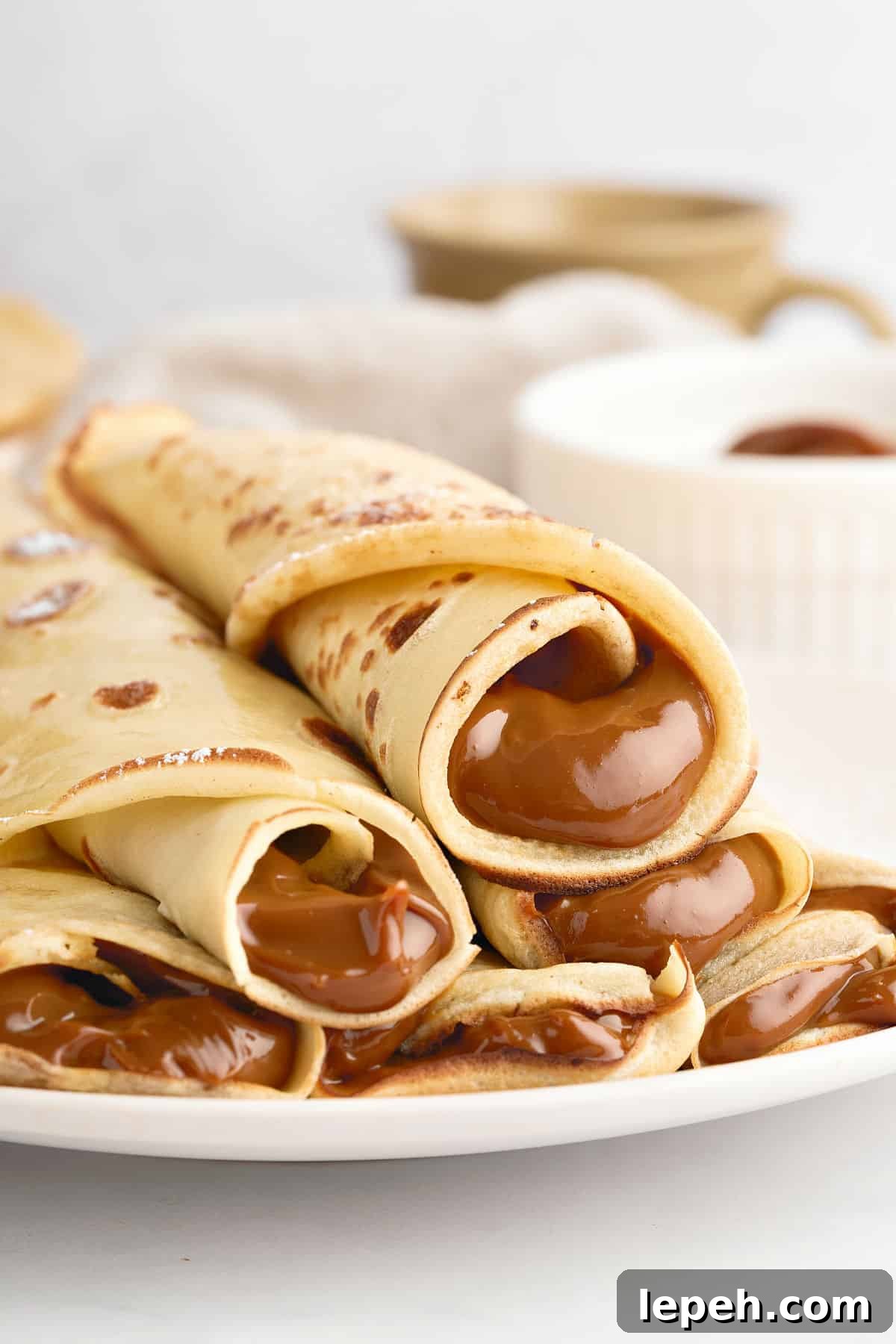
Incredibly gooey dessert
Once the thin French-style crepes are ready, this becomes a two-ingredient dessert you can assemble in minutes: crepes and dulce de leche. Use homemade dulce de leche if you have it, or a good-quality store-bought jar. Either way, spreading the sweet filling is fast and satisfying.
These crepes are best served warm, though they are also enjoyable at room temperature—avoid eating them straight from the fridge. When warmed, the dulce de leche softens and becomes pleasantly gooey. A light dusting of powdered sugar or a quick caramelized sugar topping elevates them further, though the dessert is already quite sweet and rich, so a small portion is often enough.
This is the Argentinian way of enjoying thin crepes—very different from thick American pancakes. The batter is thin and delicate, and the eating experience is all about the silky filling and the paper-thin pancake wrapping. If you love dulce de leche, these crepes are a simple, authentic way to enjoy it.

French crepes
In this context we refer to very thin pancakes—what many call crepes. They are made from a thin batter and cook quickly on a hot, lightly greased surface. The batter can be prepared ahead and kept in the refrigerator for a few days or frozen for longer storage.
Crepes are straightforward to make: a simple batter of flour, eggs, milk and a little cream yields delicate, flexible pancakes perfect for rolling with dulce de leche. A non-stick griddle or skillet works best; a silicone spatula is a helpful tool for turning the crepes without tearing them.

Filling the crepes
Type of dulce de leche: both the more fluid style and the thicker spread work. I prefer the regular, slightly softer dulce de leche because it spreads easily and melts a bit when warmed. The thicker dulce de leche, often used for sandwich cookies, will hold its shape but can be harder to spread.
Family style: arrange rolled crepes in a baking dish, warm them together, and serve straight from the dish for a communal presentation—like a sweet version of baked taquitos.
Individual serving: you can keep crepes warm and fill them as you serve for a fresher experience, or fill ahead and serve at room temperature.
Rolls or triangles: the traditional presentation is rolled, though folding into triangles is also common—choose the style you prefer.
Vintage Kitchen Tip
Spread a thin layer of dulce de leche—almost as thin as the crepe. A little goes a long way; too much filling makes the crepe heavy and harder to handle.

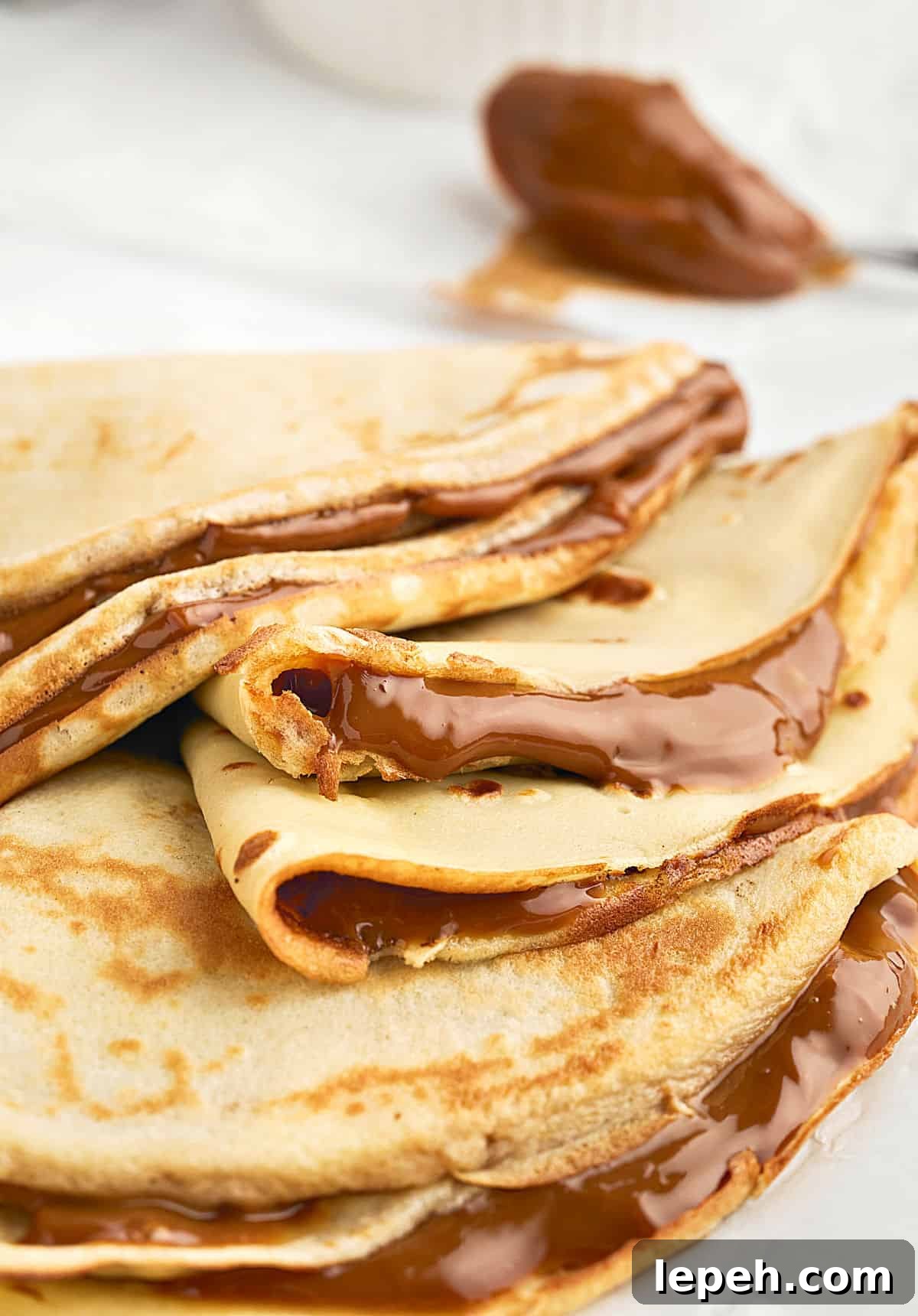
Kitchen Notes
- Organization: read the recipe through before starting. Have ingredients at the suggested temperatures, and set out your equipment and workspace for a smoother process.
- Filling: dulce de leche is easy to make from a can of sweetened condensed milk, or you can buy a jar from the store. Use a spreadable consistency for best results.
- Refrigerating crepes: store crepes in an airtight container for a few days. Separate layers with parchment or freezer sheets to prevent sticking.
- Freezing: you can freeze crepes for up to a month; separate them with freezer sheets and seal in a freezer-safe container to avoid tearing when thawing.
- Serving: crepes are traditionally served warm but are also delicious at room temperature. Serve with fresh berries to cut the sweetness if you like, or a light dollop of whipped cream for added contrast.
Related recipes you might like:
-
White Chocolate Blueberry Pancake
-
Homemade Dulce de Leche
-
Lemon Blueberry Ricotta Pancakes
-
Savory Crepe Cake




If you try this recipe and enjoy it, please leave a comment and a rating. If something doesn’t work for you, share the details so adjustments can be suggested. You can also subscribe to the site’s newsletter for more recipes and updates.
As an Amazon Associate, the author may earn from qualifying purchases.

Dulce de Leche Crepes
Ingredients
Crepe batter:
- ¾ cup all-purpose flour
- ¼ teaspoon salt
- 2 eggs, at room temperature
- 1 cup whole milk, at room temperature
- ⅓ cup whipping or heavy cream, at room temperature
- 1 tablespoon unsalted butter, to cook the crepes
To assemble:
- 2 to 3 cups dulce de leche
- ¼ cup powdered sugar, to sprinkle, optional
Instructions
Crepe batter:
-
In a bowl, whisk together ¾ cup all-purpose flour and ¼ teaspoon salt.
-
Add 2 eggs and mix until you have a paste. Gradually add 1 cup whole milk while whisking to make a smooth batter, adding the milk slowly to avoid lumps.
-
Stir in ⅓ cup whipping or heavy cream, mix until integrated, then let the batter rest at room temperature for about 1 hour.
-
Heat a non-stick skillet or crepe griddle over low to medium-low heat. Lightly smear butter before cooking each crepe.
-
Pour about ¼ cup of batter per crepe, spreading it thinly over the surface. Cook 40 seconds to 1 minute on the first side until bubbles appear and edges firm, then flip and cook another 15–20 seconds. Use a flexible spatula for turning.
-
Stack finished crepes loosely on a plate so they are easy to separate later.
-
Refrigerate well wrapped for a couple of days or freeze with dividers between each crepe for up to a month.
Dulce de leche crepes assembly:
-
Place a crepe on a flat surface and spread about ¼ cup dulce de leche down the center. Roll the crepe to enclose the filling and place seam-side down in a baking dish. Repeat with remaining crepes.
-
Warm the filled crepes in a moderate oven (325°F / 165°C) for a few minutes until heated through.
-
Sift a light dusting of powdered sugar over the crepes before serving. Alternatively, sprinkle granulated sugar on top and briefly broil or use a torch to caramelize the sugar for a crisp finish—be cautious, the filling and sugar will be hot.
Notes
Caramelized top: to create a caramelized surface, sprinkle granulated sugar on the filled crepes and either use a kitchen torch or place under the oven broiler for a short time until the sugar melts and browns. Allow them to cool briefly before eating to avoid burns.