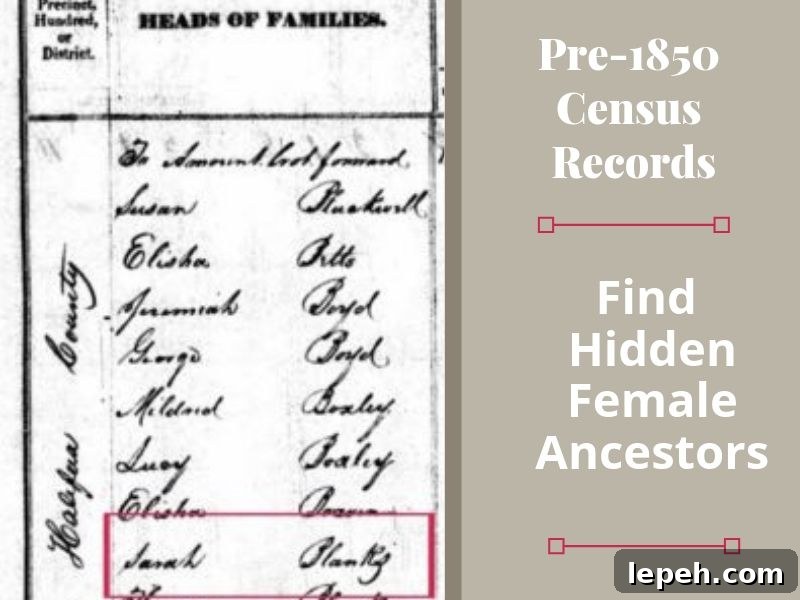
Genealogy researchers often struggle to locate female ancestors in pre-1850 U.S. census records. We rely on census records as a primary source for family lines, but those early censuses tend to highlight the head of household and male members. Because of that, female ancestors can be easy to overlook.
I used to dread working with records that predate the 1850 census — and I still feel some of that anxiety sometimes. The difficulty usually comes from not fully understanding how those census schedules were organized and what the enumerator was recording.
Census records were created for taxation and government representation. To make the most of them for family research, you must understand how the data was collected and what the recorded categories actually mean. Spend time learning how to analyze early censuses before jumping into your research.
Understand what the record is actually saying.
How can we use pre-1850 census records to find female ancestors?
Place female ancestors in time and place
Often women appear only as counts within age categories. For example, in the 1830 U.S. census for Wake County, NC, ages are recorded as grouped tick marks rather than names for every household member. Interpreting those age columns lets you estimate birth years and confirm residence.
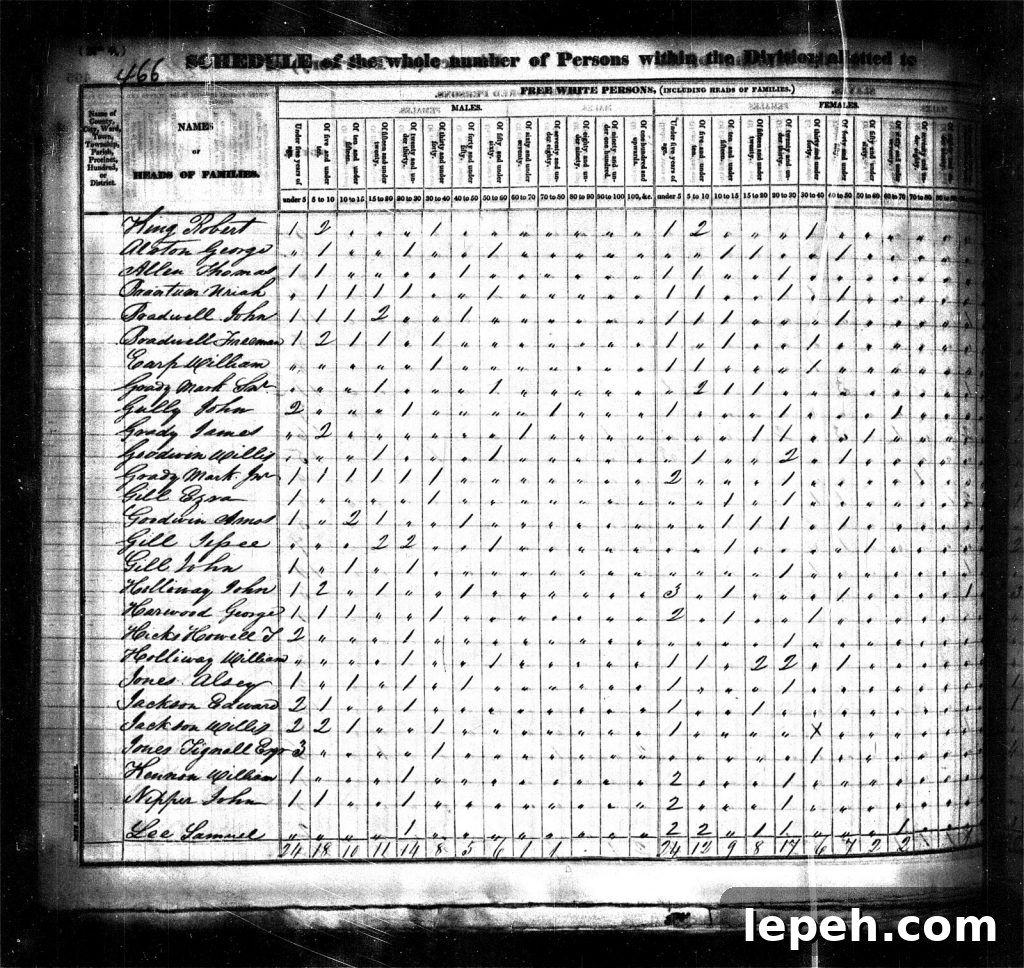
In one example, the Harward household shows one male and one female in the 30–39 age group. We can reasonably infer the 30–39 male is the head, George Harward (also spelled Harwood), and the woman in the same age category is likely his wife Elizabeth. From the 1830 census we estimate their birth years between 1791 and 1800 (1830 minus 39 = 1791; 1830 minus 30 = 1800). The census places Elizabeth in Wake County, NC in 1830 and provides an estimated birth range.


Female listed as head of household
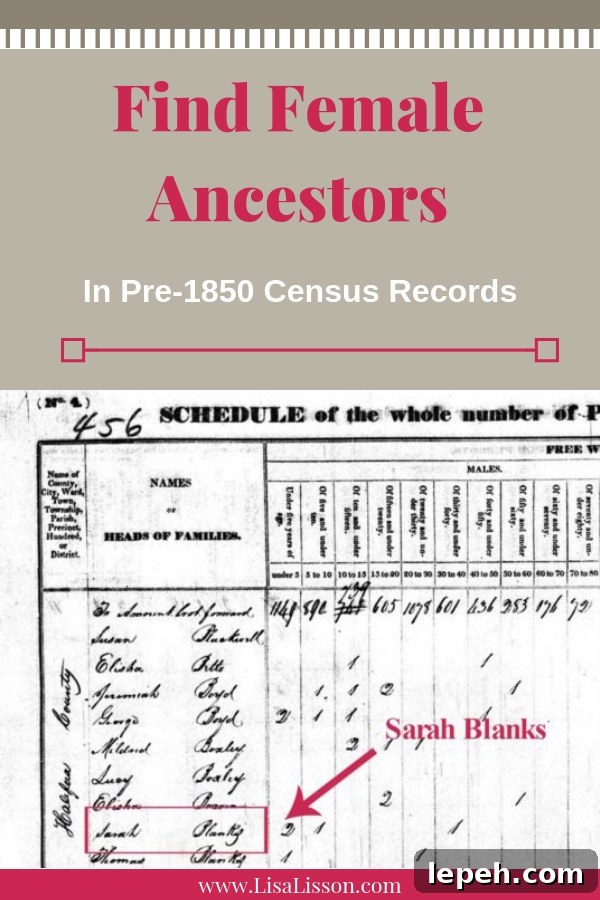
Women do appear as heads of household in pre-1850 censuses. A female head often indicates a widow or a woman running a household on her own. For example, the 1830 Halifax County, VA census shows Sarah Blanks listed as head of household. Her enumerated household includes children and a male in the 30–39 category, but Sarah herself is the named head, suggesting widowhood or an independent household.
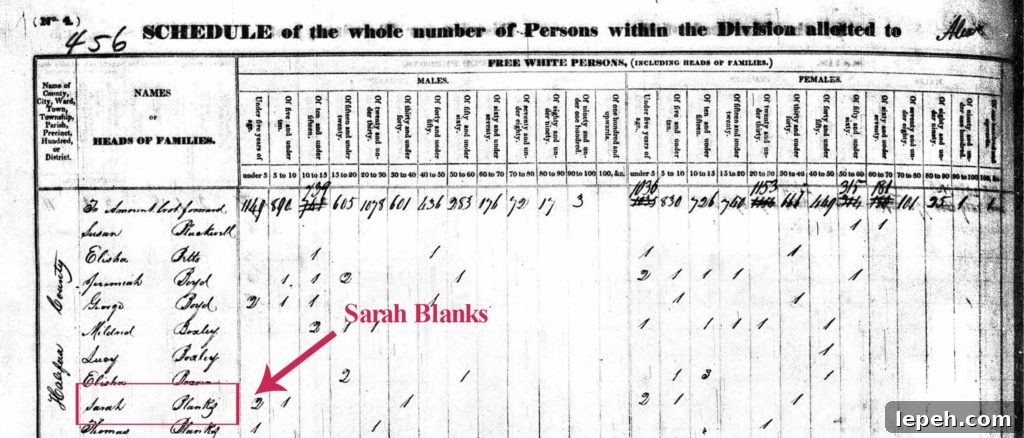
From the age columns, Sarah’s estimated birth range is about 1790–1800. Her enumeration suggests several productive next steps:
- Search for a marriage record for a Sarah who married a male Blanks in Halifax County or neighboring counties. A found marriage may identify her maiden name.
- Search probate records for males named Blanks; these records can confirm a husband’s death and provide details about Sarah’s status and family.
- When census pages are not alphabetized, note neighbors and nearby households. Neighbor relationships can provide leads on extended family or community ties.
Note: A male listed in the household who is age 30–39 is not automatically Sarah’s husband; because she is the head, a husband would normally be listed as head if married. In Sarah’s case, further research identified that male as Langley Talbot, and their story turned out to be unconventional.
Discovering subsequent marriages
Tracking a family across multiple censuses can reveal second marriages and changing household composition. James Harward of Wake County provides a clear example. In the 1790 census he appears with two white females and two white males under 16. By 1800 his household includes one female aged 26–44, later identified as Rosannah Barbee, giving a birth year estimate between 1756 and 1774. By 1830 James appears as age 60–69 with an older female not matching the earlier age range, which suggests a different, younger woman in the household—likely a second wife.
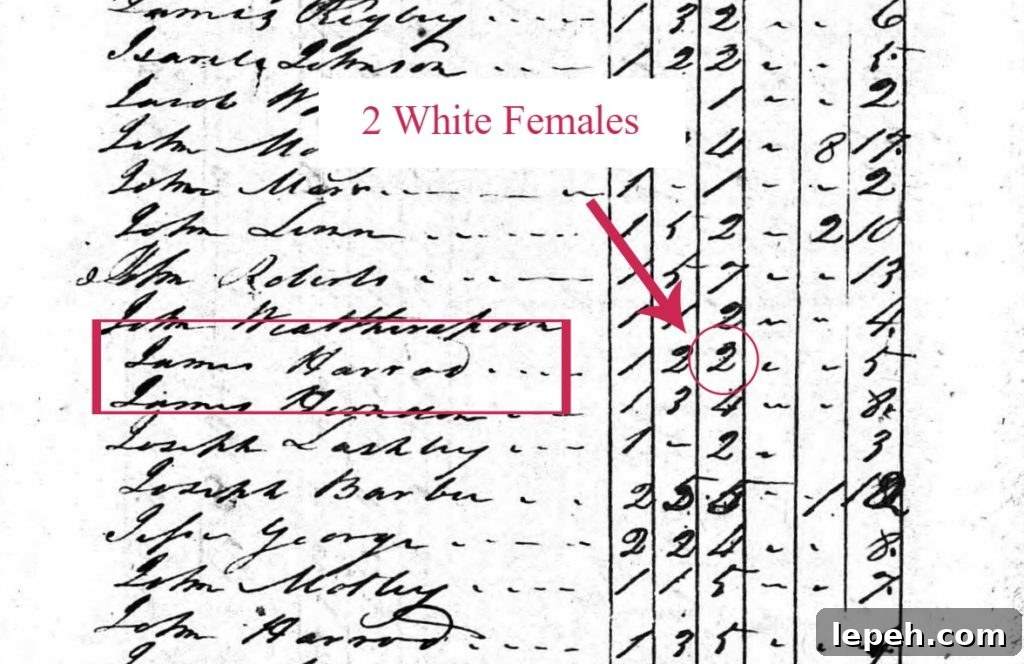
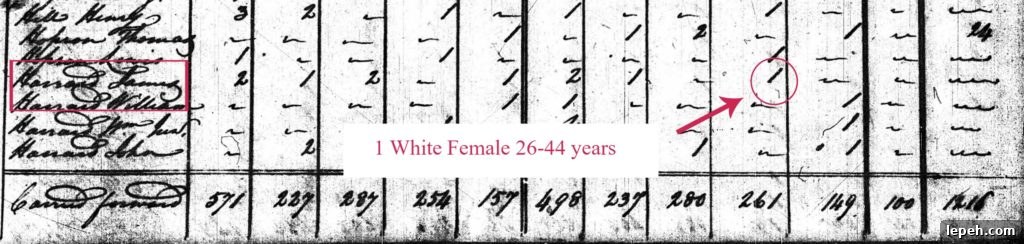
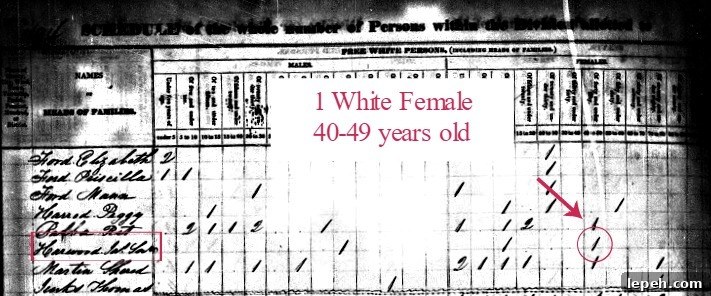
From these patterns you can develop research tasks:
- Look for an early marriage record for James Harward before 1790.
- Search probate records for potential fathers or guardians for children in the household.
- Search for a second marriage record for James before 1830, focusing on Wake County first since he remained there.
- If a second wife is probable, look for death records or other evidence for the first wife.
Following household composition across census years gives you a timeline and context to pursue marriage, probate, and local records that can identify female relatives who otherwise appear only as age tallies.
Remember…
The pre-1850 census may not give full names or precise dates for female ancestors, but those age columns and household patterns are valuable clues. Use them to place women in a county at a particular time, estimate birth ranges, and generate targeted searches in marriage, probate, and other local records. Interpreting early censuses carefully supports and strengthens other genealogical findings.
Other posts of interest:
- Finding Children Between the Census Years
- How To Make Genealogy Sense of Census Records
- What Is That Family Cemetery REALLY Telling You?
***Please note: this post originally contained affiliate links. That does not affect the content provided here.