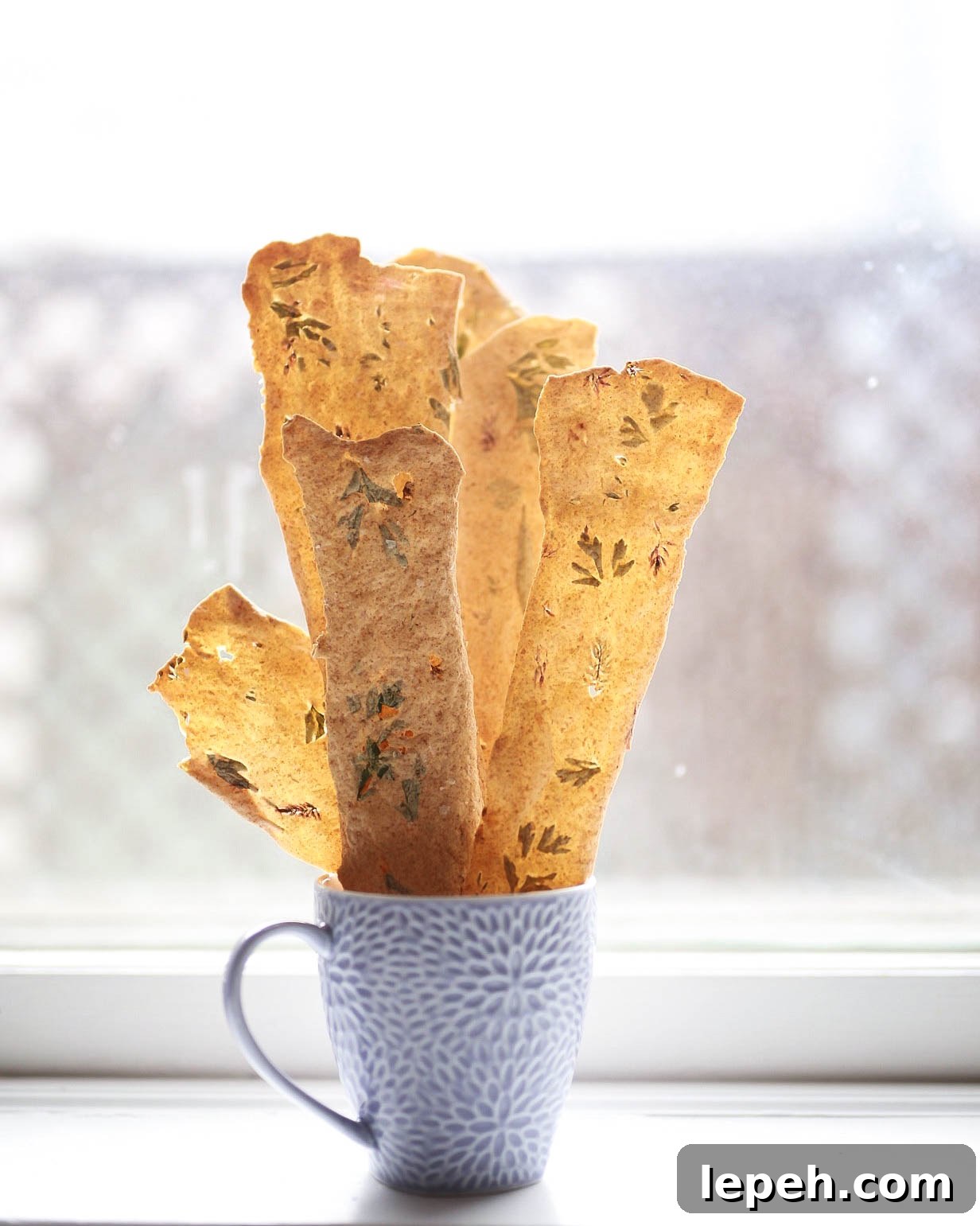
In my ongoing effort to use up discard sourdough starter, I discovered a recipe for sourdough crackers on the Love & Olive Oil blog. That original recipe used ripe starter, not discard, but from my experience with other recipes, discard starter can usually be substituted for ripe starter without issue. This adaptation aims to make a thin, crisp cracker studded with herbs and edible flowers.
When I imagined these crackers, I pictured very thin sheets of dough to achieve a delicate crispness. To make that easier, I used my KitchenAid pasta maker attachment to roll the dough paper-thin. The Love & Olive Oil method of passing the dough through a pasta machine immediately appealed to me for this purpose, and inspired the technique used here.
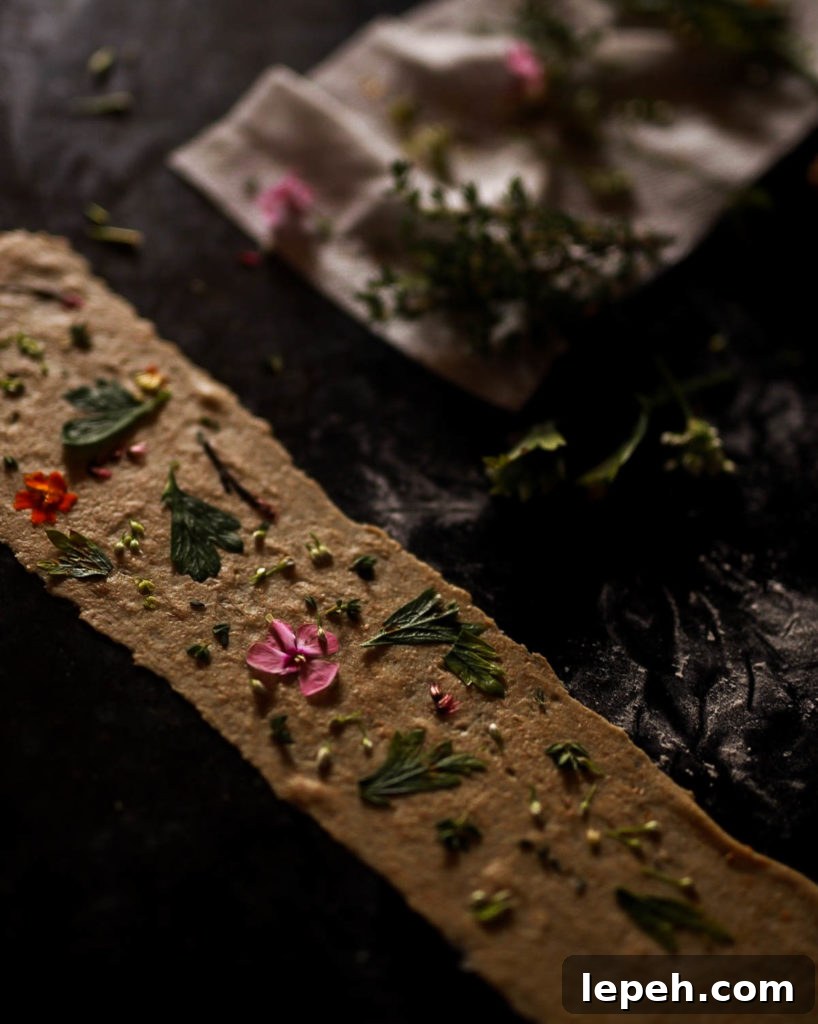
This recipe is flexible. Use whatever herbs or edible flowers you have—or omit them entirely. You can also vary the flours: a mix of white and whole grain works well, and I recommend including at least a bit of wheat or rye for flavor. I feed my starter with half whole-grain flour (wheat or rye), so even when most of the added flour is all-purpose, some whole-grain character remains.
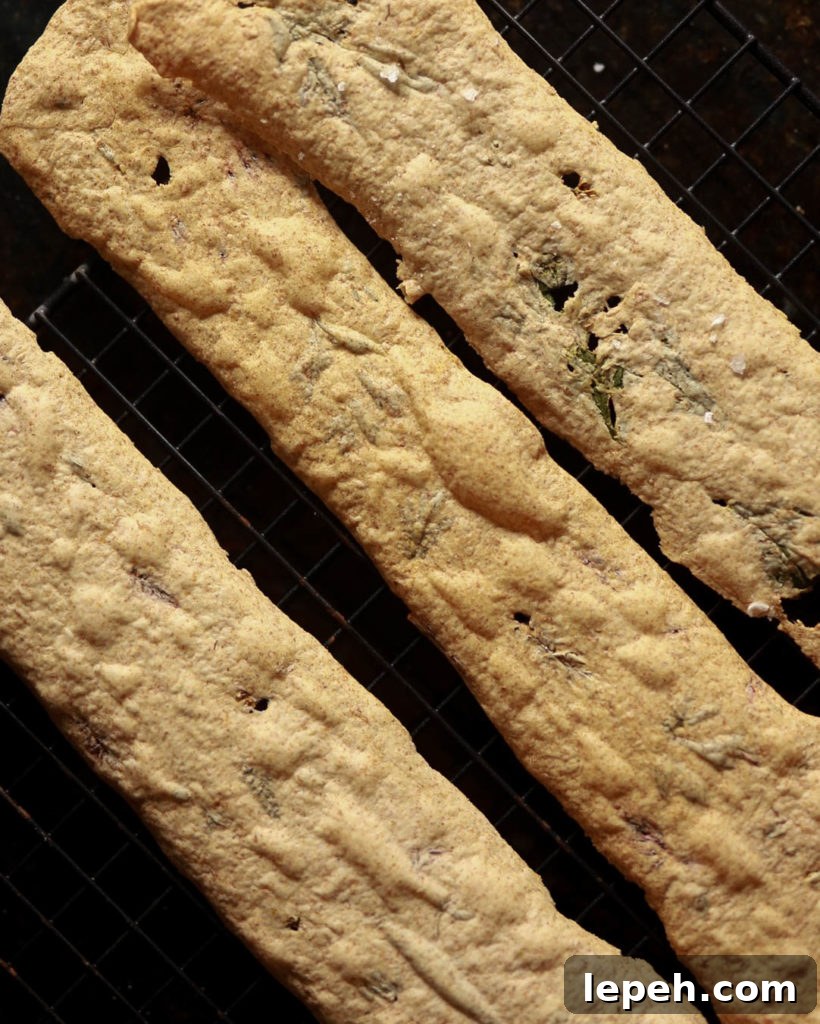
The dough is easy to roll by hand if you don’t have a pasta machine. Either way, one element I consider essential is a generous sprinkle of Maldon or another flaky sea salt on top—this really enhances the herbs and flowers and brightens the overall flavor.
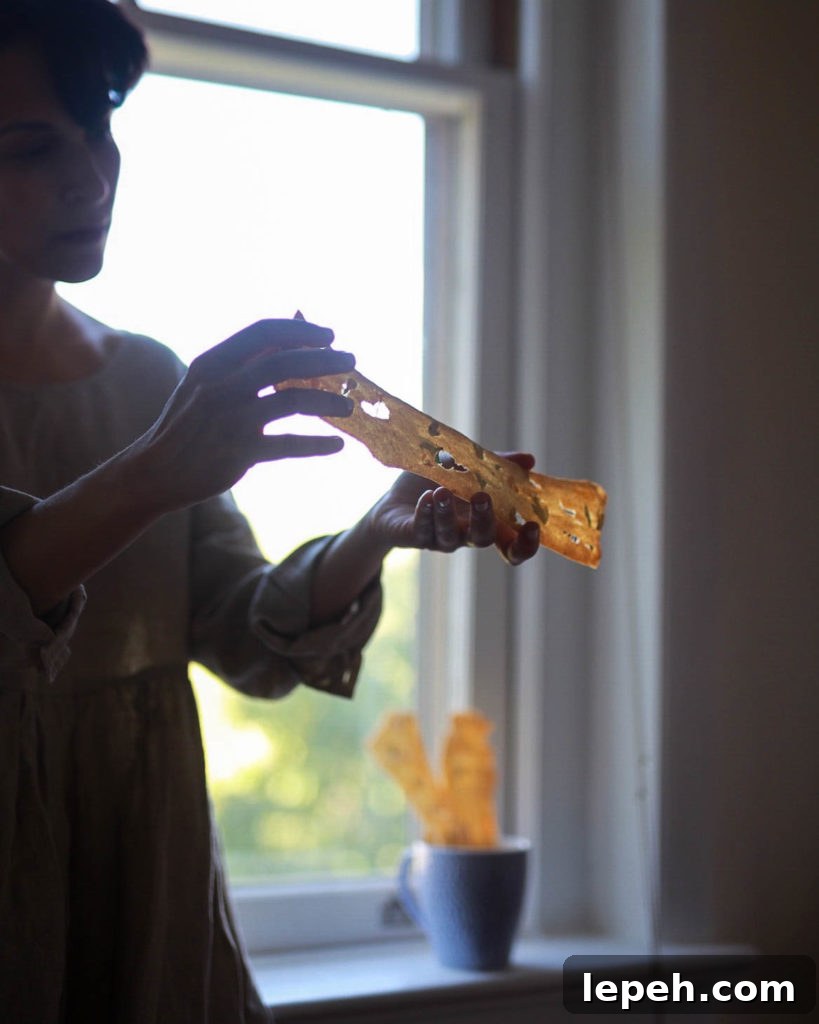

Sourdough Discard Crackers with Herbs and Edible Flowers
A crisp, adaptable flatbread that makes good use of discard starter. Adapted from a recipe on the Love & Olive Oil blog.
discard starter, discard starter recipe, sourdough crackers, sourdough discard, sourdough flatbreads
Ingredients
- 200 g discard sourdough starter (100% hydration)
- 75 g all-purpose flour
- 45 g whole wheat flour
- 12 g rye flour
- 3 tbsp (32 g) extra virgin olive oil
- 1/2 tsp fine sea salt
- assorted fresh herbs and/or edible flowers
- Maldon or other flaky sea salt for topping
Instructions
-
In a large bowl, combine the discard starter, flours, olive oil, and fine sea salt. Mix until combined, then knead by hand for about 3–5 minutes until the dough forms a smooth ball. Wrap in plastic and chill in the refrigerator for at least 30 minutes and up to 24 hours.
-
Preheat the oven to 350°F (175°C). Line two large baking sheets with parchment paper.
-
Remove the dough from the fridge, divide it in half, and return one half to the refrigerator. Take the remaining half and divide it into four roughly equal pieces.
-
On a lightly floured surface, roll one piece of dough into a thin rectangle. If you have a pasta machine or KitchenAid attachment, pass the dough through the rollers until you reach setting 6 (out of 8) to make it very thin.
-
Lay the thin sheet on a floured surface and scatter herbs and edible flower petals over half of it. Fold the other half over the herbs and flowers, enclosing them. Gently press or roll the layers together so the filling stays inside.
-
Run the filled piece through the pasta machine again, starting at setting 4 and progressing to setting 6 for a consistently thin sheet. If you don’t have a machine, use a rolling pin to roll the dough as thinly as possible.
-
Transfer the rolled sheet to a prepared baking sheet. Trim to fit if necessary, and gather scraps to roll out again using the same method.
-
Repeat the rolling and filling process with the remaining pieces until the first baking sheet is filled.
-
Lightly spritz the rolled crackers with water and sprinkle generously with flaky sea salt, such as Maldon.
-
Bake for 12–15 minutes, turning the pan halfway through, until the crackers are crisp and just turning a light golden color. Remove from the oven and transfer the crackers to a wire rack to cool.
-
While the first pan bakes, prepare the second pan the same way and bake. Continue with the remaining pieces from the first half of dough, then repeat the entire process with the dough stored in the refrigerator.
Recipe Notes
- Use any herbs or edible flowers you like. I’ve used parsley, thyme, lavender, chive blossoms, and various flower petals. If using larger stems or flower heads, strip leaves and petals so fillings lie flat and the dough won’t tear.
- The flour ratios here worked well for me, but you can adjust the mix as long as at least 50% of the added flour is all-purpose. Because I feed my starter partly with whole-grain flour, the crackers retain some whole-grain flavor even with mostly all-purpose flour in the recipe.
- Store cooled crackers in an airtight container; they will remain crisp for several days.