Table of Contents
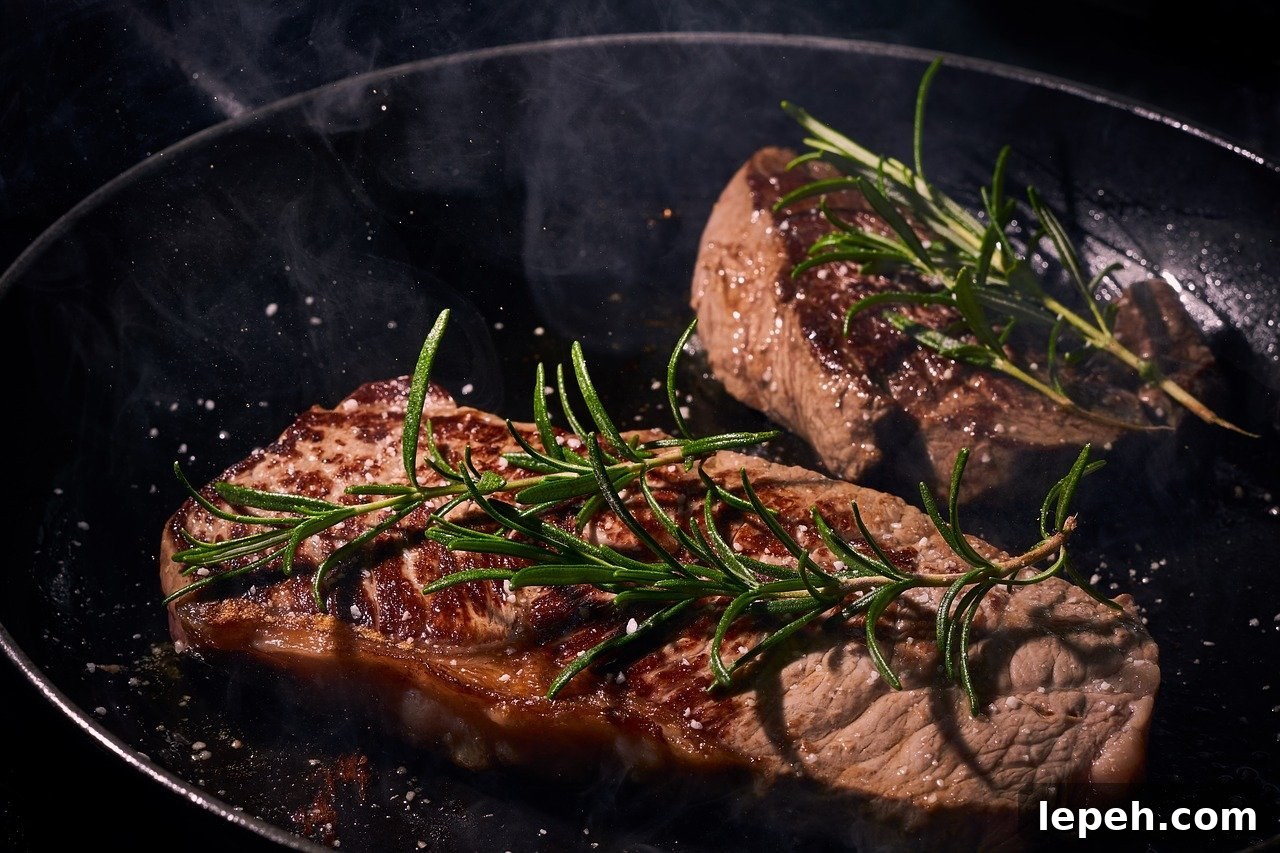
One of the most important—and often overlooked—steps in sous vide cooking is the final sear. Whether you’ve cooked a steak, roast, or chicken in a water bath, how you finish it determines texture, color, and much of the flavor. This guide covers practical tips for searing after sous vide, with a focus on using cast iron for the best results.
Note: the advice below centers on cast iron pans, though many techniques apply to other hot surfaces.
Why should we sear our food?
Searing adds flavor, texture, and an attractive brown crust. That brown, savory quality comes from the Maillard reaction—a chemical process between amino acids and reducing sugars that creates the complex flavors and browned appearance we seek. The Maillard reaction typically occurs in the range of 140–165 °C (280–330 °F) and is distinct from caramelization, which involves sugars alone.
How do we make sure we get the best sear after the sous vide?
Follow these steps for a reliable, flavorful sear:
- Get the pan extremely hot. A very hot cast iron pan produces the fastest crust formation and reduces overall cook time. Use an oil with a high smoke point—avocado oil or ghee are good choices.
- Dry the meat thoroughly. Pat the surface completely dry with paper towels. Any surface moisture will steam the meat and prevent a proper crust.
- Apply pressure if needed. A meat press or heavy utensil can improve contact with the pan and encourage even browning.
- Consider a finishing torch. Using a torch after or during the pan sear can deepen color and concentrate crust without overcooking the interior.
- Work quickly and rotate. Rotate the meat every 10–15 seconds and aim for a total sear time of about 1–2 minutes, depending on thickness and desired crust.
What other Searing Methods are good for the Sous Vide?
Grill
Grilling is an excellent option, especially in warm weather. Preheat the grill to its highest setting and keep the lid closed to maximize heat. Lightly oil the meat, then sear for about 45–90 seconds per side. Avoid leaving it on too long to prevent drying.
Frying
Deep or shallow frying can produce a fast, even crust while preserving the moist interior. Heat oil to roughly 375 °F (190 °C) and fry the meat for 30–90 seconds. Ensure the surface is dry before adding to hot oil to avoid dangerous splattering.
Cooling
If you’re concerned about overcooking the interior during searing, briefly chilling the sous vide-cooked meat can help. Placing it in the refrigerator or briefly in the freezer firms the outer layer so only the surface heats during the sear, preserving the desired doneness inside.
Flour
A light dusting of flour or cornstarch on the surface can encourage browning and create a crisper crust. Apply a thin, even layer and shake off excess before searing.
When performed correctly, searing enhances the flavor and appearance of sous vide-cooked foods without drying them out. Dry the surface, use high heat, move quickly, and choose the finishing method that suits your kitchen—cast iron, grill, frying, or a torch can all deliver excellent results.
Source: Information about the Maillard reaction and browning temperatures is based on commonly accepted culinary science.