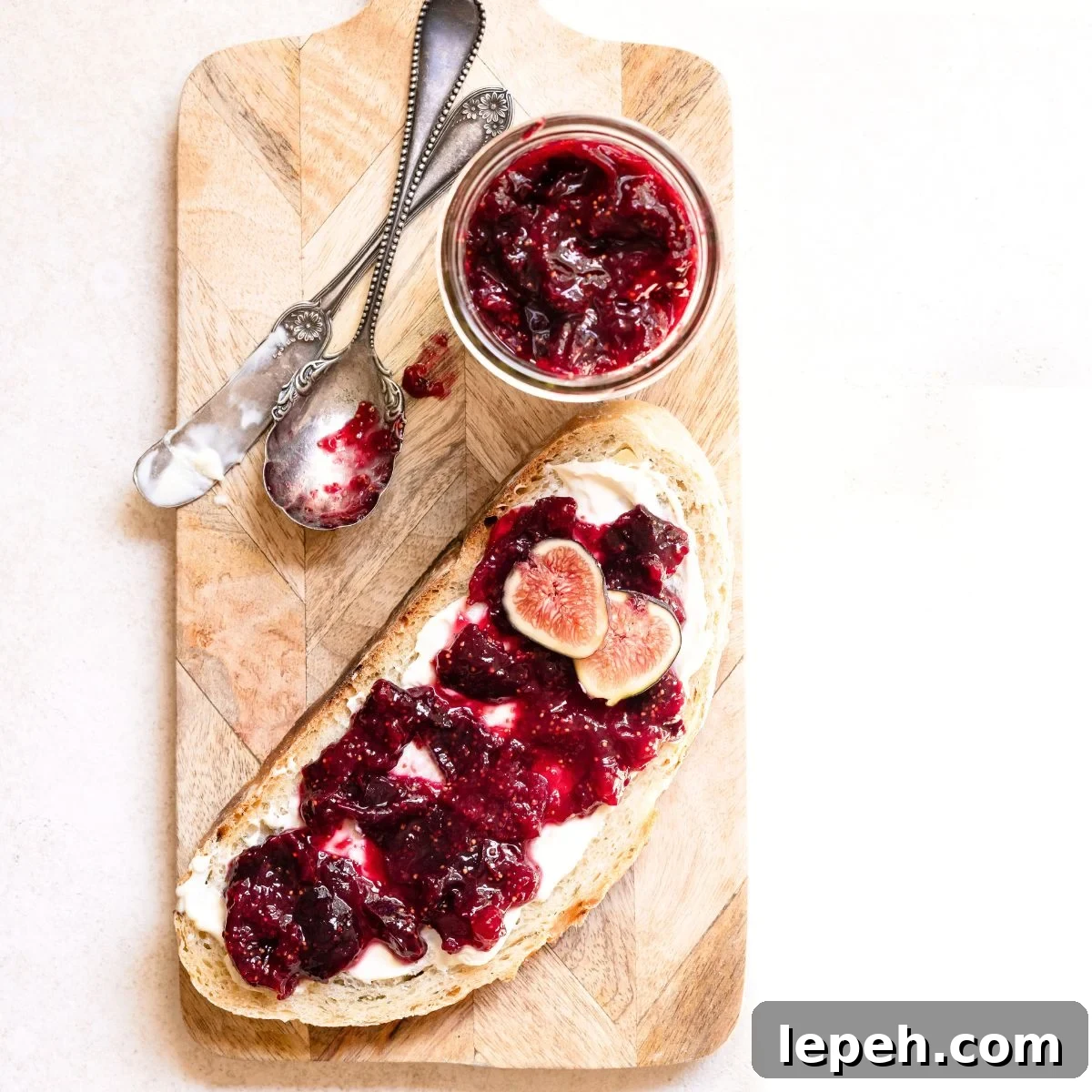
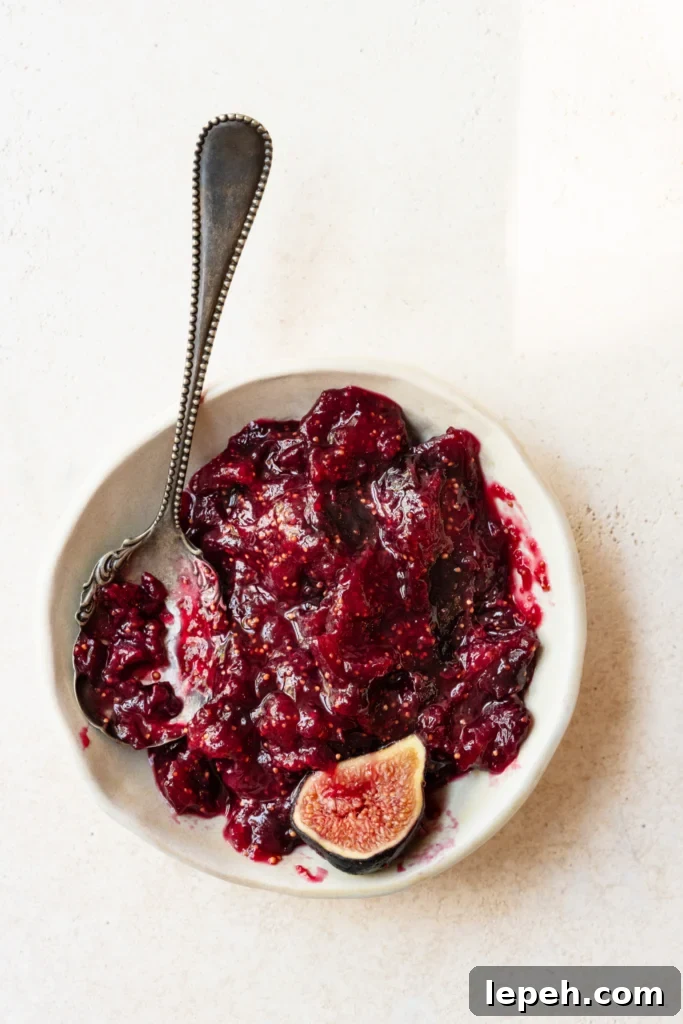
This homemade easy fig jam combines orange and lemon zest, fresh lemon juice, vanilla, and a splash of sherry for a bright, rich flavor. There’s no need to peel or remove seeds—simply trim the stems, chop the figs, and simmer gently with citrus, sugar, and vanilla. In under an hour you’ll have a luscious jam that beats store-bought versions.
Key Ingredients
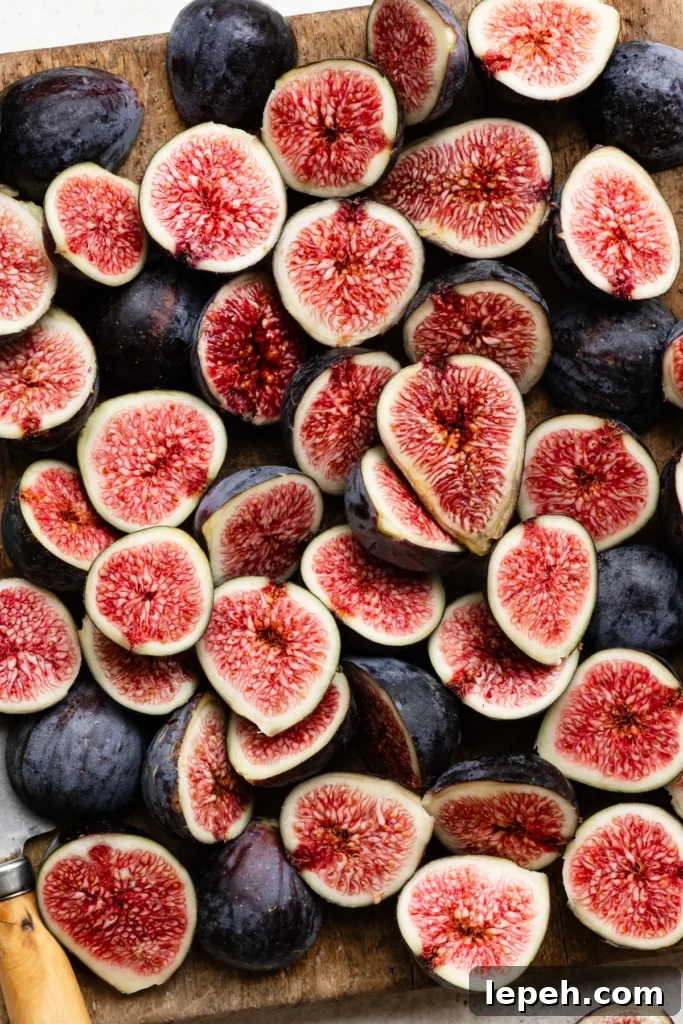
- Fresh figs — ripe or slightly overripe, purple or green, work best for jam.
- Note: Figs are low in natural pectin; lemon juice helps the jam set without added pectin.
- Granulated sugar sweetens and helps thicken the fruit as it breaks down.
- Note: A common approach is to weigh fruit and use sugar equal to about half its weight. Because figs are naturally sweet, this recipe uses a little less than half.
- Orange & citrus zest complement figs and give the jam a fresh, summery character.
- Note: For a fall variation, omit citrus zest and add 1–2 teaspoons of cinnamon, nutmeg, or cloves.
- Fresh ginger adds warmth and a subtle bite.
- Lemon juice reacts with sugar to help release pectin and thicken the jam.
- Water creates a simmering liquid so the figs can break down evenly.
- Vanilla bean paste or scraped vanilla bean to deepen the flavor.
- Sherry brings caramel and dried-fruit notes for a rounded jam.
- Note: Add sherry early with the sugar to cook off the alcohol.
How to Make Fig Jam
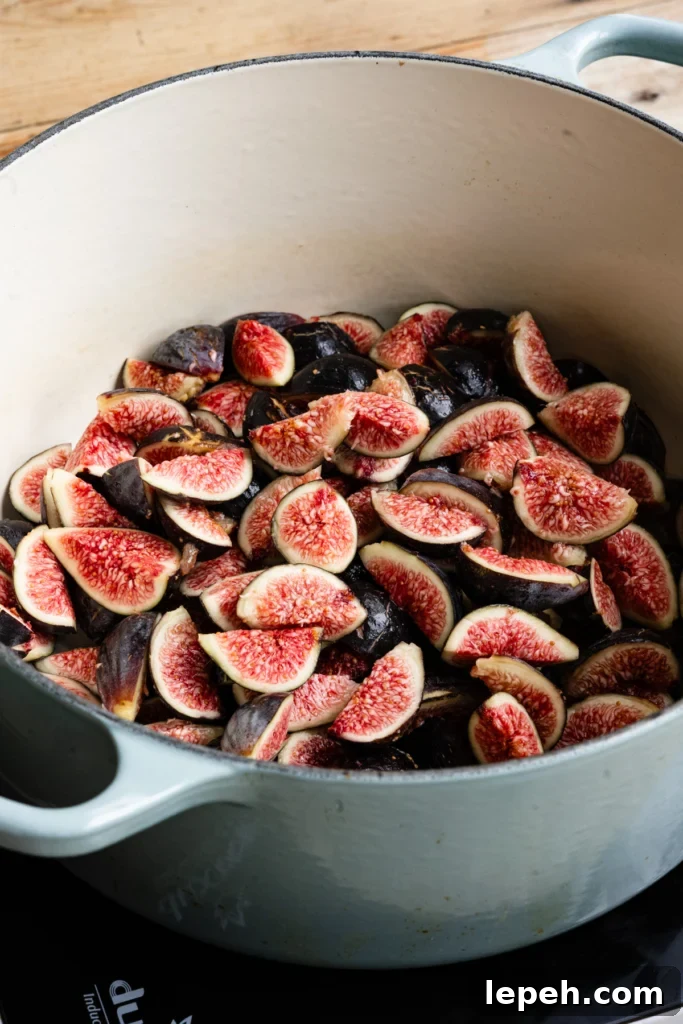
- Place fig quarters or 1/2-inch chunks in a large pot and toss with sugar. Let the fruit macerate for about 20 minutes so it releases juices.
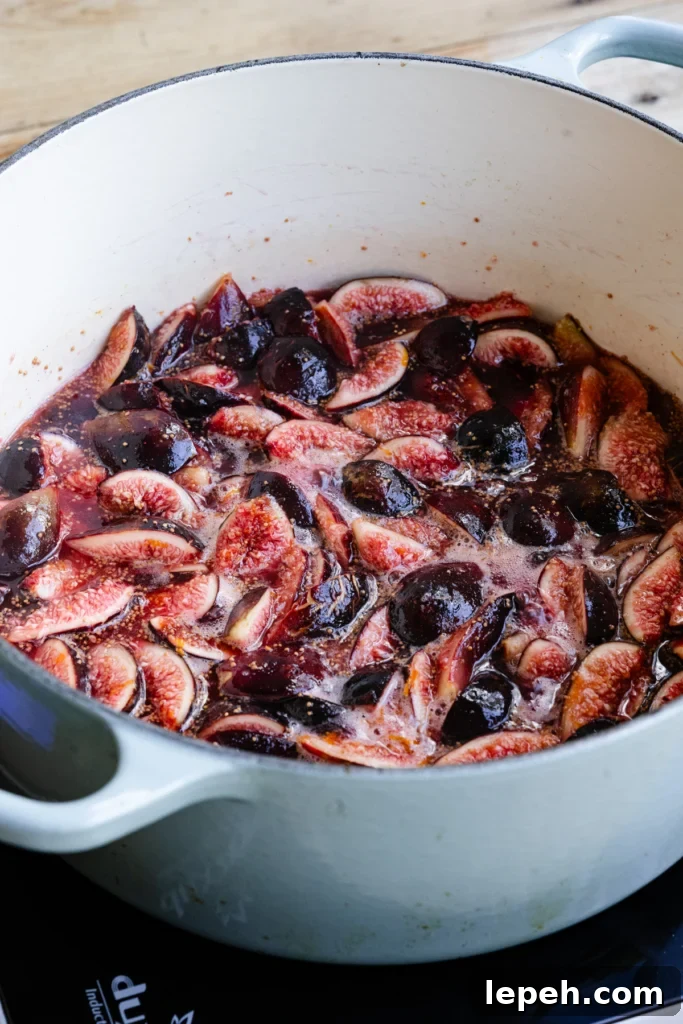
- Add citrus zest, lemon juice, water, vanilla, ginger, and sherry. Bring to a boil, then reduce heat and simmer for 25–30 minutes until thickened.
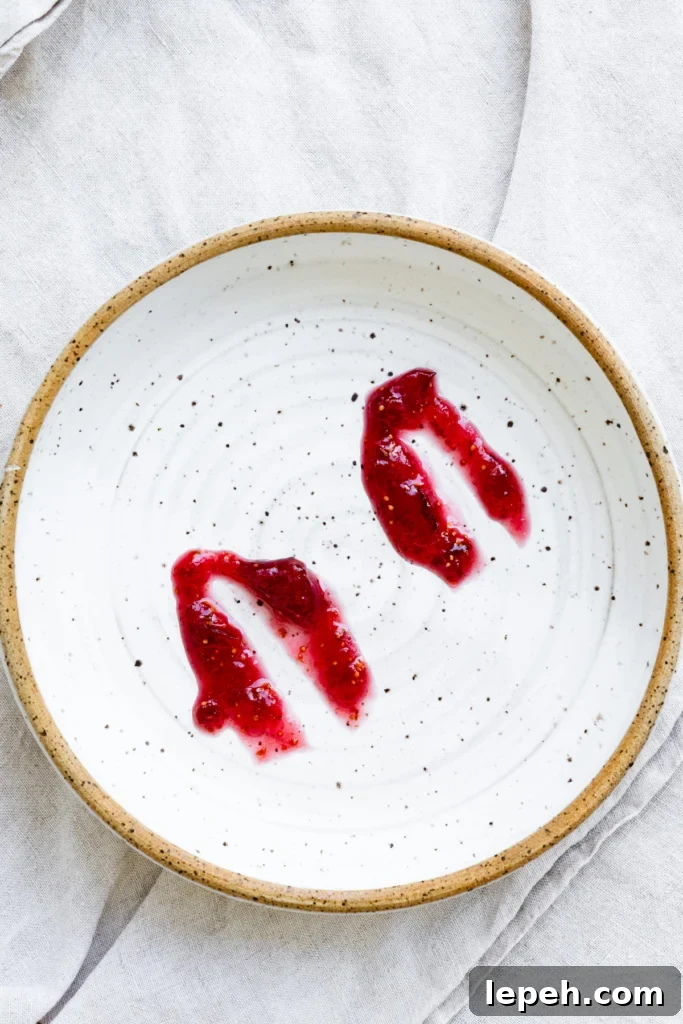
- Test for doneness by spooning a small amount onto a frozen plate and drawing a finger through it. If it runs back together, cook 3 more minutes and test again. If it stays separated and wrinkles slightly, it’s ready.
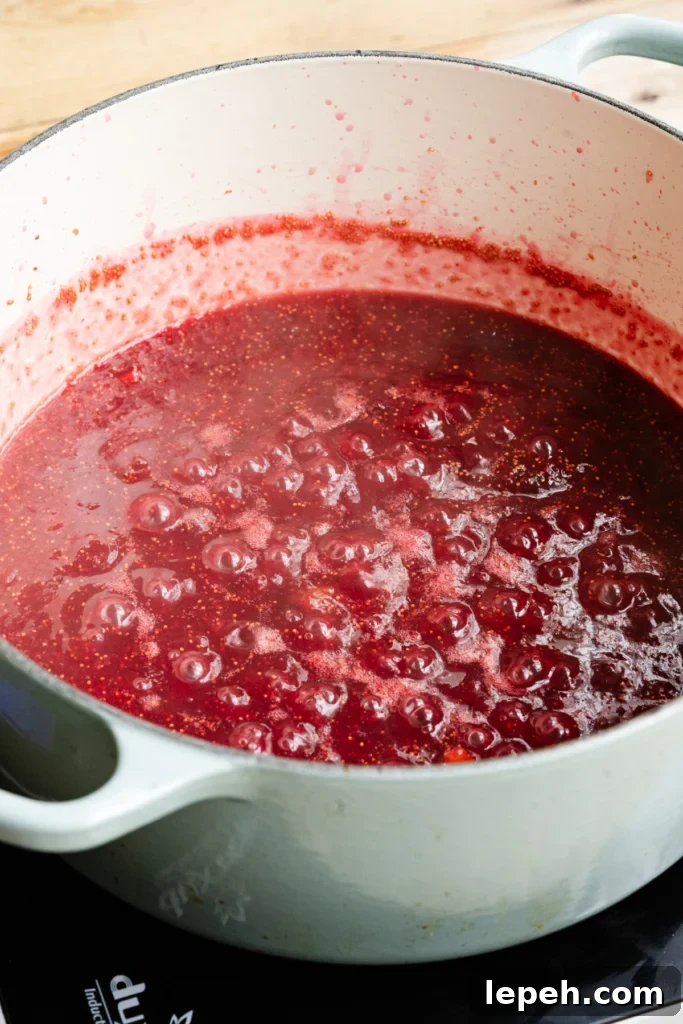
- When the jam is done, remove from heat. Keep it chunky or use an immersion blender to smooth slightly—take care to avoid splatters. Spoon hot jam into clean jars, seal tightly, and let cool.
When is homemade jam set?
There are a couple reliable ways to check if jam has set. Stay near the pot and stir occasionally while it cooks.
- Frozen plate test: Chill a small plate in the freezer before you start. When the jam has thickened, spoon a bit onto the cold plate and draw a line through it. If the jam runs back together, cook a few minutes longer and test again. If it stays separated and begins to set, it’s ready.
- Thermometer: A candy thermometer should read about 218–220ºF (103–104ºC) when the jam reaches gel stage. Thermometers can be imprecise; the plate test and your senses are often more reliable for preserving fresh flavor.
To sterilize or not?
For small batches I usually skip formal canning. The jam disappears quickly—shared with friends or spread on morning toast—so long-term shelf stability isn’t always necessary. I typically use the inversion method and keep jars refrigerated.
Use clean, heatproof glass jars intended for food storage. Reused jam jars work perfectly.
- If you plan to eat the jars within a week, simple cleaning and refrigeration is sufficient: spoon hot jam into clean jars, let cool, and refrigerate.
- Inversion method: After washing jars and lids, fill them with hot jam, seal tightly, then turn jars upside down until cool. The cooling creates a vacuum seal and the hot jam helps sanitize the headspace. Store at room temperature until opened; jam should keep for several months unopened.
- Oven method: Place jars and lids (no rubber seal) on a baking sheet and heat at 180°C/350°F for 10–15 minutes.
- Dishwasher method: If jars have rubber seals, run jars, lids, and seals through a hot dishwasher cycle to sanitize.
- Note: For long-term shelf-stable canning, consult official guidance from trusted food preservation resources.
Ways to Enjoy Fresh Fig Jam
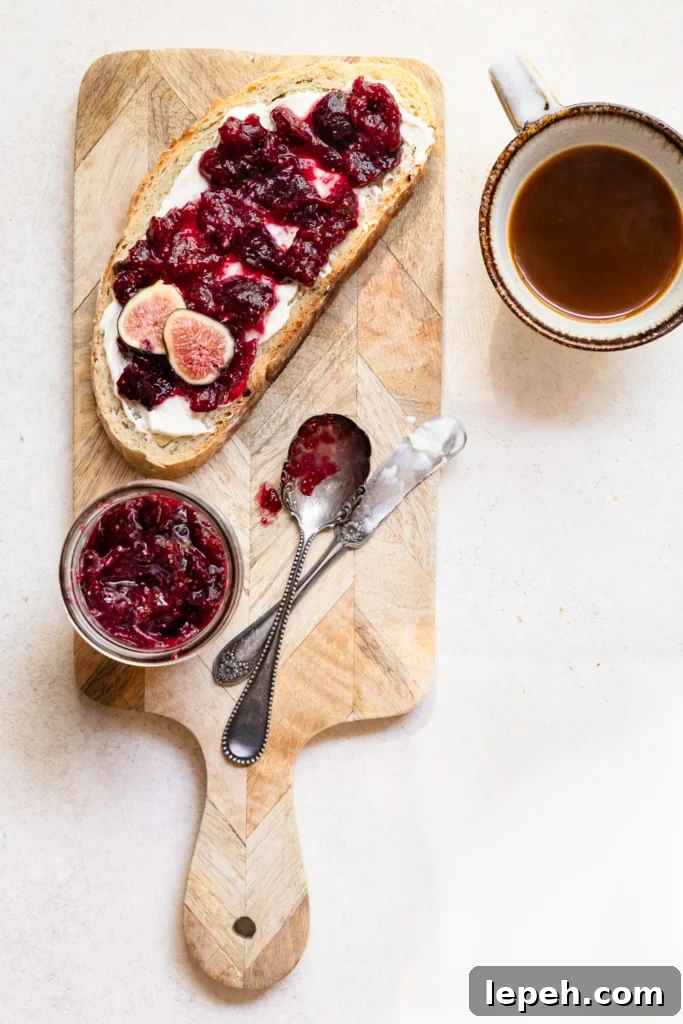
Smear fig jam on fresh bread for a simple treat. Try it on a slice spread with mascarpone or cream cheese for a richer pairing. It also works beautifully with savory breads or as a condiment for cheese boards.
Other ways to use fig jam:
- As the filling for bars or thumbprint cookies.
- Spread on warm banana or nut breads.
- As a glaze or marinade for grilled lamb chops.
- A spoonful melted over vanilla ice cream or stirred into plain yogurt.
★★★★★ Please leave a star rating and review below if you make this recipe! THANK YOU!!
Easy Fig Jam

Equipment
-
large heavy-bottomed pot
Ingredients
- 908 grams (2 pounds) purple or green fresh figs, stemmed and cut into 1/2-inch pieces
- 300 grams (1.5 cups) granulated sugar
- 120 grams (½ cup) fresh lemon juice
- 60 grams (¼ cup) water
- Zest of one fresh lemon
- Zest of one fresh orange
- 1/2 teaspoon grated fresh ginger
- 1 teaspoon vanilla bean paste or 1 vanilla bean pod, scraped
- 1 tablespoon dry sherry
Instructions
-
Place a small plate in the freezer to chill for testing doneness later.
-
In a large saucepan, toss the fig pieces with the sugar and let them rest about 20 minutes until juicy.
-
Add lemon juice, lemon and orange zest, water, sherry, vanilla, and ginger. Stir, bring to a boil over medium heat, and stir until the sugar dissolves.
-
Reduce heat to low and simmer, stirring occasionally, until the fruit is soft and the liquid becomes syrupy, about 20–28 minutes.
-
Frozen plate test: Spoon a little jam onto the chilled plate; if it runs back together, cook 3 more minutes and test again. If it stays separated and wrinkles, it’s ready.
-
Thermometer test: A candy thermometer will read about 218–220ºF (103–104ºC) at gel stage, but the plate test and visual cues help avoid overcooking.
-
Remove from heat and carefully spoon hot jam into clean, heatproof jars, leaving about 1/4-inch headspace. Seal lids tightly and invert jars to cool.
-
Once cooled, store jars in the refrigerator. Properly stored, refrigerated jam will keep for up to 3 months.
Notes
- For a few jars to be eaten soon, simple cleaning and refrigeration is fine.
- Inversion method: Fill freshly washed jars with hot jam, seal, and invert until cool to help seal lids. Store at room temperature until opened; unopened jars can last several months.
- Oven method: Heat jars and lids (no rubber seal) at 180°C/350°F for 10–15 minutes.
- Dishwasher method: Run jars, lids, and seals through a hot dishwasher cycle if they have rubber seals to sanitize them.
- Note: For long-term, shelf-stable canning follow official food preservation guidance.