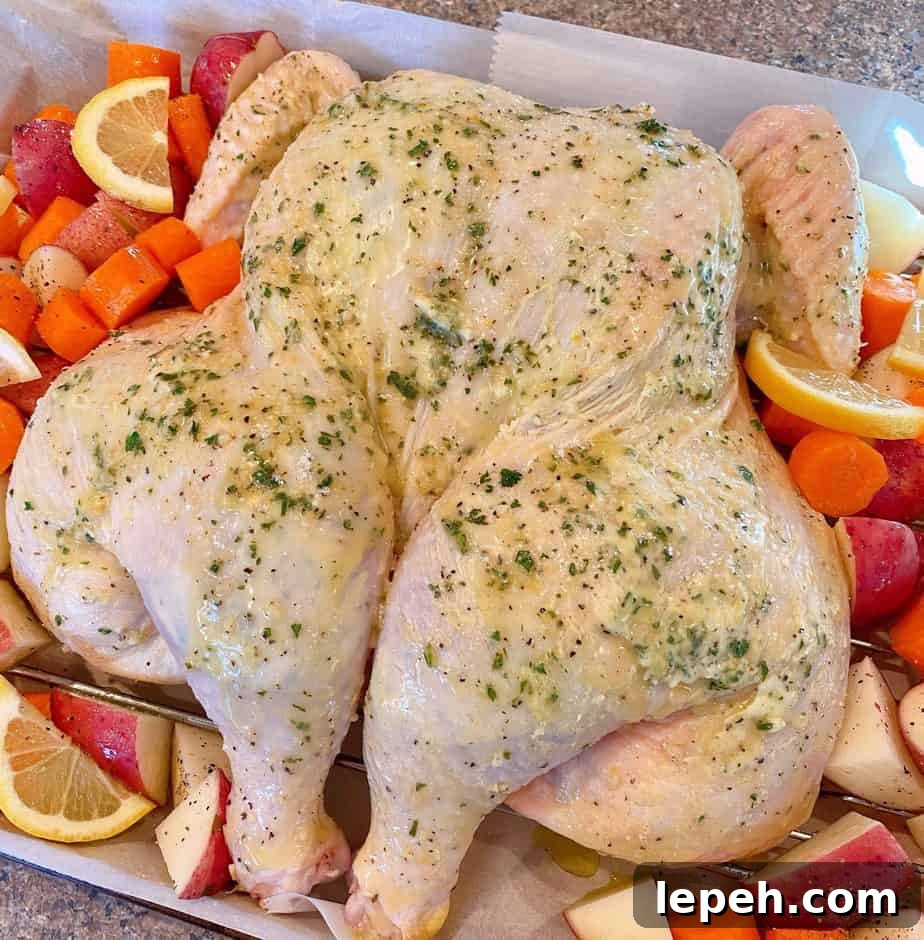
Spatchcock chicken, also known as butterflied chicken, is a technique that removes the backbone so the bird can open and lie flat. This reduces cooking time and helps produce a tender, juicy roast.
Spatchcocking—or butterflying—a whole chicken has grown in popularity because it’s simple and delivers consistently moist results. Flattening the bird evens out cooking, shortens roasting time, and encourages crisp, evenly browned skin.
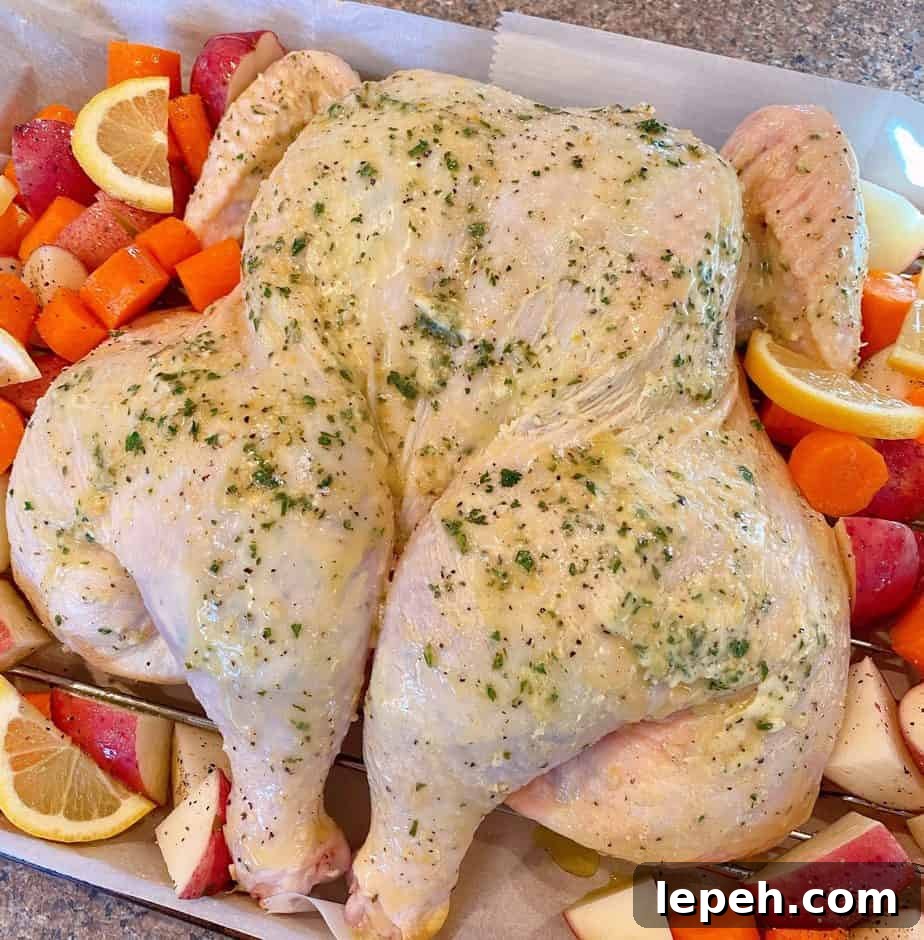
Table of Contents
Toggle
Why Spatchcock or Butterfly Chicken?
Whole chickens contain parts that cook at different rates: thighs and legs take longer than breasts. When roasted whole, breasts can dry out before the darker meat is done. Spatchcocking evens the cooking surface so the entire bird reaches the correct temperature at the same time, producing juicier breast meat and crispier skin.
Flattening the bird shortens the cook time and maximizes even heat exposure. The result is a tender, well-browned roast with deliciously crisp skin.
How to Spatchcock or Butterfly a Chicken
Start by removing the neck and giblets from the cavity; save them for stock or discard. Rinse the chicken inside and out, then pat it dry with paper towels.
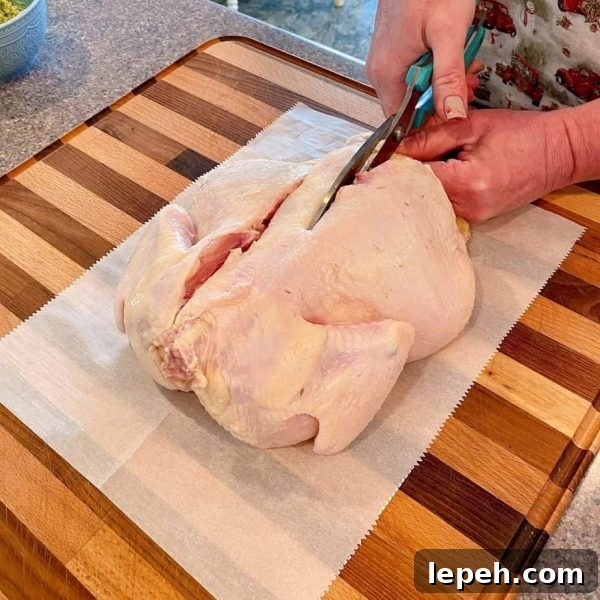
Place the chicken breast-side down on a cutting board with the legs pointing toward you. Grasp the tail for leverage. Using poultry shears or sturdy kitchen scissors, cut along one side of the backbone from tail to neck.
Tip: Lining the board with parchment makes cleanup easier and helps protect the surface.
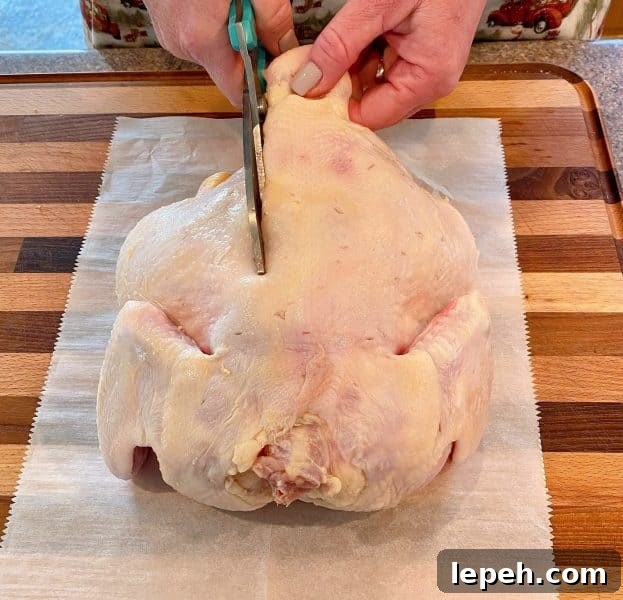
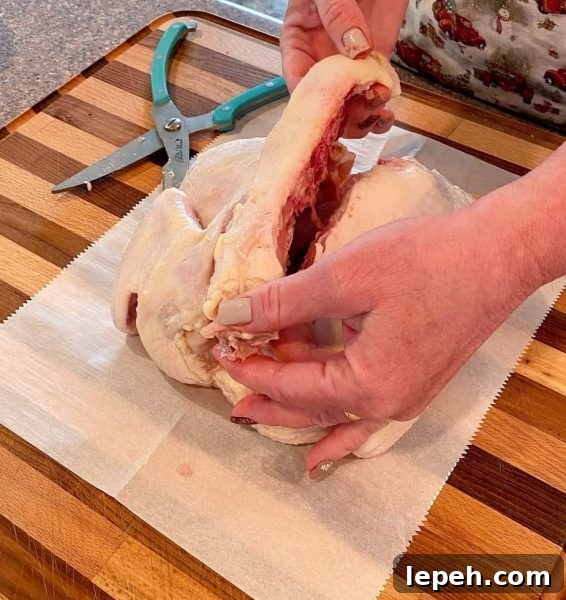
Cut along the other side of the backbone in the same way, then remove the backbone and set it aside for stock or discard it.
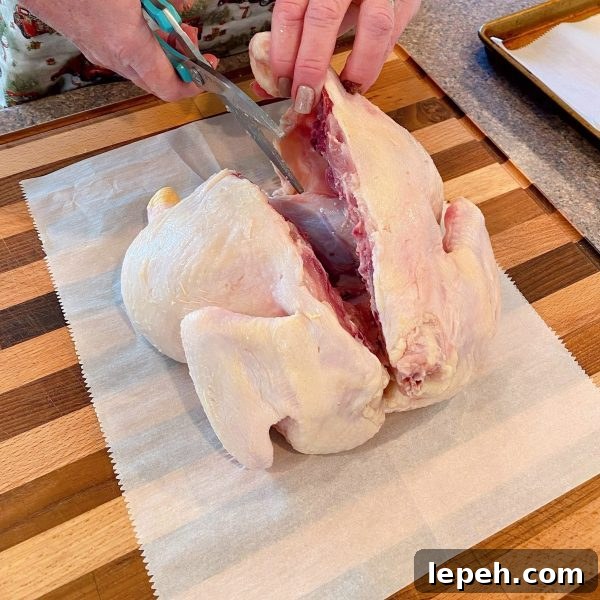
With the backbone removed, open the bird and prepare to flatten the breastbone.
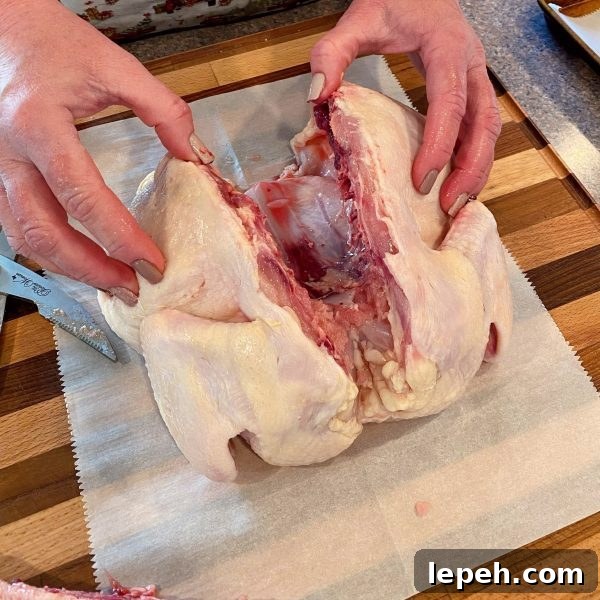
How To Break the Breastbone
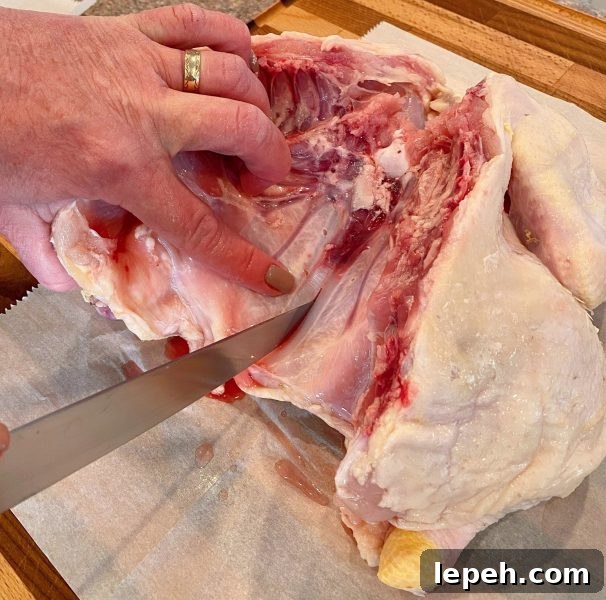
To fully flatten the chicken, cut through the tip of the white cartilage on the breastbone. That small slice makes it much easier to press the bird flat.
Flip the chicken breast-side up and place your palms on the breastbone, pressing firmly to collapse it and ensure the bird lies as flat as possible.
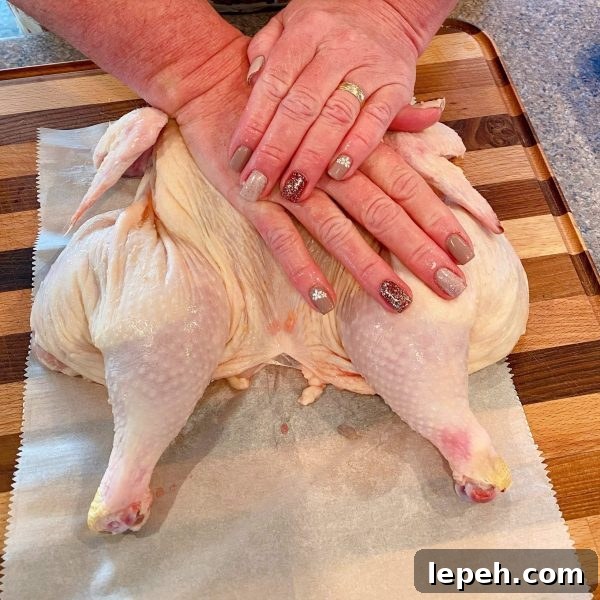
You now have a properly butterflied chicken. From here you can season simply with olive oil (or melted butter), salt, and pepper, or apply your favorite spice rub.
Once flattened, the chicken is ready for the oven or the grill. Spatchcocking is especially useful for barbecue, since the bird cooks quickly and evenly over direct or indirect heat.
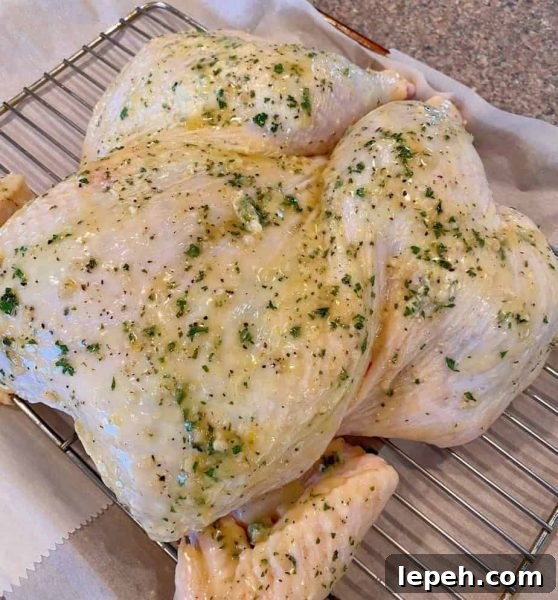
Try a lemon-garlic baste with roasted vegetables for a simple, year-round meal. The technique works well with many flavor profiles and side dishes.
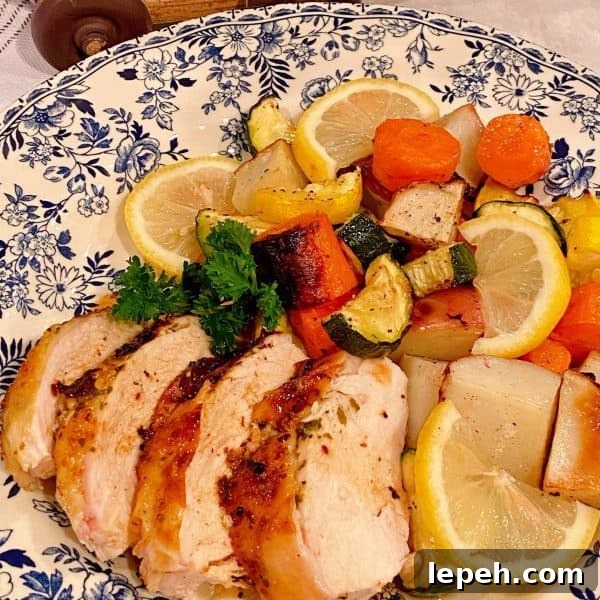
Spatchcocking is straightforward: remove the backbone and split the breastbone, and you’ll have a bird that roasts faster and more evenly.
Other Great Tips for Preparing Spatchcock Chicken
- You can butterfly the chicken directly in the roasting pan if you prefer—just be sure to use strong poultry shears. This saves an extra dish and keeps juices contained.
- For extra-crispy skin, salt the chicken and leave it uncovered in the refrigerator overnight (a simple dry brine). Pat the skin dry and add a final sprinkle of salt just before roasting.
- After butterflying, marinate the chicken in a zip-top bag for an hour or up to overnight. Pat it dry before cooking to promote even browning.
Thanks for reading—give spatchcocking a try and enjoy faster, juicier roast chicken with beautifully crisp skin.
Happy Nesting!