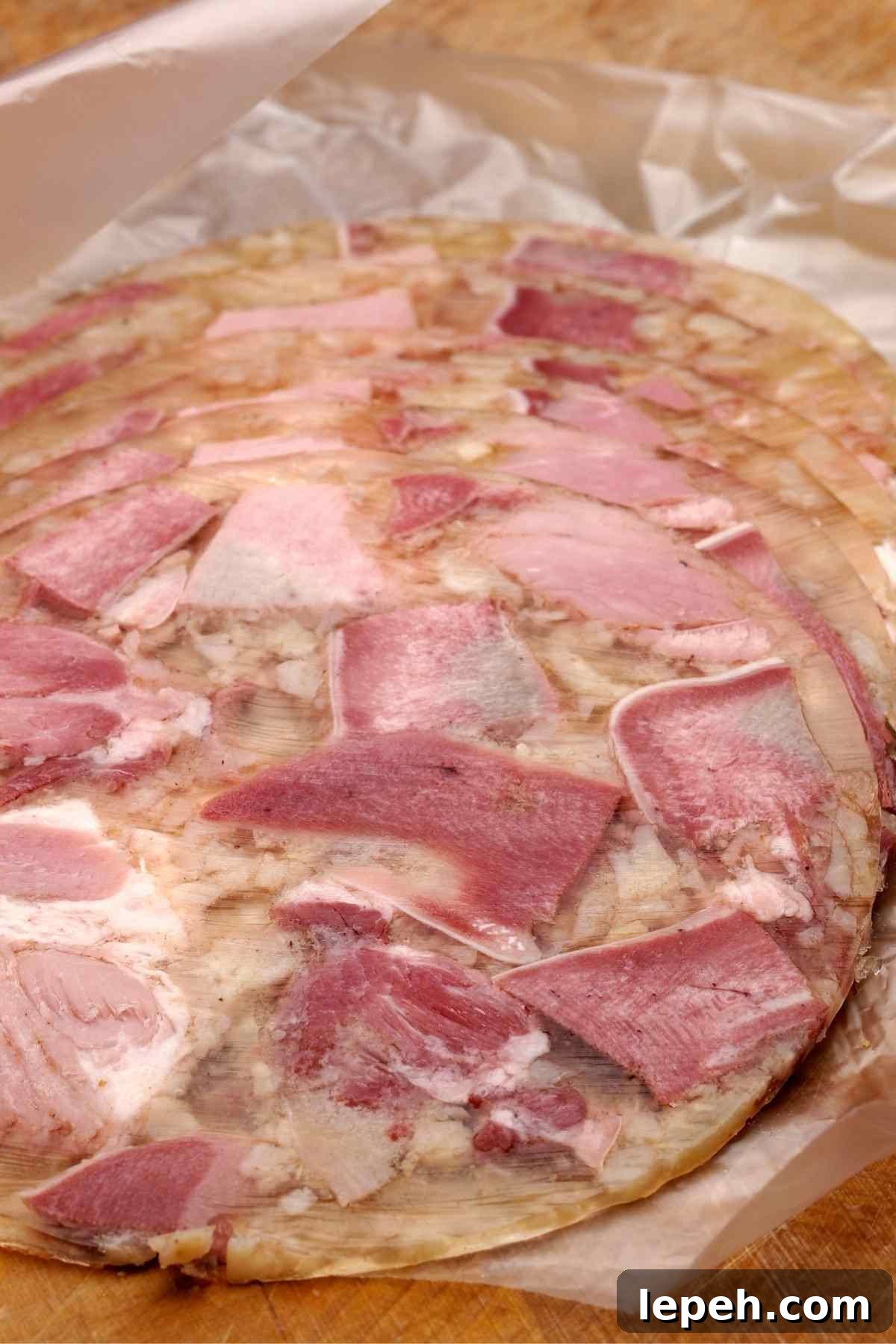
The name says it all! If you’re not familiar with Head Cheese, you’re about to be. It’s a traditional European meat jelly made from the head of a pig or calf. Despite its name, it looks more like a large sausage or a cold-cut terrine and contains no dairy.
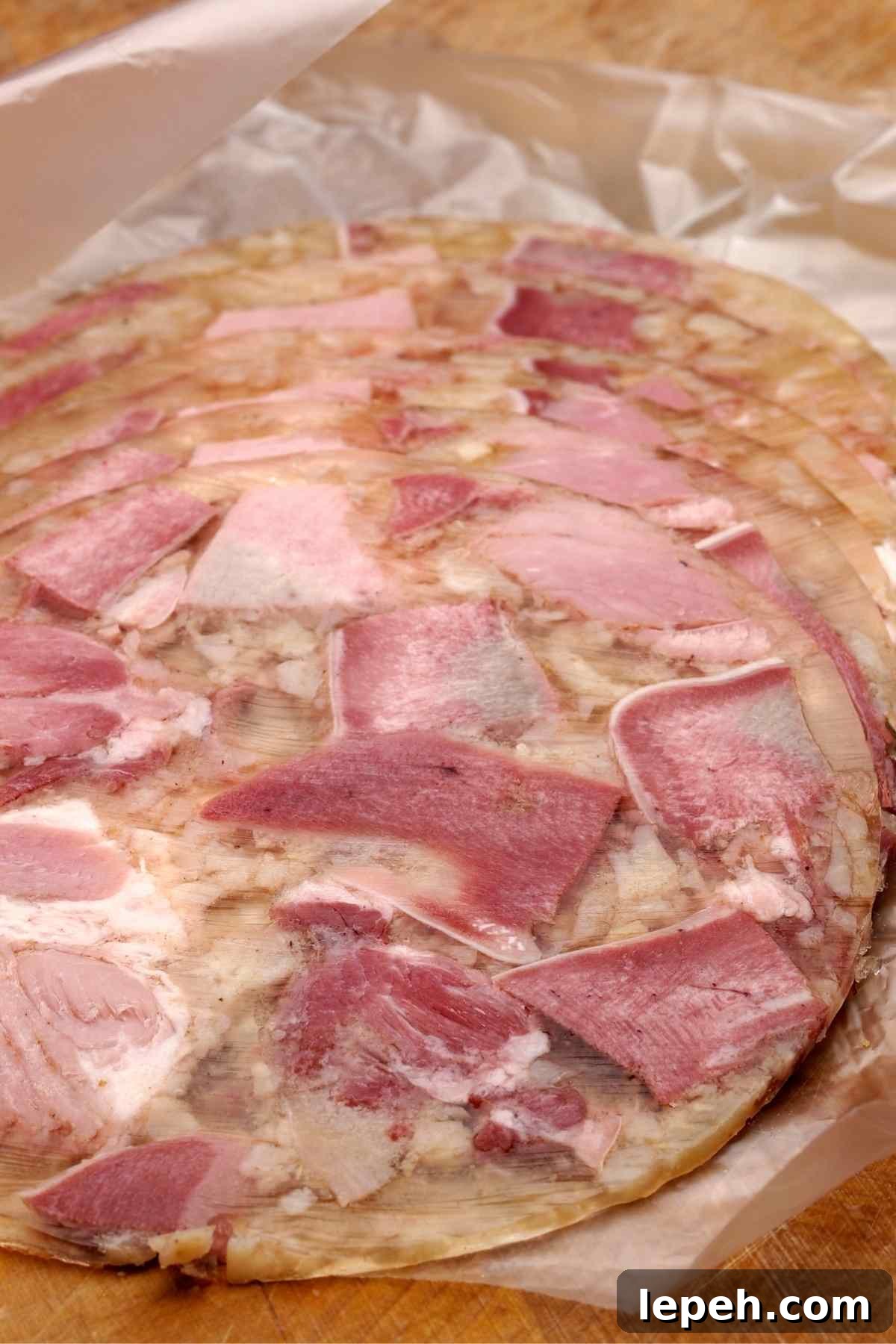
Head cheese is best served chilled, like pâté, or sliced on a sandwich. Read on to learn what it is, how it’s made, where to find it, and how to enjoy it.
What Is Head Cheese?
Despite the misleading name, head cheese contains no dairy. It is a jellied meat product traditionally made from the head of a pig or calf and sometimes from other animals. Trimmings commonly include jowls, tongue, and occasionally heart or feet.
The cooked mixture is formed into a sausage shape or pressed into a mold to create a terrine. It is served cold and sliced, which keeps the natural gelatin from the meat firm and stable.

What Is In Head Cheese?
Recipes for head cheese vary widely by region and tradition. Common varieties include:
- Regular head cheese – primarily pork head meat, often including jowls, skin, snout, feet, and gelatin.
- Tongue head cheese – made mainly from cured tongue, which gives a pink color when salt and nitrite are used.
- Blood head cheese – enriched with blood for a darker color.
- Sulz – a classic Eastern European version that uses bone-in pig’s feet set in aspic.
- Souse – common in places like Australia, often flavored with vinegar.
Regional tastes also shape the dish. In Louisiana, head cheese might be seasoned with vinegar and hot sauce, while Pennsylvania Dutch versions often include pig’s feet, vinegar, and tongue.
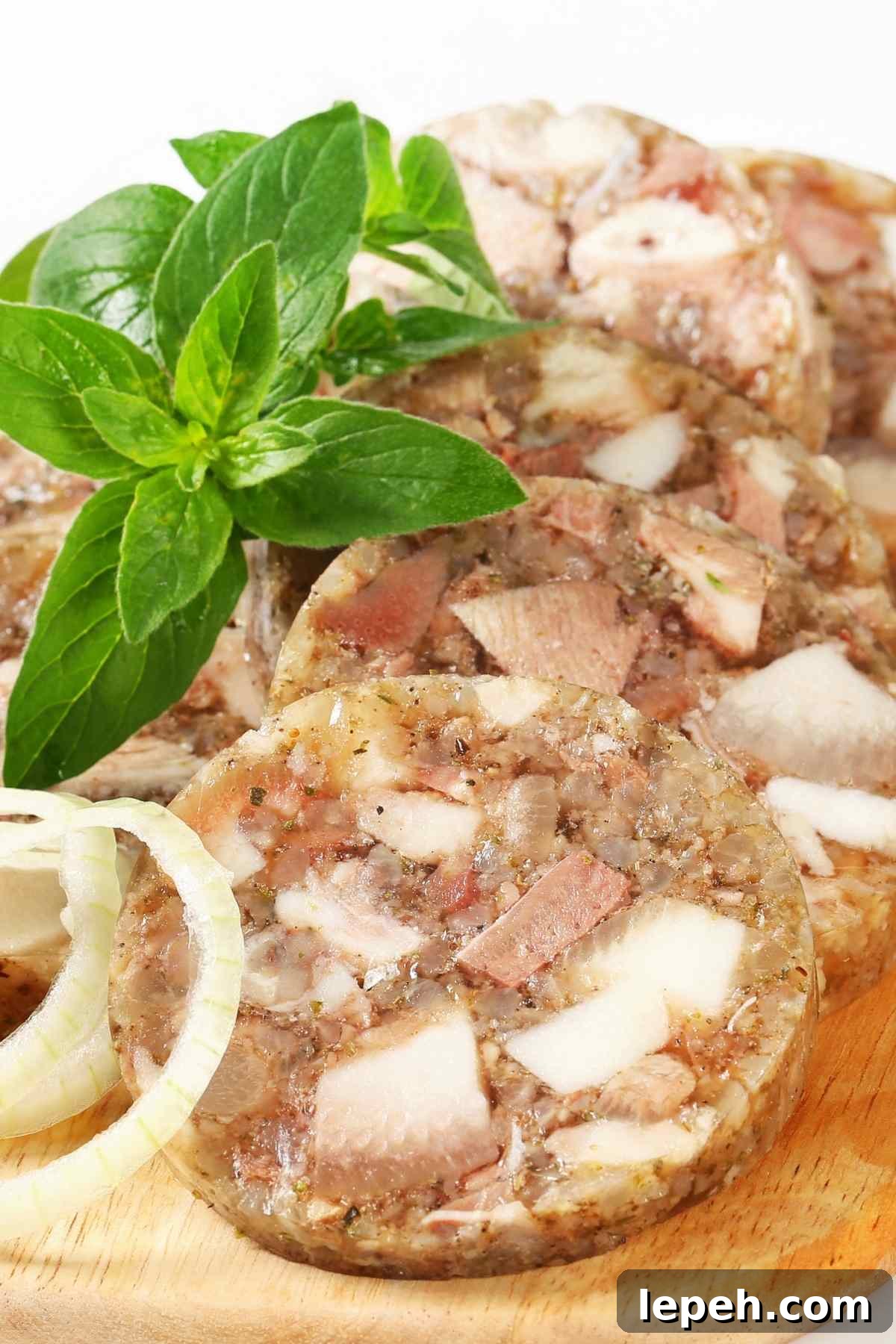
How to Make Hog Head Cheese
Preparing head cheese is a labor-intensive process but straightforward in concept. The head must be thoroughly cleaned and prepared: remaining hair is scraped away, the head may be split, and eyes and ears are removed. Trimmings such as tongues and feet are also cleaned and prepared.
Simmer the prepared trimmings in cold water, keeping the liquid just below a rolling boil for two to three hours or until the meat is very tender. Maintain a couple of inches of water above the meat and skim any scum that forms on the surface.
When the meat is tender, remove it from the broth. Boiled skins should be soft but remain intact; take them out while still warm. Debone the meat carefully and let it cool, then cut the skin into strips.
Strain the cooking liquid through a double layer of cheesecloth into a large bowl and repeat until clear—the clarity of the jelly makes a noticeable difference in the finished product. Chop the meat into small dice (about 1/4 to 1/2 inch), season with salt, pepper, and any optional aromatics like onion, garlic, thyme, or mace, and mix well.
Transfer the meat to a terrine mold or stuff it into cleaned pig stomach if you prefer a sausage form. Pour in the lukewarm, strained broth so it surrounds the meat, then weight the top to compress the mixture. Allow it to cool to room temperature before moving it to the refrigerator to chill overnight until fully set. Slice with a sharp knife and serve chilled.
Where Can I Buy Head Cheese?
Because of the work involved in making it, head cheese can be more costly than mass-produced sausages. Your best bet for finding it is at European delis and butcher shops that cater to Central and Eastern European or Italian communities.
How to Eat Head Cheese
Head cheese is versatile. Serve it thinly sliced on sandwiches, include it on charcuterie boards, or enjoy it simply on crackers. It pairs well with pickles, mustard, or a splash of vinegar to cut the richness.
You May Also Like
- Easy Ground Pork Recipes
- Best Sandwich Ideas

Homemade Head Cheese Recipe
Rate Recipe
Print Recipe
Ingredients
- 1 pork head, split in half and soaked 1–2 hours to remove blood
- Cold water, to cover
- Salt and pepper, to taste
- Seasonings, onion, garlic, thyme, cloves or mace, nutmeg, marjoram (optional)
- 1–2 tablespoons vinegar, optional for a sour note
- Optional pig stomach
Instructions
- Prepare the meat: clean hair or skin, remove excess fat, blanch tongues and remove outer layers, and rinse heart if used.
- Place the trimmings in a large stock pot and cover with 1–2 inches of cold water.
- Bring to a boil, then skim off any grey scum that appears on the surface.
- Reduce heat to low, cover, and simmer for 2–3 hours or until the meat is very tender.
- Remove meat and bones from the pot and set on a cutting board.
- Strain the hot broth through a double-layered cheesecloth into a bowl, repeating until clear.
- Pick the meat clean of bones and gristle, then chop into ¼–½ inch dice and combine with salt, pepper, and optional seasonings.
- Place the mixture into a terrine mold or cleaned pig stomach for a sausage form, then pour in the lukewarm strained broth.
- Weight the mold or tie the ends of the stomach to compact the filling, cool to room temperature, then refrigerate overnight to set.
- Slice with a sharp knife and serve chilled.
Notes
- Pig stomach: Clean thoroughly by turning it inside out, rinsing with water, trimming fat, and tying closed with butcher’s twine before stuffing.
- Cured meats: Use cured trimmings if you want a pink color in the finished head cheese.
Nutrition information is an estimate and will vary with ingredients and preparation methods.
Like this recipe? Rate and comment below!