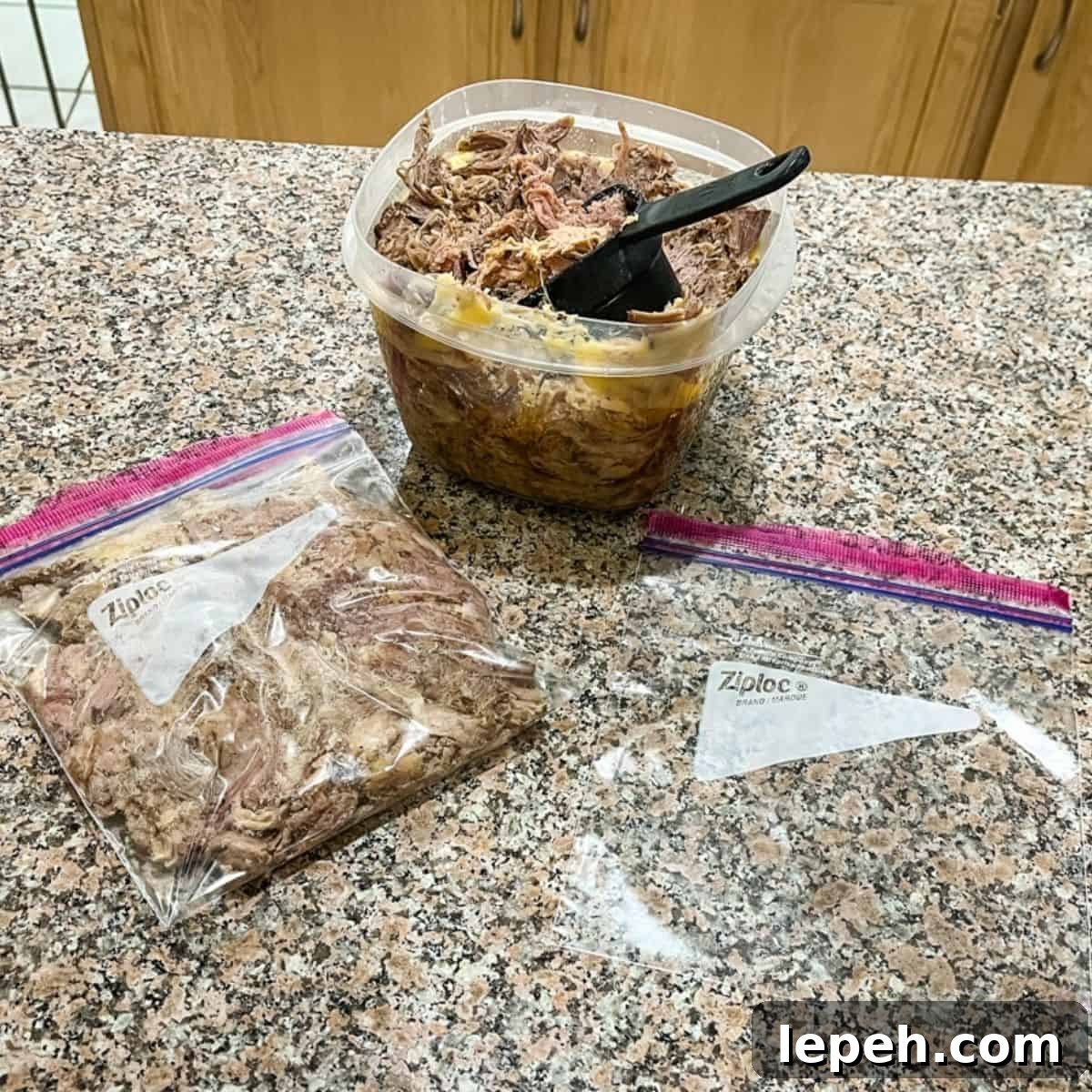
Do you have more pulled pork than you can eat before it spoils? You’re in luck — with a few freezer bags and a marker you can preserve it easily.
Pork shoulder (also called pork butt, Boston butt, or pork rump roast) is a flavorful, budget-friendly cut. I often buy it on sale and make large batches in the slow cooker.
It’s perfect for feeding a crowd, but because pork shoulder yields so much meat, leftovers are common. And nobody wants to eat the same pulled pork sandwich every day.
This guide explains how to freeze pulled pork properly so your effort doesn’t go to waste and you always have cooked pork ready for sandwiches, tacos, or other meals.
Have leftover chicken instead? The methods are very similar, and I cover freezing rotisserie chicken in a separate guide.
No time to read now? Pin it for later!
This post contains affiliate links, which means I may earn a small commission at no extra cost to you if you make a purchase through certain links.
Making Pulled Pork
Pulled pork can be made several ways. My favorite is the slow cooker because it’s hands-off and dependable. Smoking is another excellent method for barbecue fans. The important part for tender, shreddable pork is cooking low and slow; this usually brings the meat above the 145°F minimum and renders it fall-apart tender.
If you expect leftovers, avoid cooking the pork in a heavy layer of barbecue sauce. A dry spice rub keeps the pork’s flavor front and center and makes the meat more versatile for future dishes. You can always add sauce later when serving.
What Can I Make with Leftover Pulled Pork?
Leftover pulled pork transforms easily into new meals. Popular options include tacos, taquitos, pork fried rice, rice bowls, burritos, nachos, empanadas, egg rolls, pot stickers, crescent sandwiches, pasta dishes, sliders, salads, and classic barbecue sandwiches.
Before Freezing
Let pulled pork cool to room temperature before freezing. You can keep cooked pork in the refrigerator for 3–5 days in an airtight container, but I recommend freezing it by day three to preserve quality.
Choose bag sizes based on how much you’ll use per meal. For example, some carnitas tacos call for about 2 cups of pork. Freezing in several smaller portions is better than one large block because refreezing can degrade flavor and increase freezer burn risk.
Use quart freezer bags for 1–3 cup portions and gallon bags for 4 cups or more.
Freezing Instructions
When the pork is cooled or refrigerated, gather quart or gallon freezer bags and a permanent marker. A vacuum sealer works well if you have one. A measuring cup helps portion meat consistently.
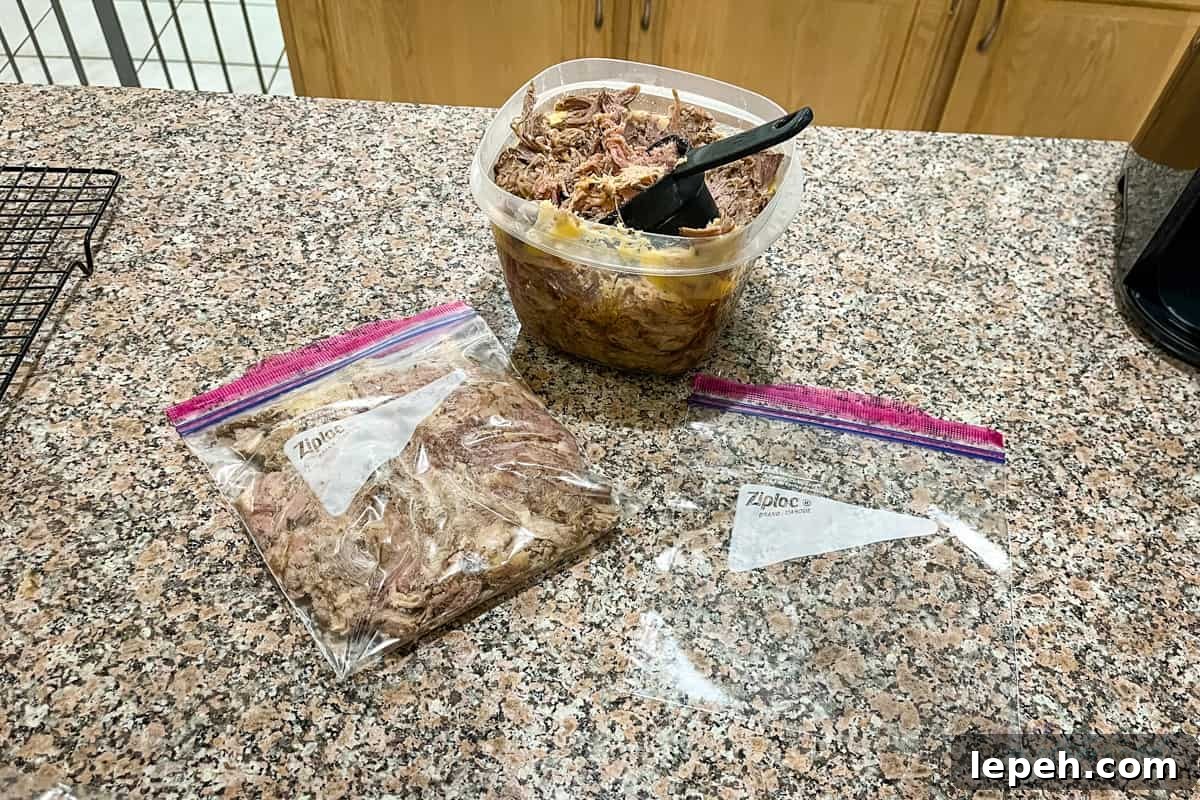
Scoop one meal’s worth of pork into a bag with some of the cooking juices to keep it moist. Flatten the meat with your hands or a rolling pin, then close the bag about three quarters of the way as you work to remove air.
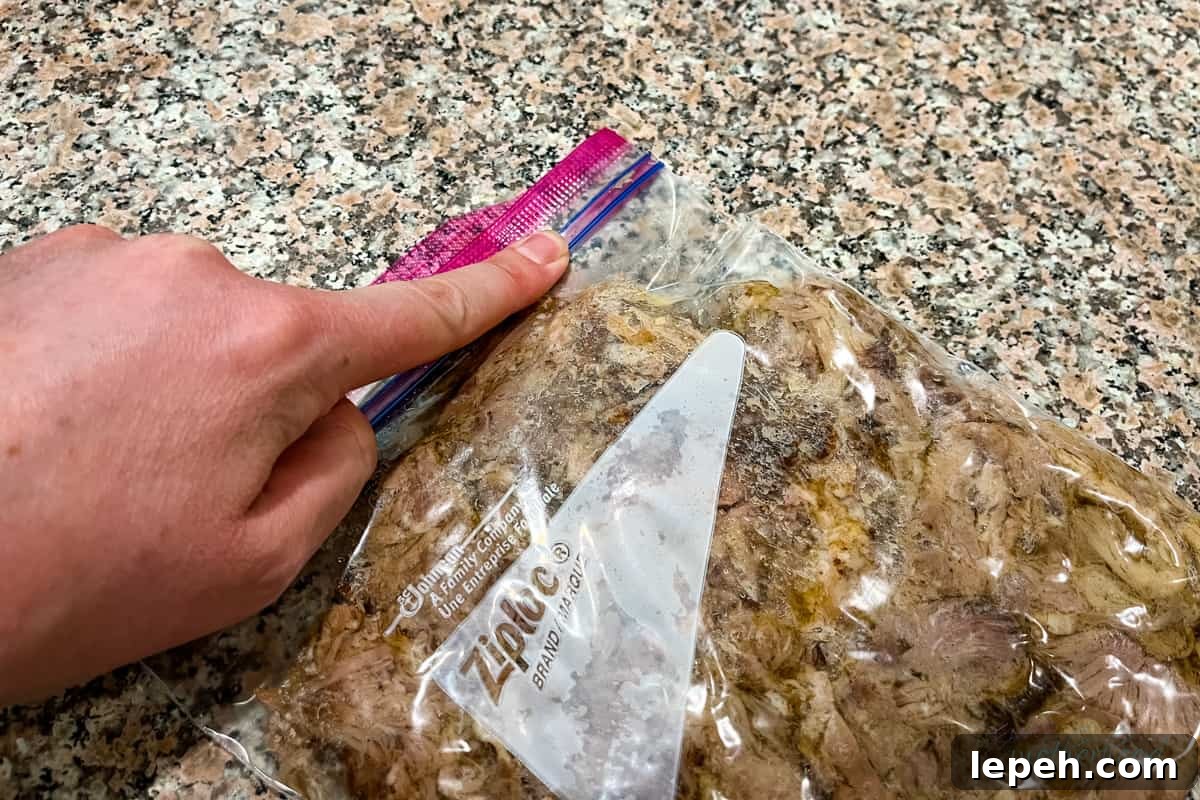
Press the meat into an even layer, pushing into corners and edges while squeezing out excess air. Minimizing air contact helps prevent freezer burn.
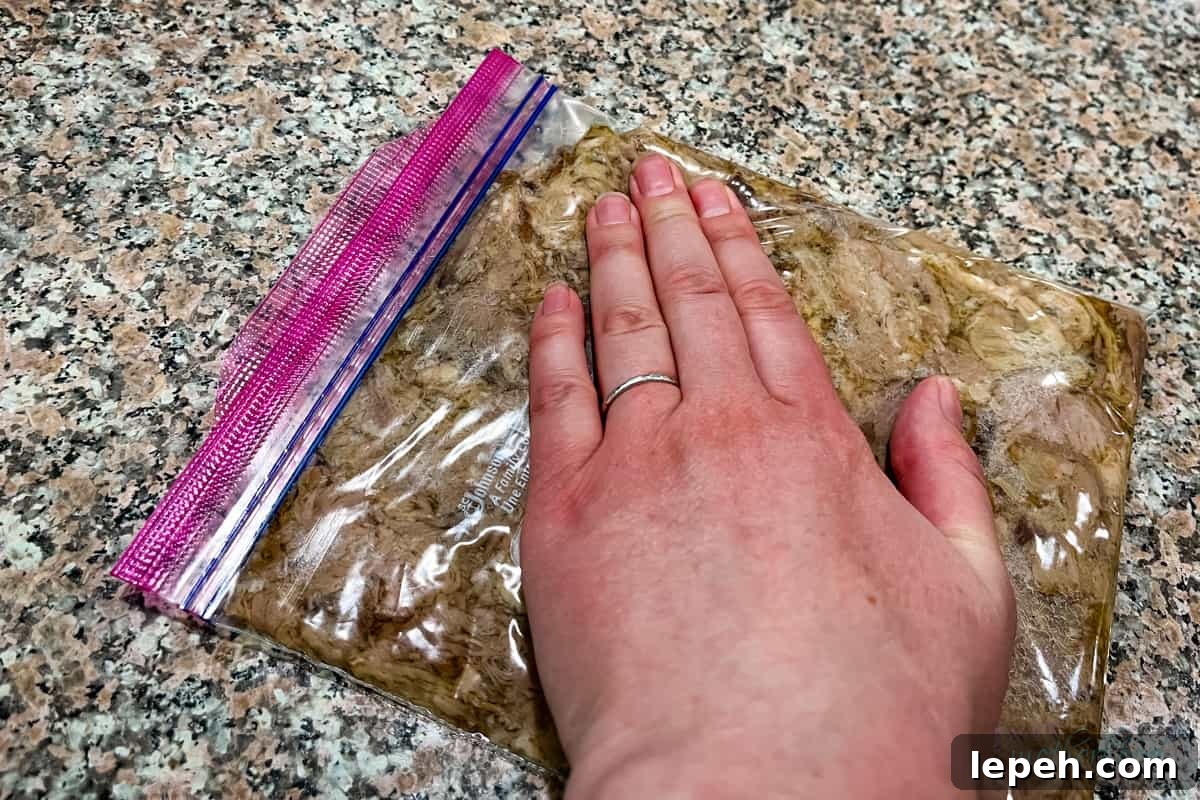
Seal the bag, label it with the amount and date, and lay it flat in the freezer to freeze quickly and evenly. Once solid, you can store the bags upright or on their sides to save space.
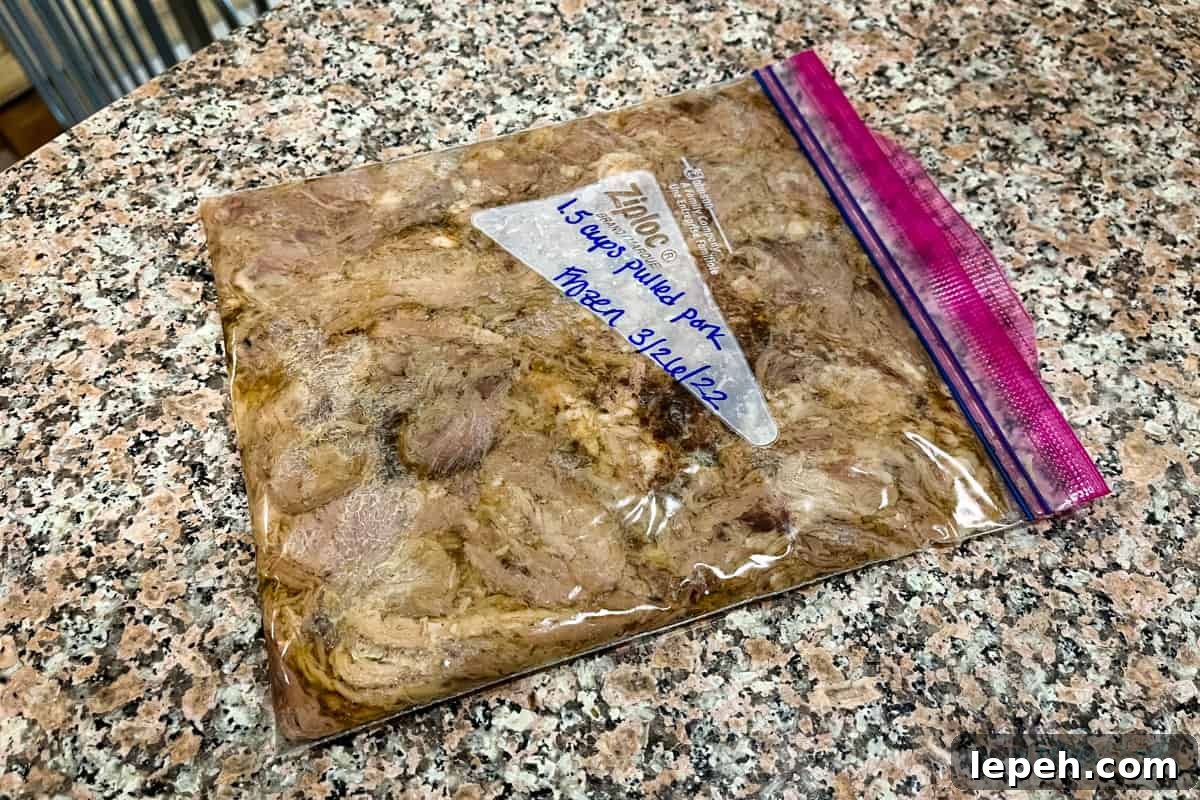
If you don’t have freezer bags, use a freezer-safe container. Pack the pork tightly, press plastic wrap directly onto the meat to remove air, label, and freeze. Properly stored, cooked pulled pork will keep in the freezer for up to three months with good quality.
Defrosting Instructions
The best method to thaw frozen pulled pork is in the refrigerator. Place the sealed bag on a rimmed plate or in a shallow container to catch any leaks and let it thaw on a shelf. Thawing in the fridge allows you to safely refreeze if plans change, although repeated freezing reduces quality.
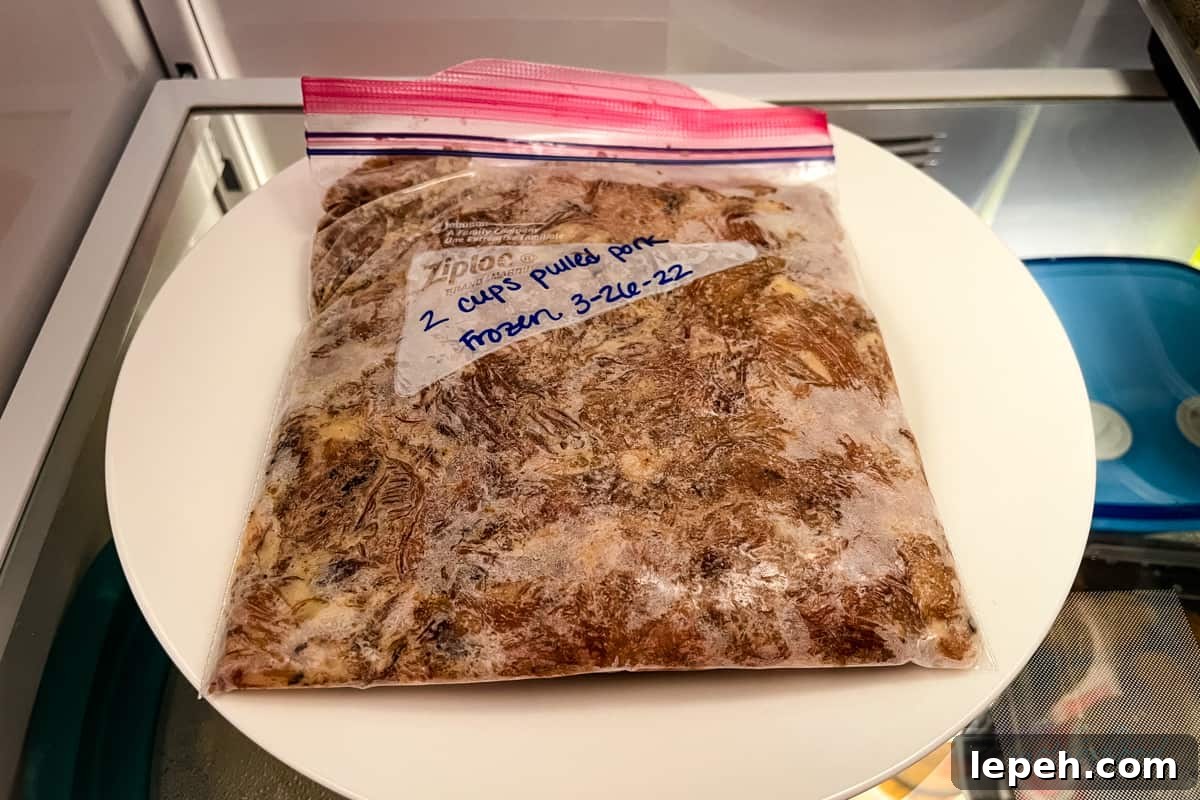
A faster option is to thaw the bag in cold water, changing the water every 30 minutes. This maintains good quality but because the temperature changes faster, it’s not recommended to refreeze meat thawed this way.
You can also defrost and reheat using sous vide if your bags are suitable for immersion. Submerge the sealed bag and heat to serving temperature, following your sous vide appliance instructions.
Reheating Instructions
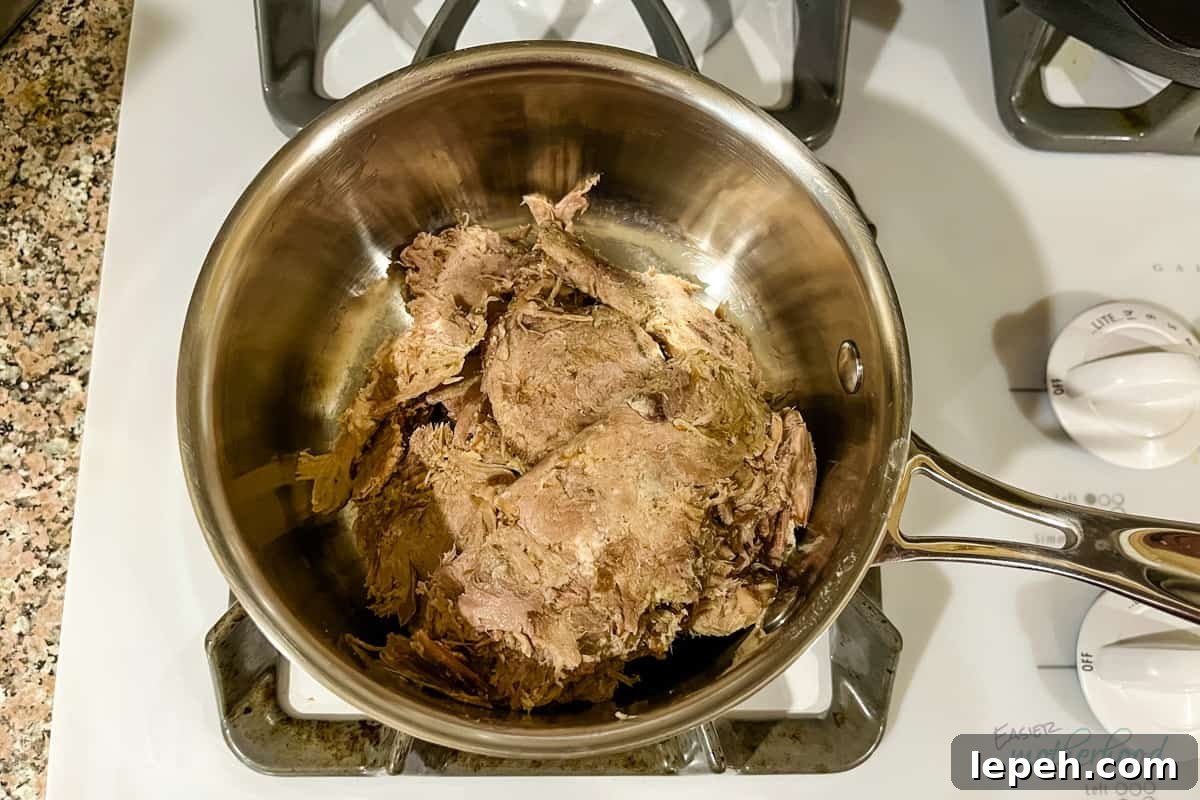
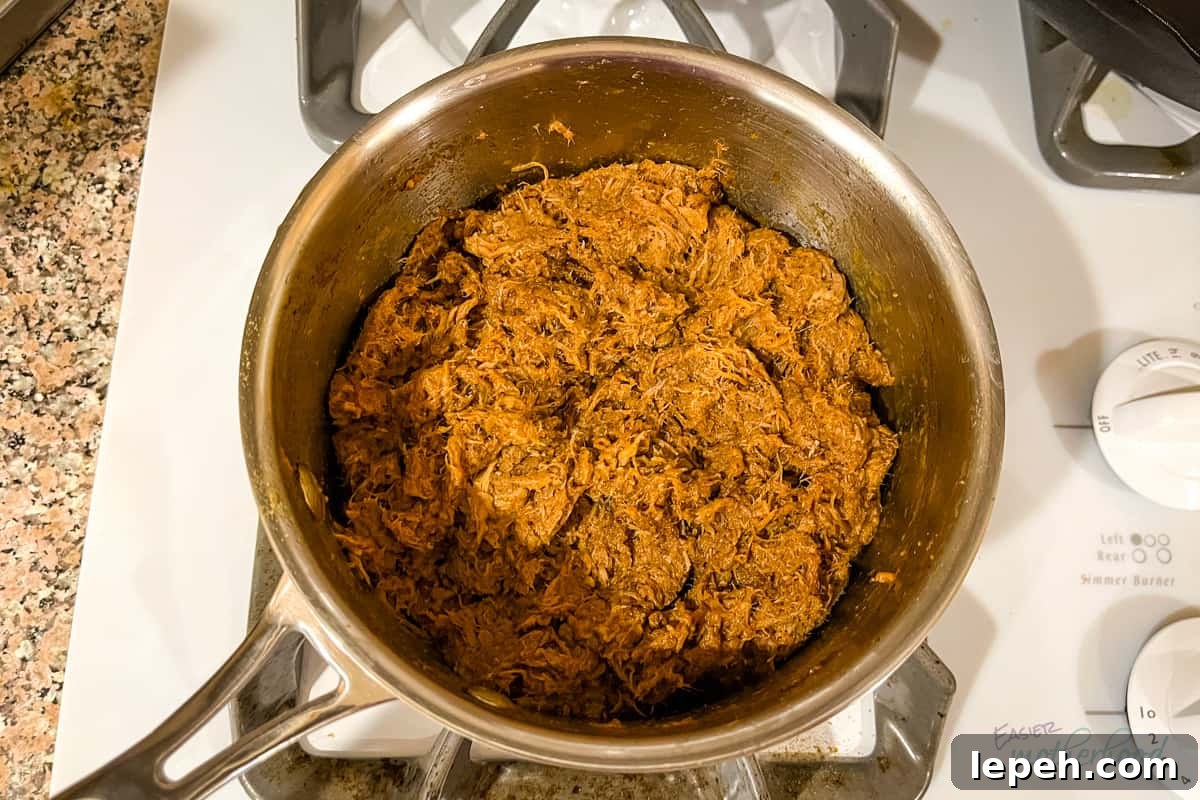
For the best texture and flavor, reheat pulled pork on the stove. Place the meat in a saucepan with a few tablespoons of water, warm over medium heat until it reaches at least 145°F.
You can also reheat in a 225°F oven. Place pork in a casserole dish or oven-safe pot, cover with foil or a lid, and heat until warmed through (about 20 minutes depending on quantity).
The microwave works in a pinch: place pork with 1 tablespoon of water per cup in a microwave-safe dish, cover, and heat in short intervals until hot. Times vary by appliance.
If you’re adding spices or a finishing sauce, add them while reheating so the flavors meld. For example, a pan of reheated pulled pork can easily become carnitas tacos with a few extra seasonings.
Freezing Raw Pork Roast
If a raw roast is too large for one meal, cut it in half and cook one portion while freezing the other. To freeze raw pork, wrap the roast in plastic wrap, then in heavy-duty aluminum foil. If it fits, place it in a freezer bag, or add another layer of wrap. Label and freeze for up to six months.