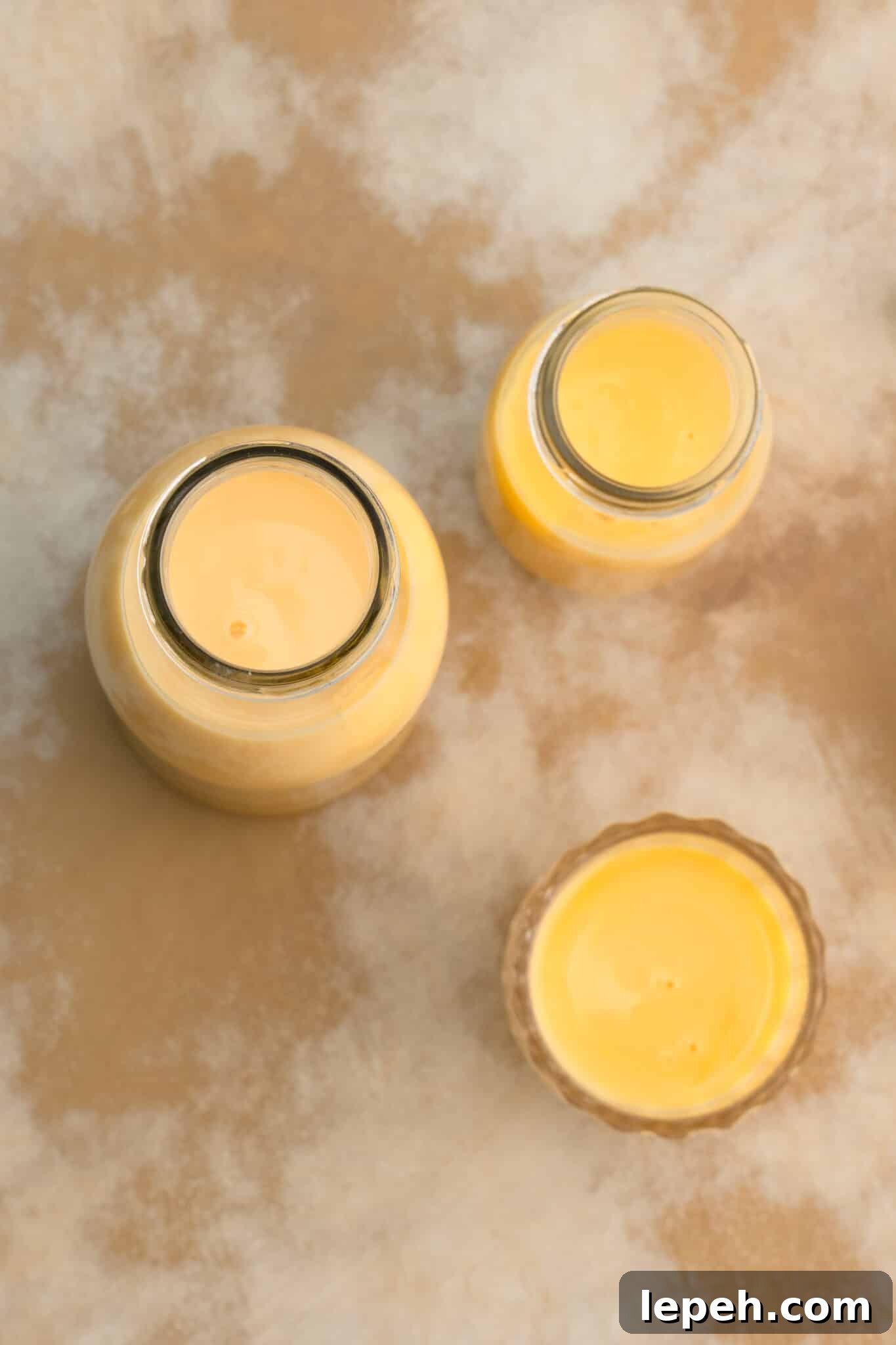
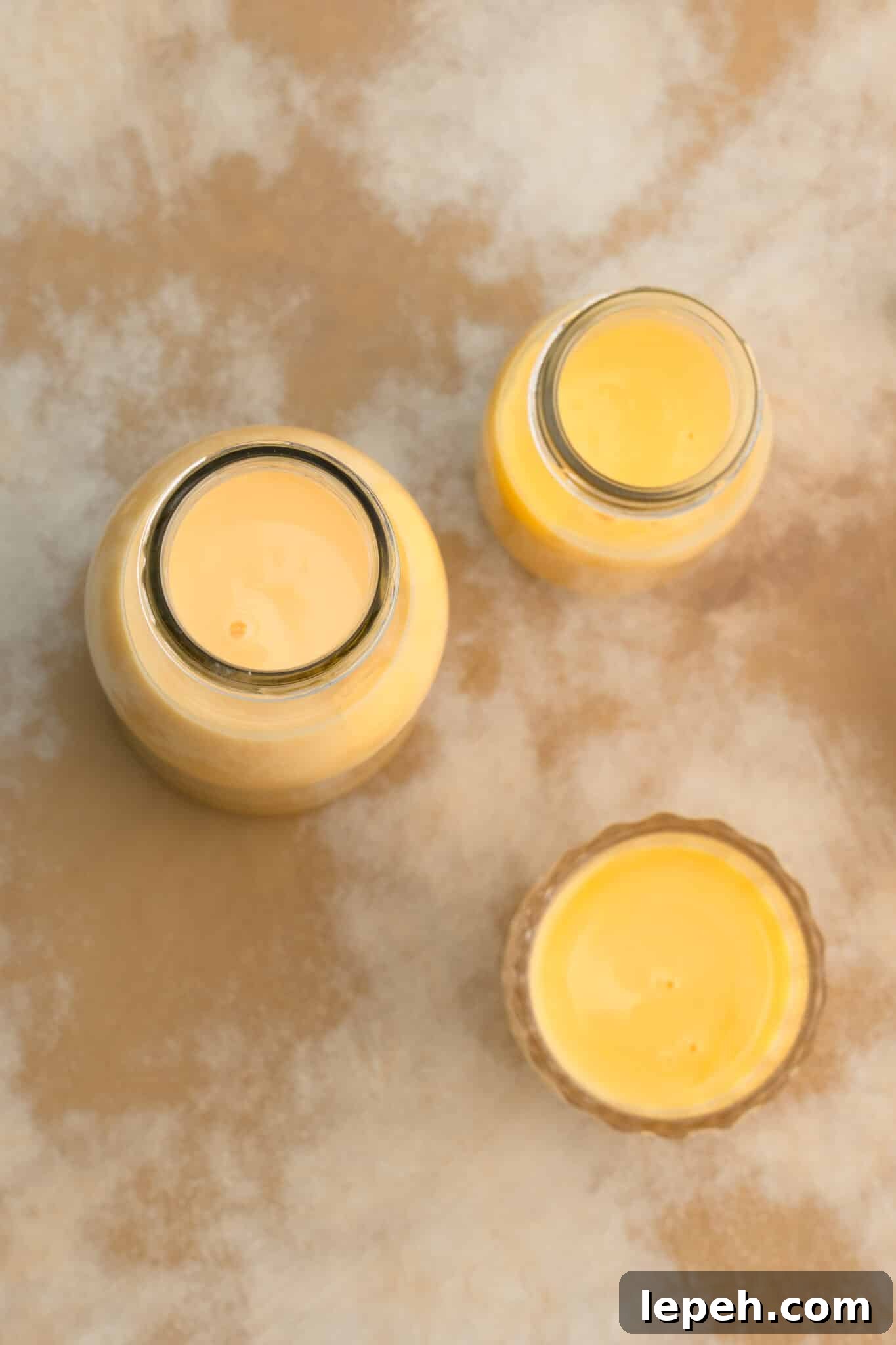
Who would have guessed eggnog could be this delicious? I always thought of it only as an ingredient for baking, but homemade eggnog is a revelation—richer and more flavorful than the store-bought versions.
Why Homemade Eggnog Is Better
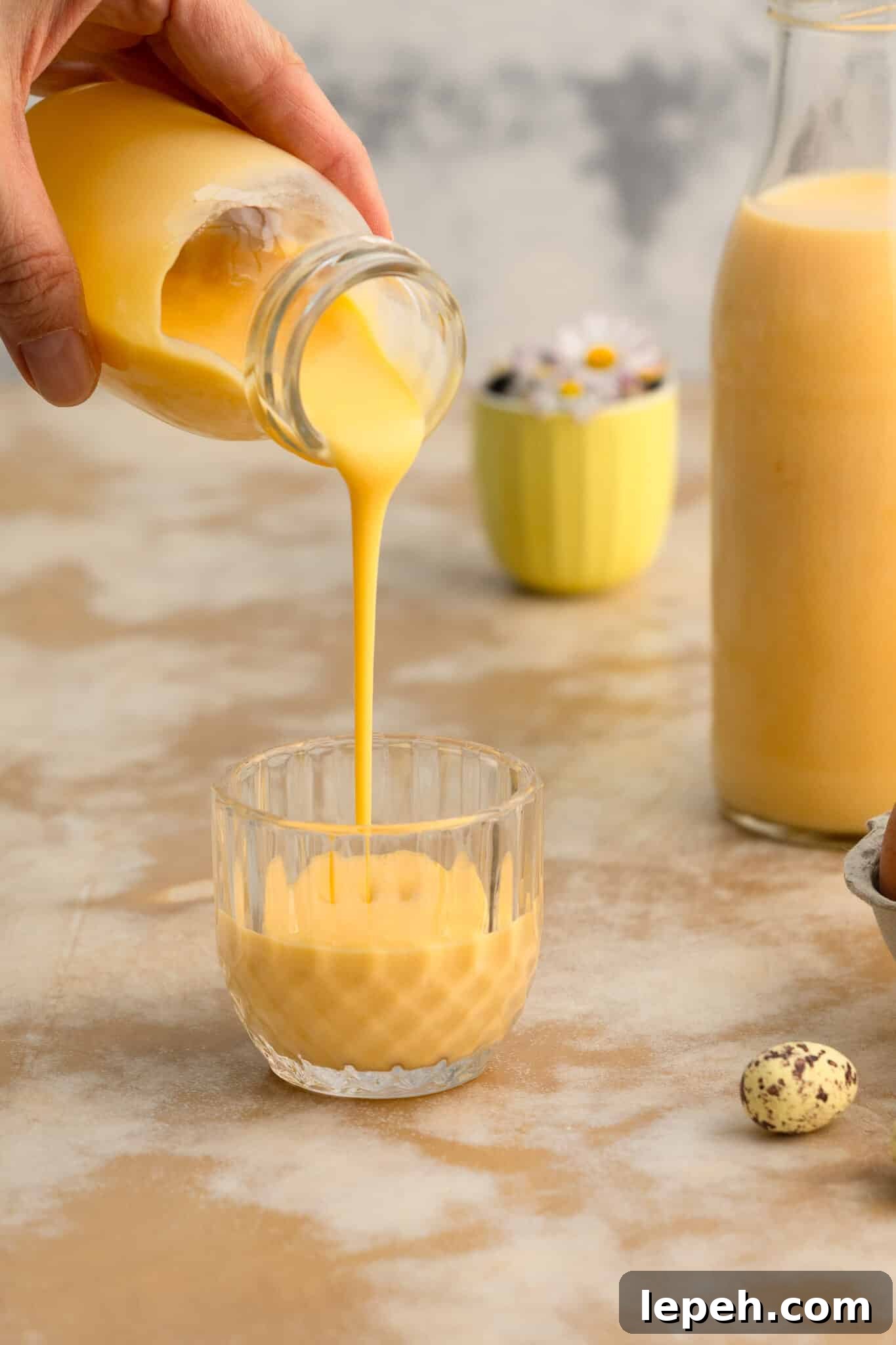
Making eggnog at home takes about 15 minutes and delivers a creamy, luscious drink similar in richness to Italian zabaglione. The biggest advantage is control: you know exactly what goes into it. Commercial eggnog often lacks a full ingredient list and often uses eggs from caged hens. When you make it yourself you can use fresh, free-range eggs and tailor the sweetness and strength of the alcohol to your taste. Choosing vodka gives a neutral profile, while rum or grain alcohol add distinct notes. For those who don’t drink much, homemade eggnog also makes a wonderful baking ingredient—try it in muffins or an eggnog cake for extra moisture and flavor.
Ingredients & Variations
A classic eggnog relies on a few key components: eggs, sugar, cream, and alcohol. You can, however, adapt each element to match your preferences.
Egg yolks: The foundation of the recipe. Use very fresh, preferably organic free-range yolks at room temperature to reduce the risk of contamination.
Sugar: Sweetens the mixture and helps with texture. Granulated or powdered sugar both work.
Heavy cream: Gives the eggnog its rich, velvety mouthfeel. You can swap in evaporated milk (10% fat) or regular milk for a lighter result, but the drink will be thinner and the alcohol will stand out more.
Alcohol: Acts as a flavor component and preservative. Neutral vodka yields the mildest result; white rum or grain alcohol add character.
To enhance the flavor, consider vanilla sugar, a pinch of cinnamon, or a touch of ground tonka bean.
How to Make Eggnog in 2 Easy Steps
I tested several methods and recommend two straightforward approaches. Detailed step-by-step photos are available in the recipe card below.
Preparation: Separate the eggs and reserve the whites for another use. In a mixing bowl, beat the egg yolks with the sugar until the mixture is slightly frothy—this helps dissolve the sugar and creates a smoother texture. A hand mixer works well.
Gentle heating in a double boiler: Combine the egg-sugar mixture with the cream in a heatproof bowl placed over (but not touching) simmering water. Stir continuously while gently heating until the mixture thickens and becomes creamy—just a few minutes. Gradually stir in the alcohol.
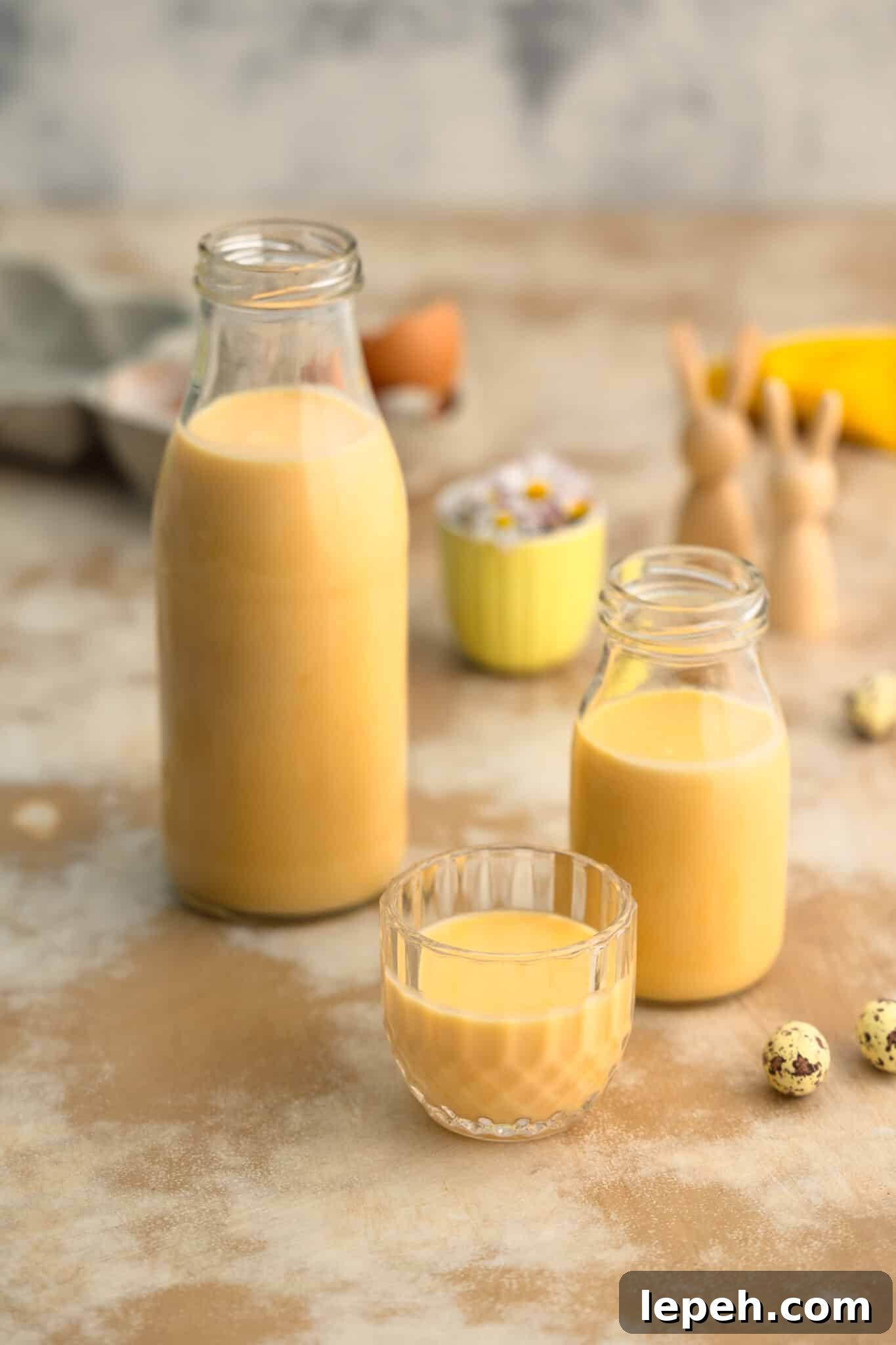
Quick Thermomix Version
The Thermomix makes this foolproof: combine egg yolks, sugar, cream, and alcohol in the bowl and heat for 8 minutes at 70°C (158°F) on speed 4. The result is consistently smooth and well emulsified.
Expert Tips
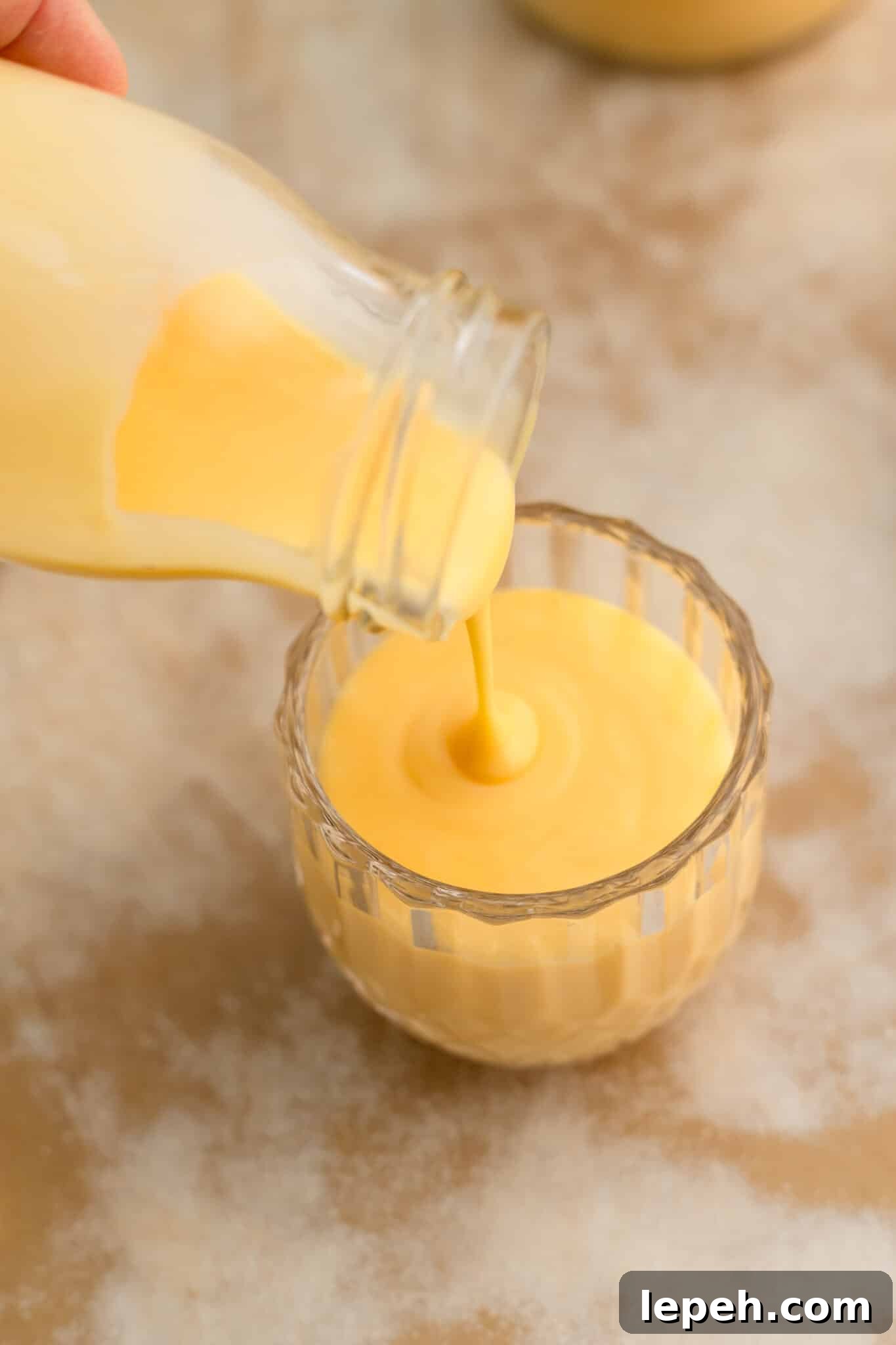
Consistency is a personal preference: more liquid yields a pourable, lighter eggnog; less cream produces a thicker, custard-like texture. If you use evaporated milk, reduce the amount to about 330–350 ml instead of 400 g of cream, since evaporated milk may already contain stabilizers.
How Long Does Homemade Eggnog Last?
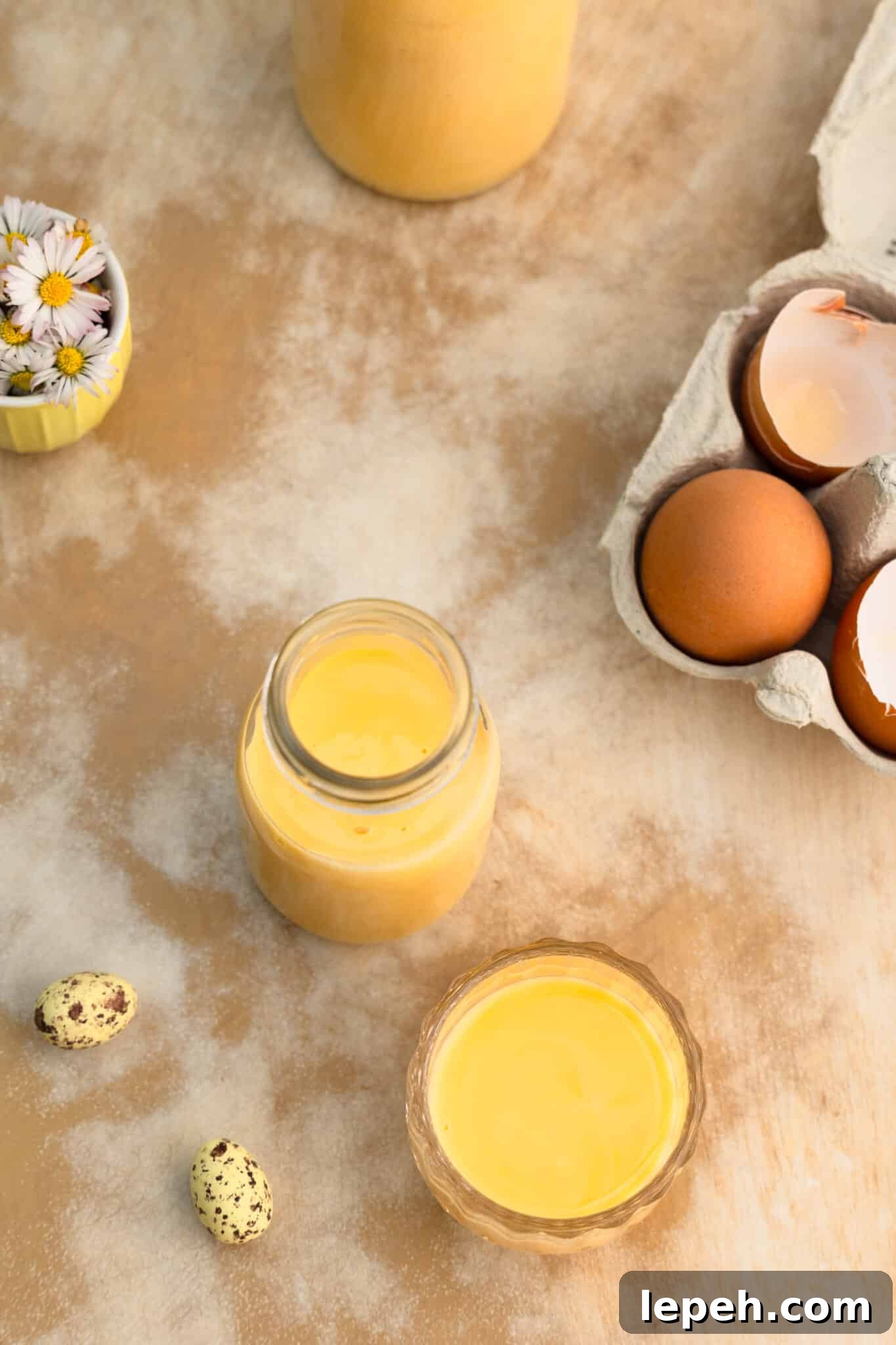
Shelf life depends on ingredient quality and hygiene during preparation. If you heat the eggnog properly (rather than just whisking ingredients cold), it should keep well in the refrigerator for about 3–6 weeks. Gentle heating reduces bacterial risk, and the combination of alcohol and sugar helps preserve the mixture. The eggnog may thicken in the fridge; simply stir in a little milk before serving if you prefer a thinner consistency.
If you plan to use it for baking, it pairs beautifully with eggnog cake or eggnog waffles, adding depth and moisture to baked goods.
Recipe Card
Click on the stars to rate the recipe
Homemade Eggnog Recipe
Ingredients
- 8 medium egg yolks, very fresh
- 220 g 1 cup sugar (or powdered sugar)
- 400 g 1 ⅔ cups heavy cream (or 330-350ml evaporated milk)
- 250 ml 1 cup vodka (or grain alcohol/white rum)
Instructions
-
Separate the eggs and save the whites for another recipe. Place the yolks and sugar in a heatproof bowl or small saucepan.
-
Beat the yolks and sugar over a double boiler until slightly frothy and lukewarm.
-
Gradually add the cream and alcohol while stirring constantly to combine.
-
Continue heating in the double boiler, stirring frequently, until the mixture thickens and small bubbles form at the edges (about 5 minutes on medium heat). Do not let it boil to avoid curdling.
-
Heat to about 65°C (149°F) if you have a thermometer. Pour the warm eggnog into clean bottles or jars, leaving a little headspace. Seal and refrigerate.
Notes
- Thermomix version: Heat all ingredients at 70°C (158°F) for 8 minutes on speed 4.
- Yield: Makes about 800–900 ml of eggnog, depending on egg size and reduction.
- Storage: Keep refrigerated; lasts around 3–6 weeks.
- Shelf life: The combination of alcohol, sugar, fresh eggs, and gentle heat treatment helps preserve the eggnog.