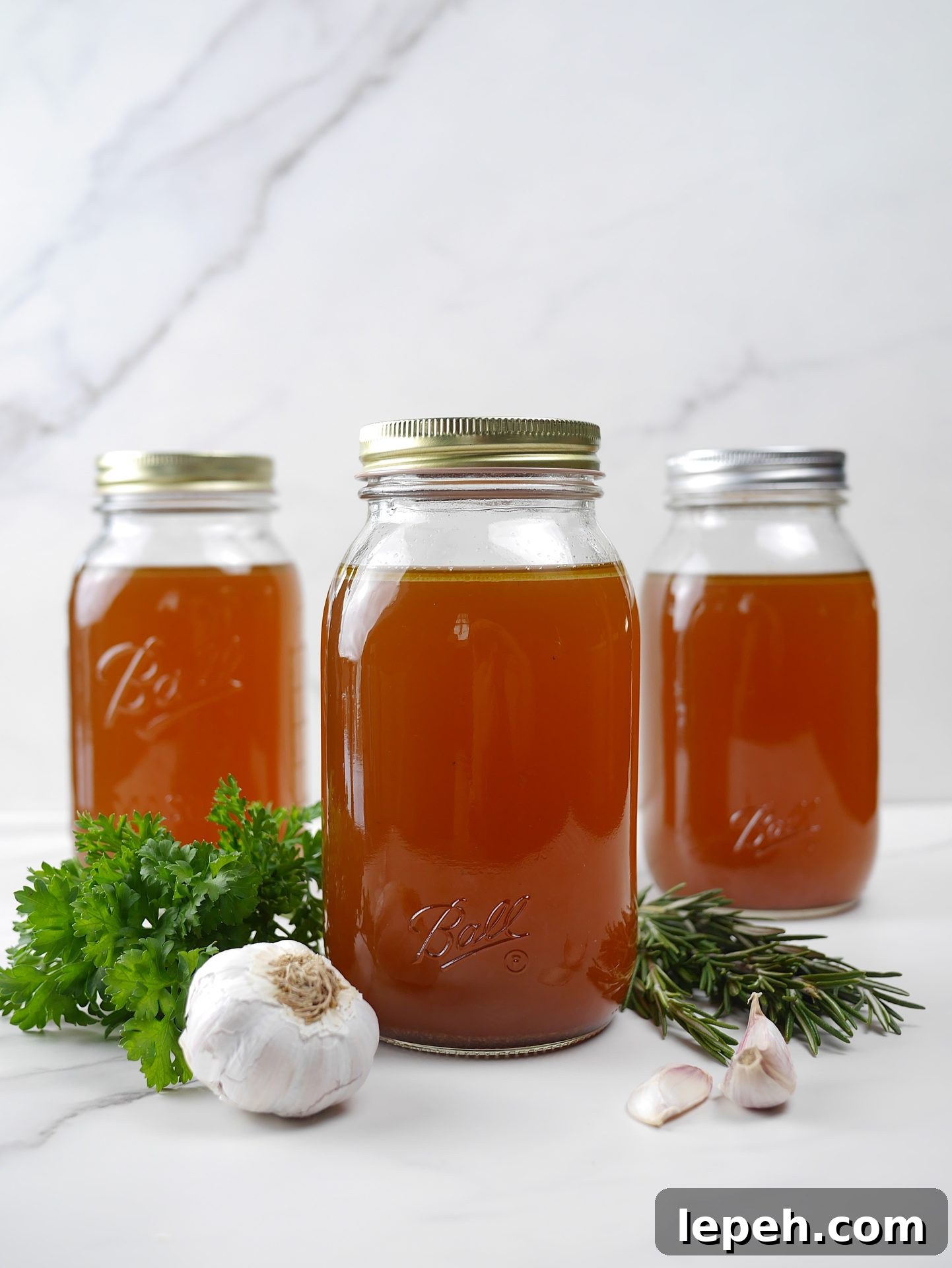
Using homemade chicken bone broth in soups and other recipes brings a depth of flavor that store-bought broth or bouillon can’t match. My favorite method is to dump the carcass, vegetables and seasonings into a 6–7 quart slow cooker and let it simmer on low for 18–24 hours. That long, gentle simmer extracts the maximum flavor and nutrients from the bones and vegetables, producing a rich, gelatinous broth. It’s also an excellent way to use vegetable scraps you might otherwise throw away. Making broth at home is cheaper, more flavorful and more nutritious—truly a win-win.
As an Amazon Associate I may earn from qualifying purchases. Follow along for Amish recipes and more, and if you try this recipe please leave a rating and comment below.
Homemade Chicken Bone Broth (slow cooker)
10 minutes
18 hours
Soup
American
4 quarts
Ingredients
- 1 whole chicken carcass with neck and giblets
- 2-3 cups fresh or frozen clean vegetable scraps (onion ends and skins, carrot peelings, celery tops and ribs, etc.)*see note
- 4 whole garlic cloves, peeledcan slice if desired
- fresh herbs (parsley, sage, thyme, rosemary or basil)roughly a handful, or as desired
- 1 tablespoon apple cider vinegar
- 1 teaspoon saltcan add to taste after cooking
- water to fill crockpot about 3/4 full (leave 2 inches headspace)
Instructions
-
Place the chicken carcass and giblets into a 6–7-quart crockpot. Add the vegetable scraps, garlic, herbs, apple cider vinegar and a teaspoon of salt if desired.
-
Cover with cold water, leaving about two inches of headspace (approximately 3/4 full). Cover and cook on low for 18–24 hours. Add water if needed during cooking.
-
Remove the lid and allow the broth to cool slightly. Strain the liquid through a sieve, discarding bones and scraps. Transfer the strained broth to sealable containers or jars, leaving several inches of headspace.
-
Cool completely before freezing. If using glass jars, do not tighten lids until the broth is fully frozen to allow for expansion and prevent breakage.
Notes
Vegetables to favor: onion, carrot, garlic and celery. Some vegetables—potatoes, broccoli, cabbage, turnips or strong-flavored roots—can make the broth bitter, cloudy or change its consistency. Mild additions like zucchini, spinach or kale can be used sparingly, but too much leafy green will alter the flavor. Feel free to experiment to find what you like.
Herbs are optional. Avoid very strong herbs such as mint or dill, which can overpower the broth.
If you prefer a milder vegetable presence, start with 2 cups of scraps rather than 4. Begin with 1 teaspoon salt and adjust after cooking to taste.
Slow cooker, chicken bone broth, vegetable scraps, chicken stock, crockpot chicken broth
Tried this recipe?
Let us know how it was!
Subscribe today and get free meal inspirations delivered to your inbox!
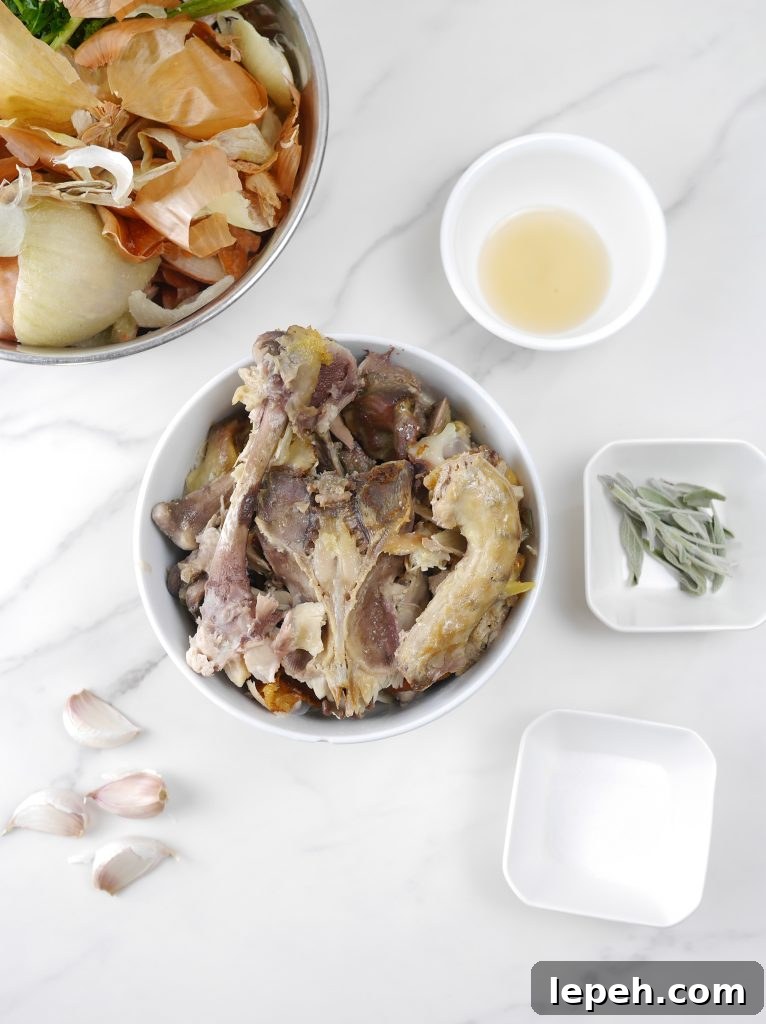
Ingredients used: vegetable scraps, a whole chicken carcass with giblets and neck, apple cider vinegar, fresh herbs (I used sage and frozen parsley), garlic cloves and salt.
Can other vegetables be added?
I usually stick with carrot, onion, garlic and celery. Potatoes add starch that clouds the broth, and strong-flavored vegetables like broccoli, cabbage or turnips can make the broth bitter. Peppers will add heat. Zucchini, spinach or kale can be used in moderation. Adjust to taste as you experiment.
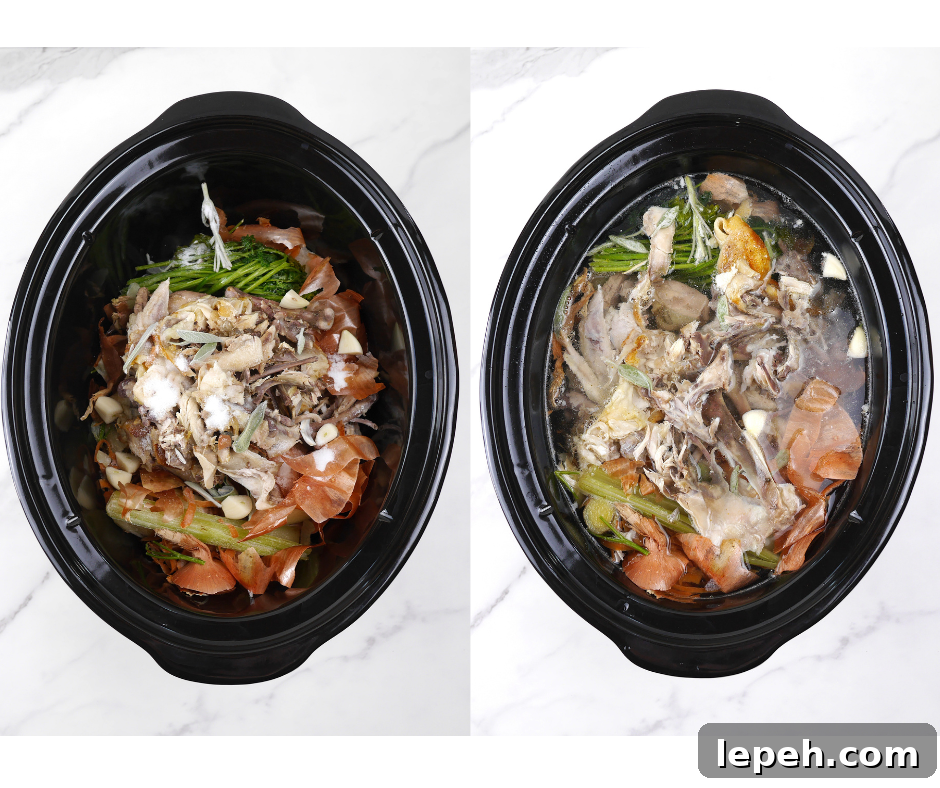
Step 1–2: Place the carcass and giblets in a 6–7 quart crockpot. Add vegetable scraps, garlic, herbs, vinegar and salt if desired. Fill with cold water to about 3/4 full (leave ~2 inches headspace). Cook on low 18–24 hours, topping up water if necessary.
Salt and vegetable amounts:
Start with 2 cups of vegetable scraps (up to 3 if you prefer). I recommend 1 teaspoon salt to start and then adjust after cooking if needed. If you prefer a less vegetable-forward broth, use fewer scraps.
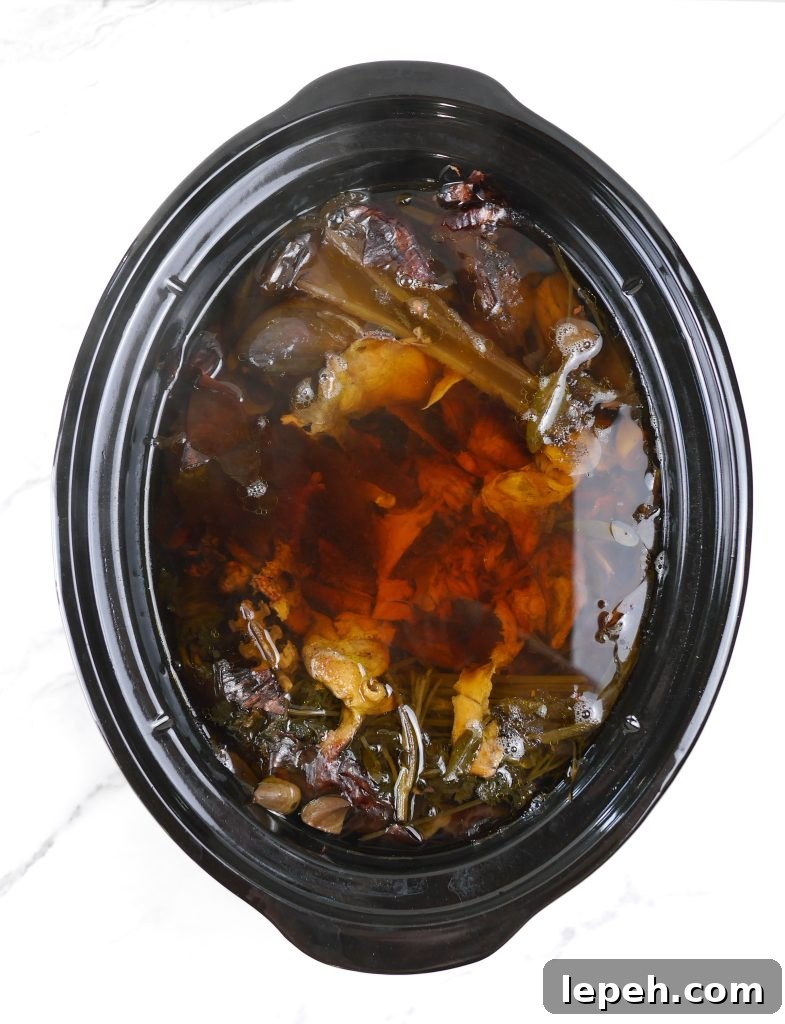
Step 3: After 18–24 hours, remove the lid and let the broth cool slightly. Strain through a sieve and discard solids. Transfer the strained broth to sealable containers or jars, leaving several inches of headspace.
Equipment that helps:
A medium sieve and a funnel that fits the jar mouth make straining easier. Quart jars are convenient, but any freezer-safe containers work. If freezing in glass, leave headspace and don’t fully tighten lids until frozen.
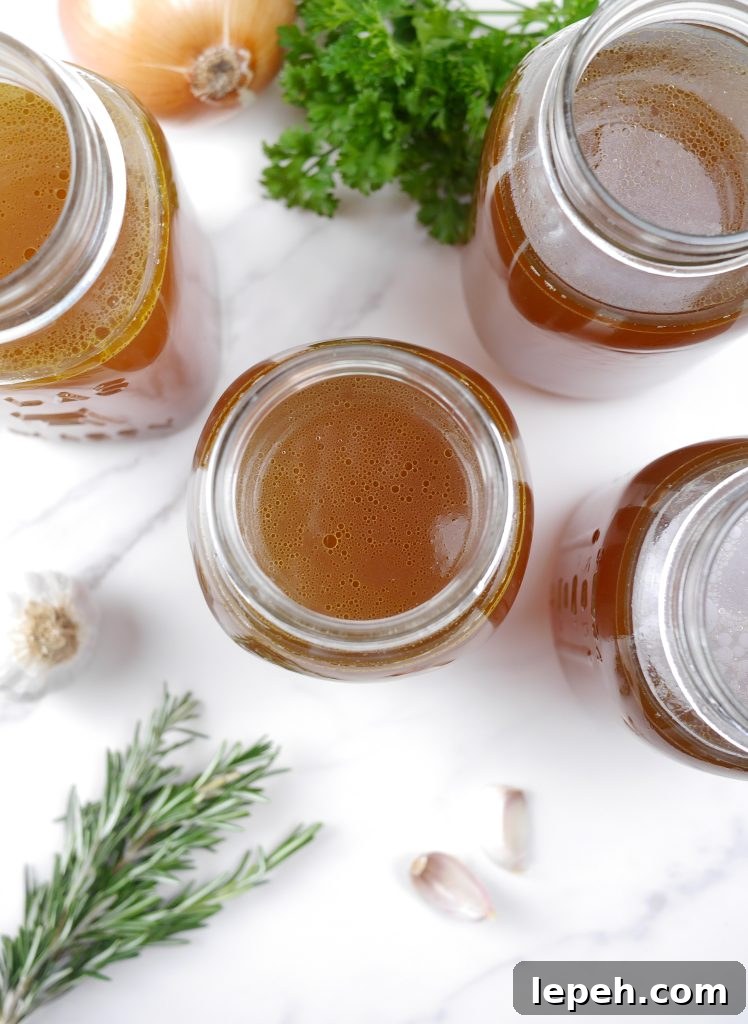
Storage: Refrigerate up to one week or freeze for longer storage. Allow the broth to cool completely before freezing. I typically freeze mine; if you pressure-can broth, follow trusted canning guidelines.
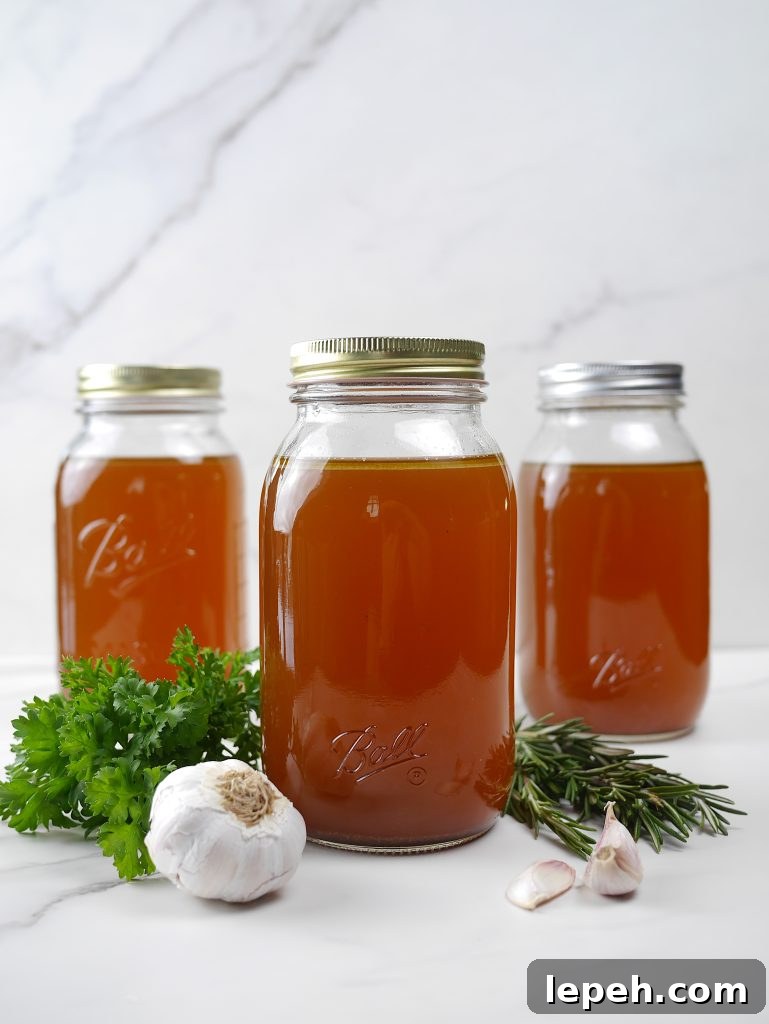
Favorite soups to use this broth in:
- Amish chicken noodle soup
- Slow cooker white chicken lasagna soup
- Crockpot ham and bean soup
- Creamy ham and potato soup
- Copycat Olive Garden chicken gnocchi soup
- Amish cheesy chicken soup
- Crockpot chicken taco soup
Thank you for stopping by. May your day be filled with love and peace. If you try this recipe, please pin or print it and leave a comment and rating—thank you! —Marilyn Stoltzfus Peight.
Privacy Policy