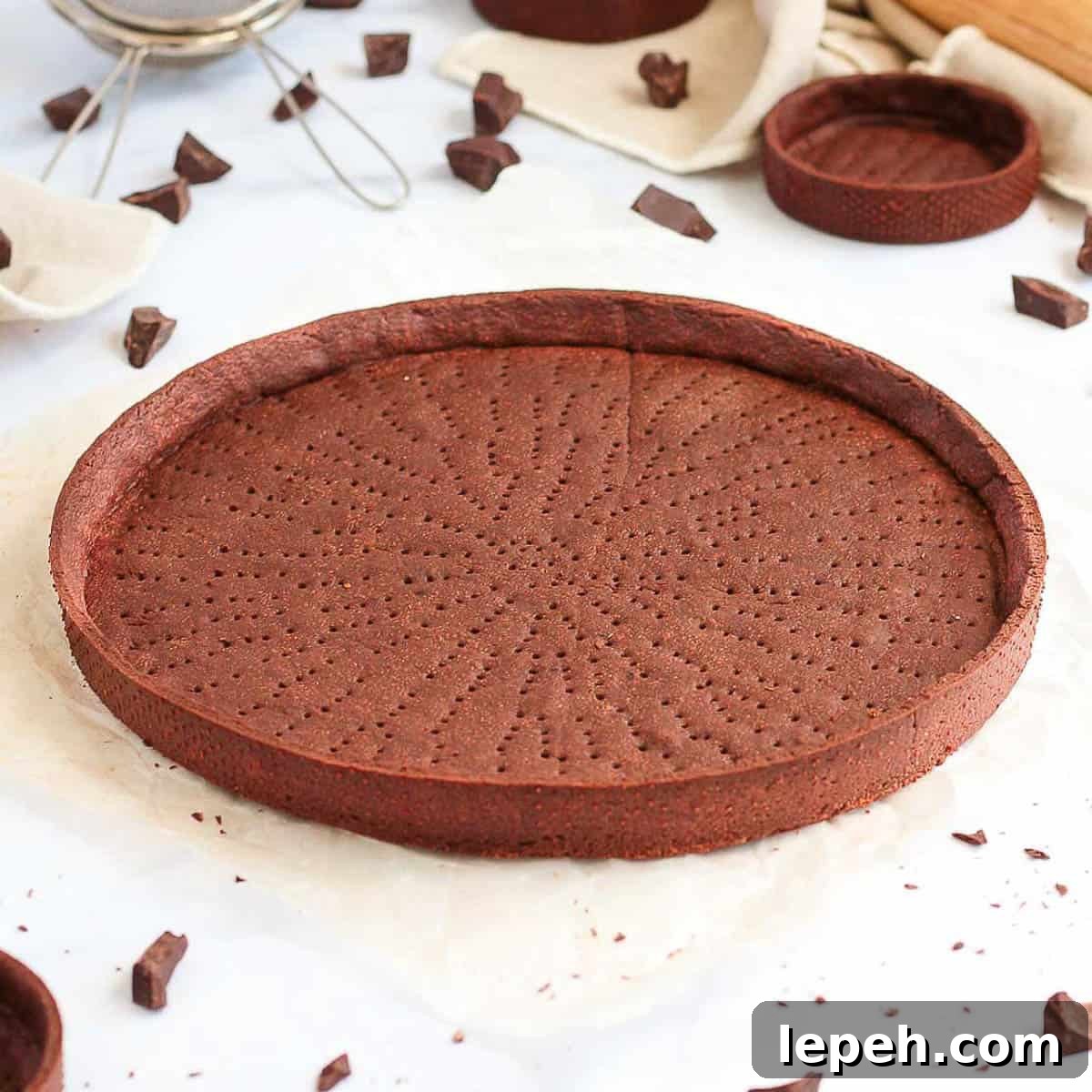
This chocolate tart crust is simple to make by hand or in a food processor with only five ingredients. A chocolate Pâte Sablée (shortcrust-style pastry) gives a tender base that works beautifully with fruit, cream or rich chocolate fillings.
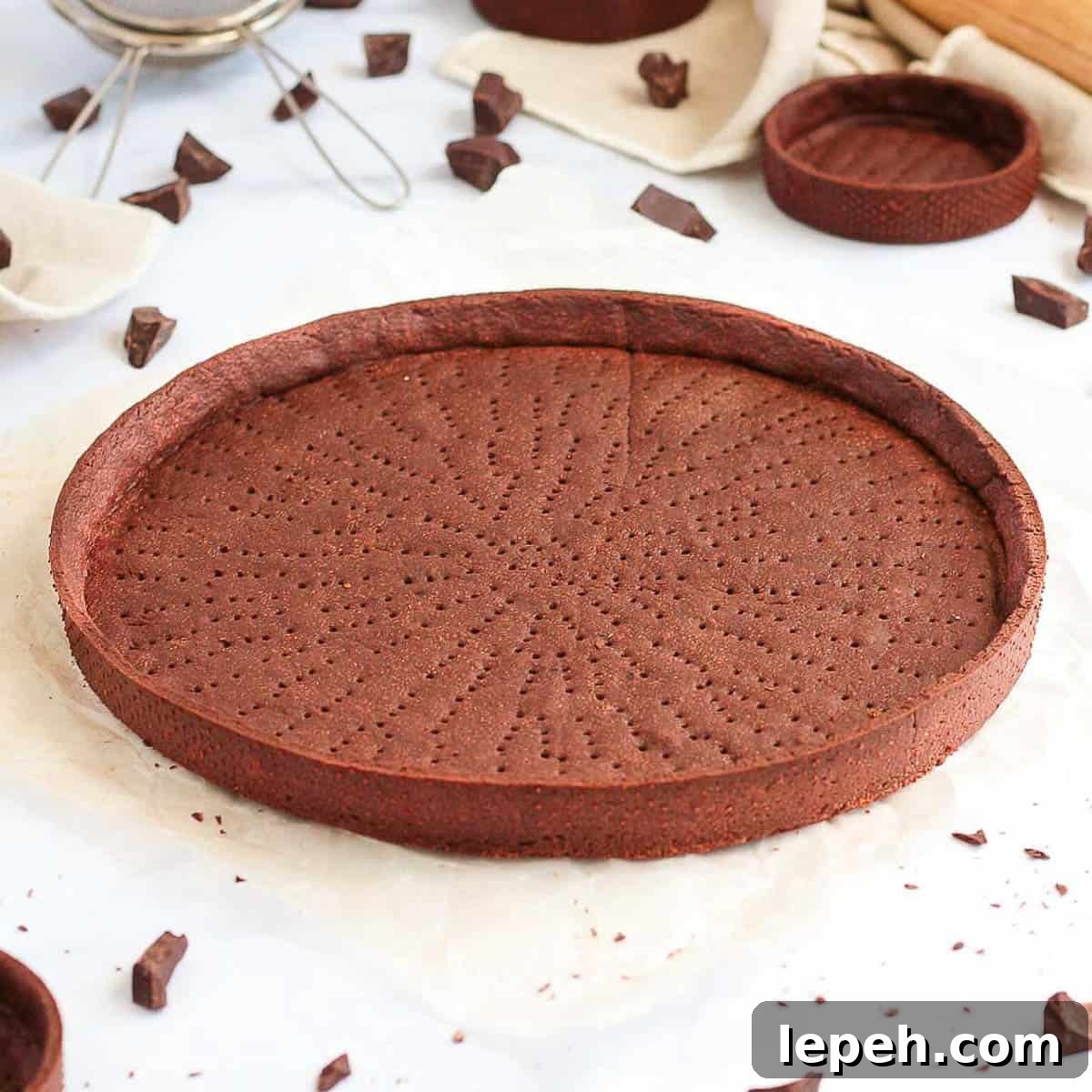
Why we love this recipe
Store-bought crusts are convenient, but a homemade pastry offers superior flavor and texture. This chocolate tart crust is a straightforward chocolate version of a classic French shortcrust (Pâte Sablée). It’s versatile, reliable and quick to prepare.
Different shortcrust recipes produce different results: some are crisp and cookie-like, others flakier. This recipe strikes a balance and can be adapted depending on whether you want a tender, slightly crumbly shell or a flakier edge.
If pastry feels intimidating, don’t worry—this one uses only a few pantry ingredients and simple techniques. The instructions include both a hands-on method and a food-processor method so you can choose whichever suits your kitchen and tools.
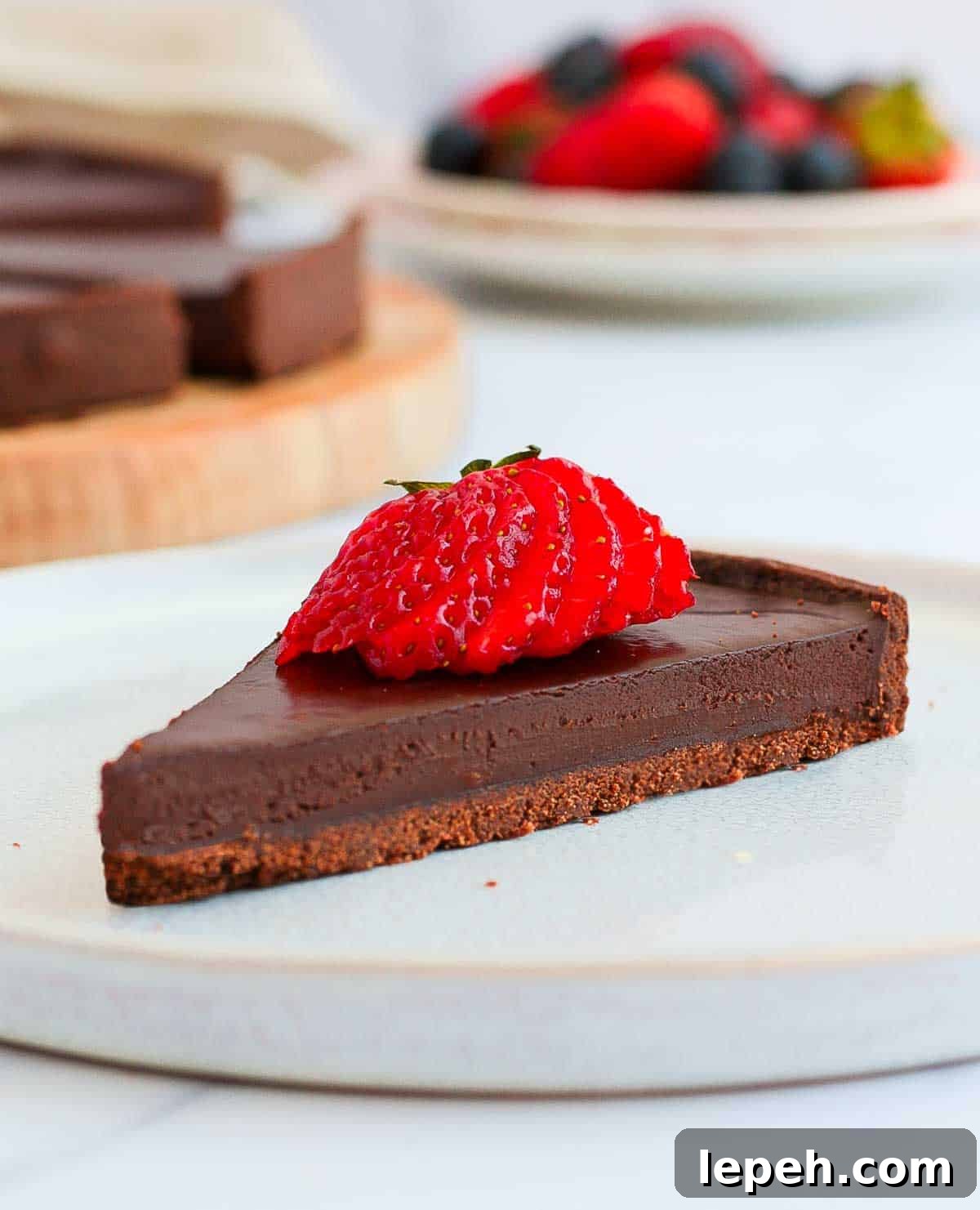
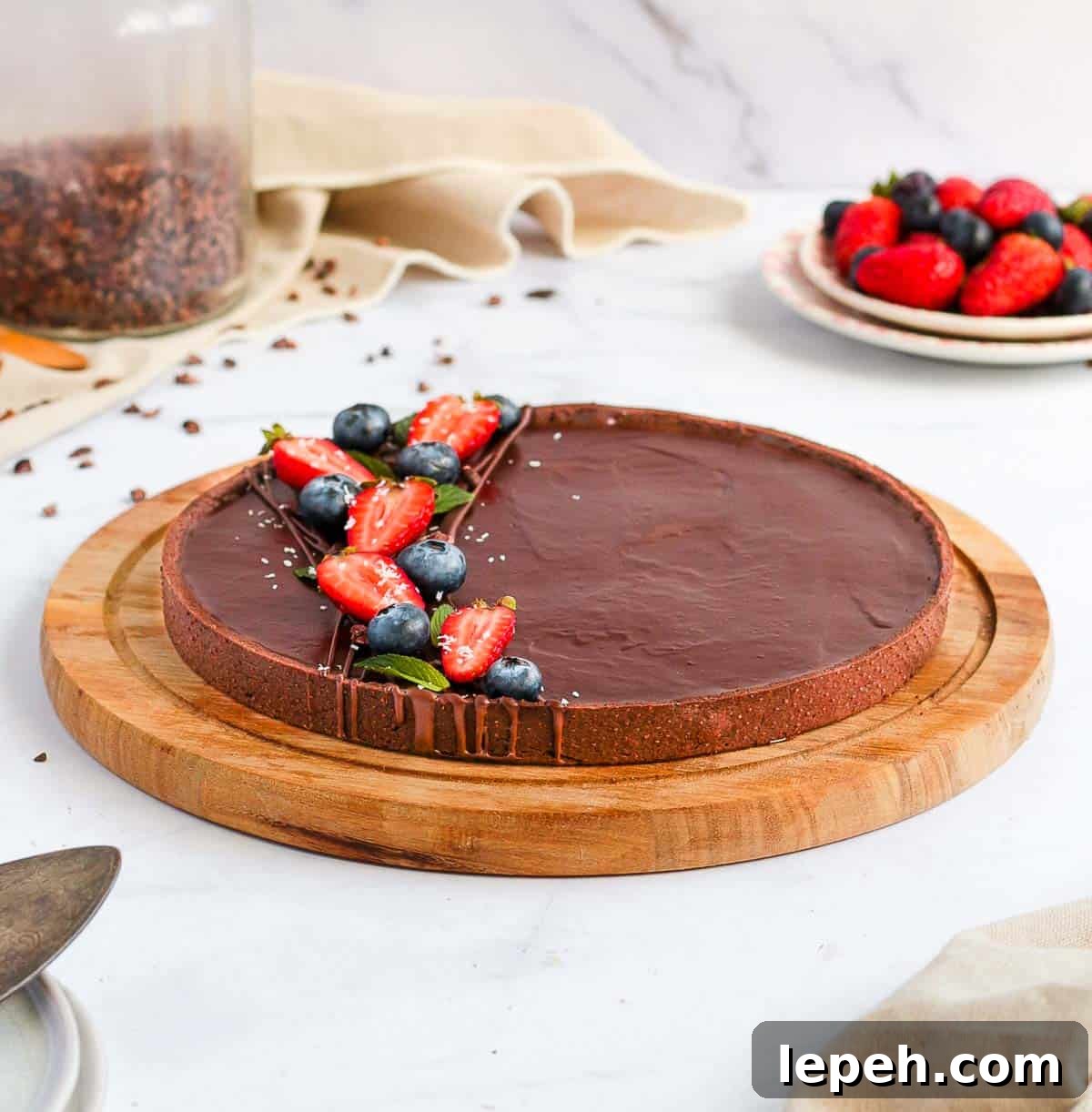
Use this crust for chocolate cherry tarts, baked chocolate tarts, ganache tarts or to make tartlet shells for mini chocolate tarts.
Ingredients
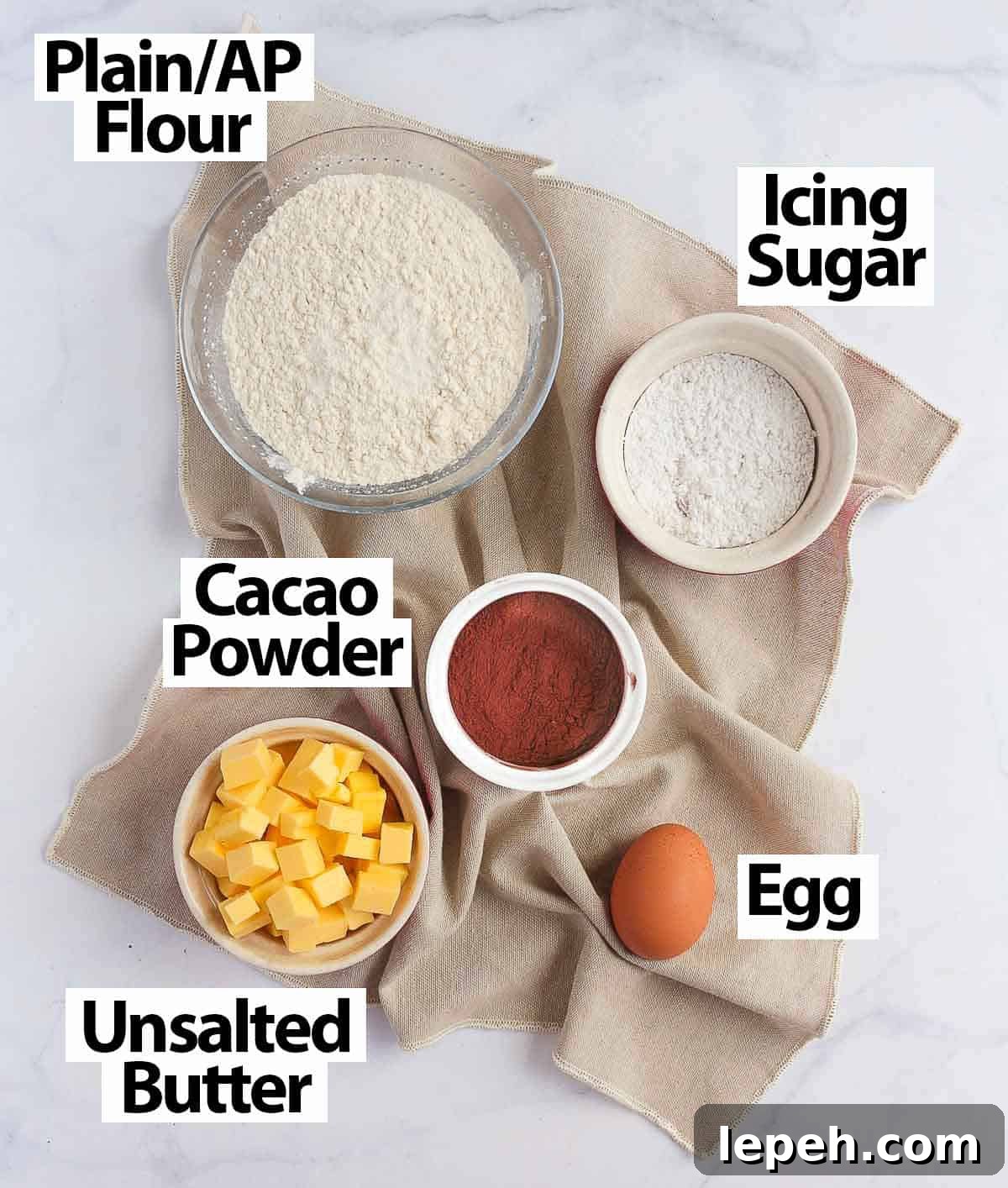
This chocolate tart pastry uses five basic ingredients. Quantities are shown in the recipe card below.
Core ingredients:
- Flour: plain/all-purpose, sifted.
- Icing sugar (powdered/confectioners’ sugar): blends smoothly into the dry ingredients.
- Cocoa powder: unsweetened. Natural or Dutch-processed both work; sift to remove lumps.
- Butter: unsalted and very cold. Good quality butter improves flavor and texture.
- Egg: binds and enriches the dough; a medium egg is used here.
Optional additions: a pinch of ground cinnamon or cardamom, a little fine coffee or espresso powder (1–2 teaspoons to taste) and a small pinch of salt to enhance flavor.
How to make Chocolate Shortcrust Pastry
You can make this pastry either by hand or in a food processor. The processor gives fast, even results; making it by hand can produce slightly larger butter pieces for a flakier texture.
Making the pastry by hand
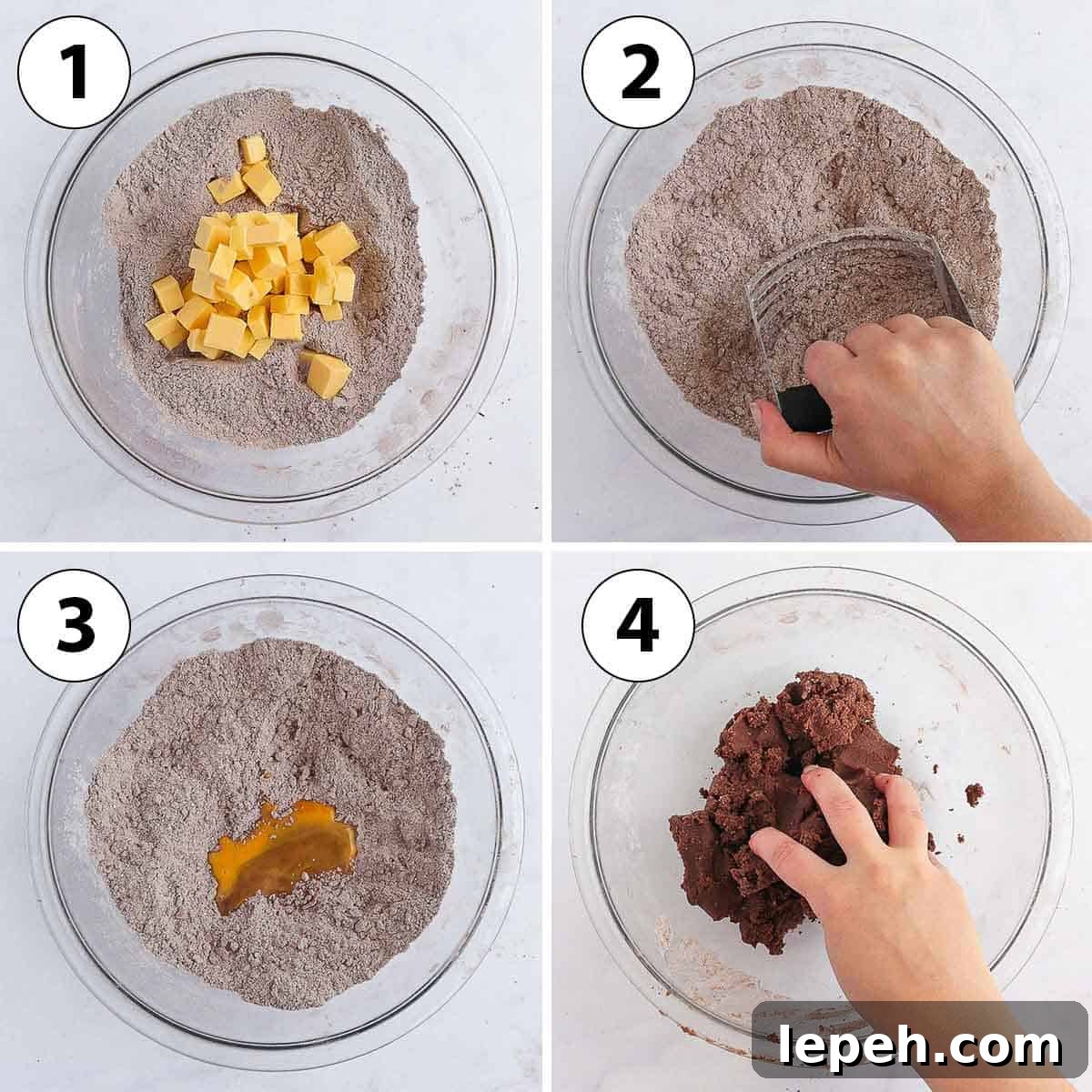
- Sift the flour, cocoa powder and icing sugar into a large bowl and mix to combine.
- Add the very cold butter cut into small cubes. Using your fingertips or a pastry cutter, rub or cut the butter into the dry ingredients until you have a fine crumb with no large lumps of butter.
- Add the whisked egg and gently work the dough until it starts to come together. Lightly knead until it forms a ball that holds when pressed. If it’s too dry, add a few drops of very cold water; if too sticky, dust lightly with flour.
Making the pastry with a food processor
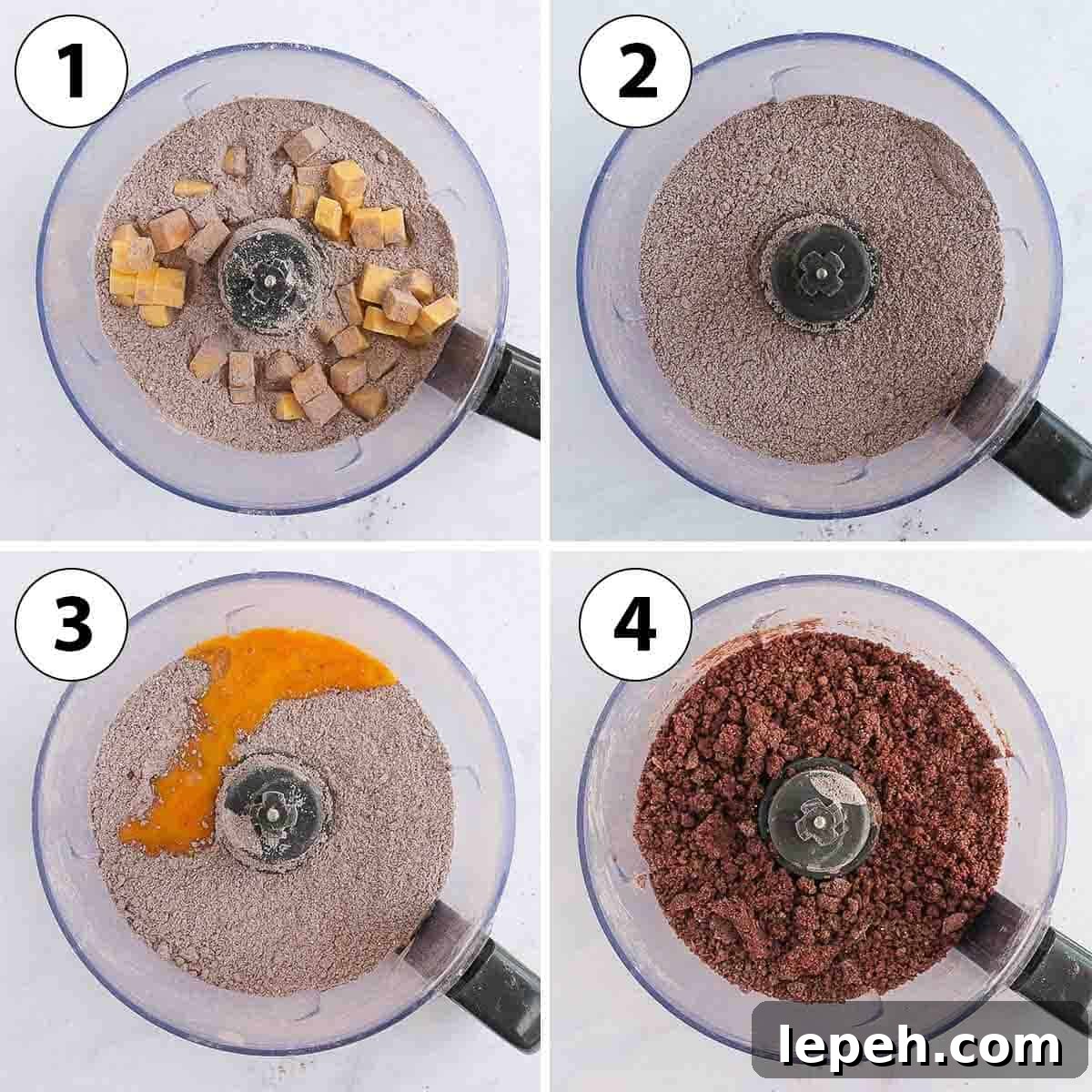
- Place the flour, cocoa powder and icing sugar in the food processor and pulse to combine and remove lumps.
- Add the very cold butter cut into cubes and pulse until the mixture resembles fine crumbs with no large butter pieces.
- Add the whisked egg and pulse until the crumbs begin to stick together into a cohesive dough. The mixture should hold when pressed into a ball.
Rolling the pastry
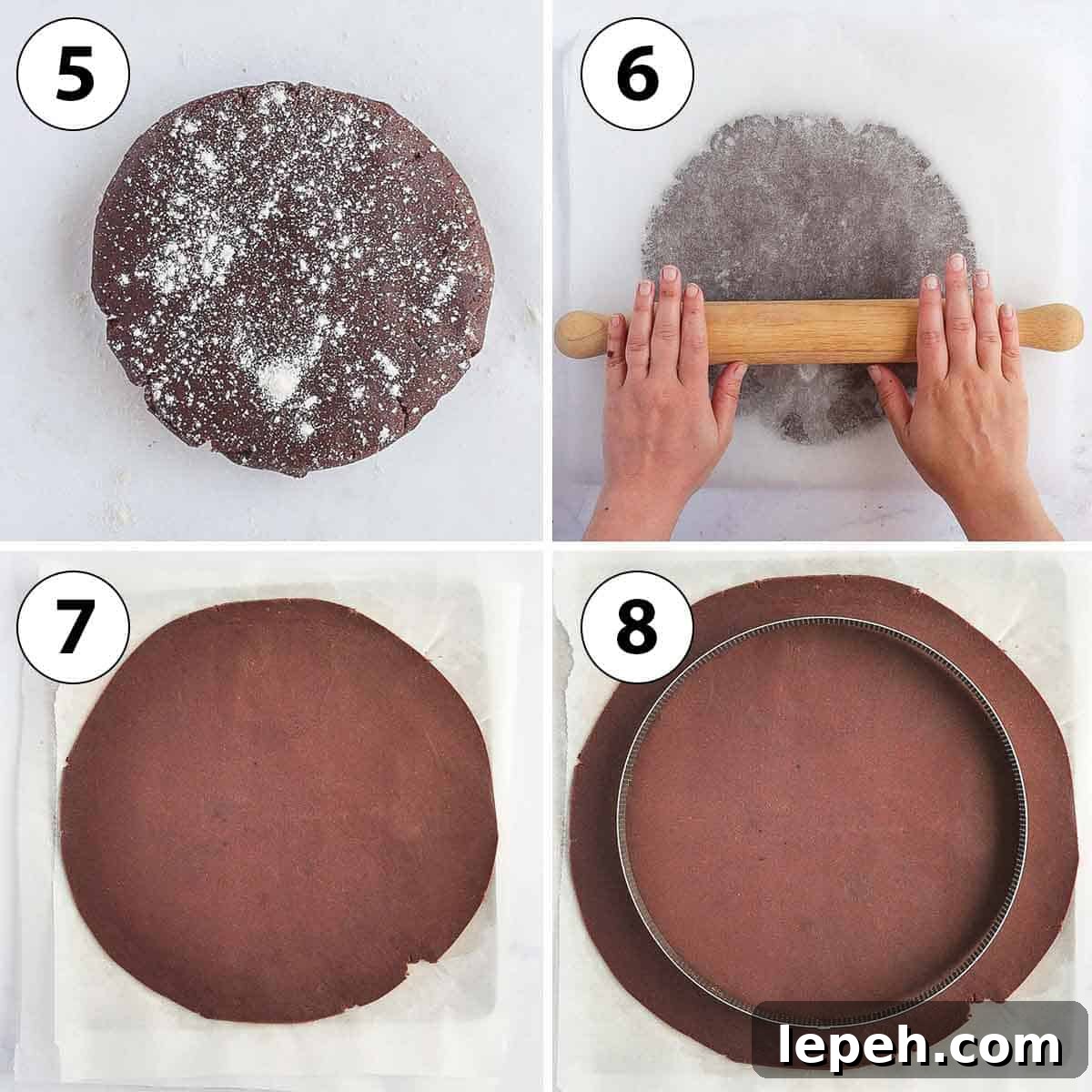
- Form the dough into a ball and press into a flat disk. If slightly sticky, dust a little flour under and over the dough.
- Place the disk between two sheets of baking paper and roll to your desired thickness (about 3–4 mm / 1/8 inch is recommended). Transfer the rolled dough to a flat tray and chill in the fridge for at least 1 hour or up to 24 hours.
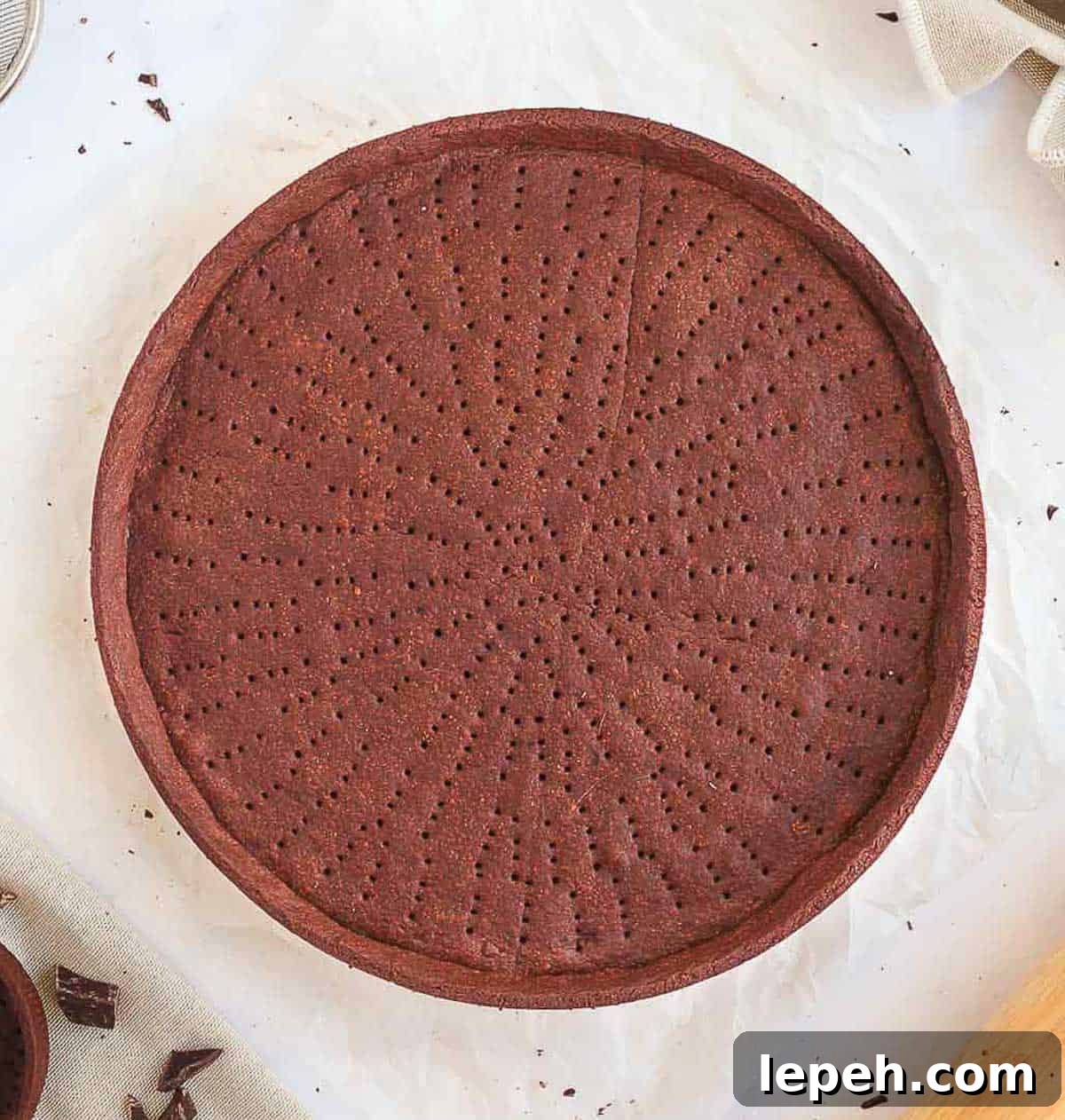
- When chilled, remove the top sheet of paper, trim the pastry to fit slightly larger than your tart ring or pan, then lift and line the pan. Trim excess with a sharp knife and patch any cracks with your fingers if needed.
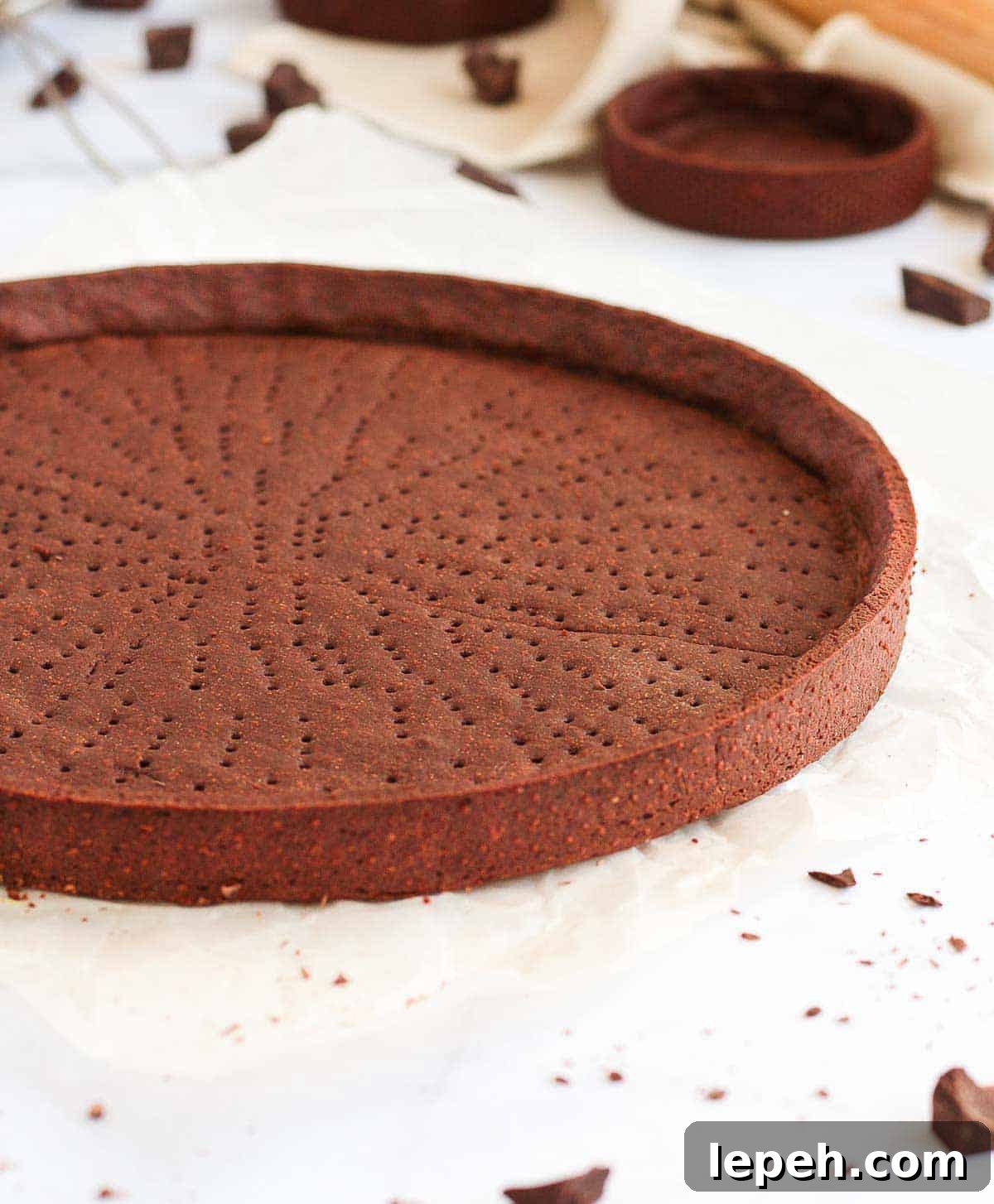
- Dock (prick) the base with a fork. Return the lined shell to the fridge for at least 1 hour (or up to 24) before baking. For best results, freeze 15 minutes while your oven preheats to help prevent shrinking.
Baking the pastry
Depending on your filling, blind-bake, par-bake or bake fully filled. A short blind-bake of 15 minutes at 160°C / 325°F helps dry the base before filling. For fully baked shells for a no-bake filling, bake at 160°C / 325°F for 30–40 minutes until the base feels dry and the edges are set.
Tips for success
- Chunk size matters: larger butter pieces produce a flakier pastry; a processor yields a more uniform, cookie-like texture.
- Keep everything cold: cold ingredients and chilling steps prevent shrinking and give better texture.
- Rest the dough: chilling the rolled shell for at least an hour reduces movement and collapse during baking.
- Roll between parchment and use thickness rings or consistent pressure for even thickness. Freeze the lined shell 15 minutes before baking to firm the butter.
- To help prevent sogginess, fill close to serving time. You can brush a partly baked shell with egg white mid-bake to seal it for longer crispness.
Recipe FAQs
This recipe is developed for butter. If you prefer another fat, look for a recipe specifically designed for that fat, as results will differ.
Either unsweetened natural or Dutch-processed cocoa works here. Black cocoa can be used for a very dark crust.
It depends on the filling. As a rule, blind-bake about 15 minutes at 160°C/325°F to dry the base. Fully bake for 30–40 minutes if the filling is not baked.
Because the dough is chocolate, rely on feel rather than color—the base should feel dry and the edges fully set.
Troubleshooting
- Dough too dry: different flours or egg sizes can affect hydration. Add a few drops of very cold water, a little at a time, until it comes together.
- Dough very sticky: dust lightly with flour or roll between parchment to manage stickiness.
- Dough pulls or is hard to roll: gluten may be overworked—rest 15–20 minutes to relax the dough before rolling.
- Cracks when lining the pan: let the pastry warm a few minutes at room temperature so the butter softens slightly; patch with your fingers.
Storing & Freezing
Fill the pastry within a day for best texture. Unbaked dough can be refrigerated for up to 48 hours wrapped in plastic, pre-rolled between parchment, or already lined in the pan. For convenience and best texture, freeze unbaked lined shells so they’re ready to bake without thawing.
More Basic French Pastry Recipes
- Vanilla Crème Pâtissière (Pastry Cream)
- Traditional French Crêpes
- Choux à la Crème (French Cream Puffs)
- Almond Cream Filling (Frangipane)
- How to make Profiteroles
- Dacquoise Sponge
- Chocolate Pastry Cream
- Choux au Craquelin
Made this recipe?
Leave a comment below and tag us on Instagram @a.baking.journey with a photo of your creation!
Recipe
Chocolate Pie Crust
1 Large Pie Crust
Sylvie
Ingredients
- 225 gr (1 1/2 cup) Plain / All-Purpose Flour
- 20 gr (2 tbsp) Unsweetened Cacao Powder or Dutch-processed
- 50 gr (1/3 cup + 2 tbsp) Icing Sugar
- 1 pinch Salt
- 120 gr (1/2 cup) Unsalted Butter very cold
- 1 Egg medium
Instructions
Making the pastry by hand
- Sift the flour, cocoa powder and icing sugar into a large bowl and mix.
- Add very cold butter cut into cubes and rub or cut into the dry ingredients until you have a fine crumb (no large lumps).
- Add the whisked egg and gently bring the dough together until the crumbs stick when pressed.
Making the pastry with a food processor
- Place the flour, cocoa and icing sugar in the processor and pulse to combine.
- Add the cold cubed butter and pulse until the mixture resembles fine crumbs.
- Add the whisked egg and pulse until a sticky dough forms and holds when pressed.
Rolling & lining the pan
- Form the pastry into a disk, dust with a little flour if sticky, and place between two sheets of parchment. Roll to about 3–4 mm thickness.
- Chill the rolled dough on a tray for at least 1 hour or up to 24 hours.
- Let sit 5 minutes at room temperature, remove the top parchment and line your tart ring or pie pan. Trim excess and dock the base with a fork. Chill again for at least 1 hour.
Baking
- Preheat oven to 160°C / 325°F and place the chilled shell in the freezer while the oven heats.
- Blind-bake for 15 minutes, or fully bake for 30–40 minutes depending on the filling and recipe requirements.
Notes
Yield: Makes enough pastry for a large tart or about 10 tartlets.
Notes:
- You shouldn’t see large lumps of butter; the larger the crumbs the flakier the pastry.
- Work gently and avoid overworking the dough to prevent toughness.
- If too sticky to roll, add a little flour. If too dry, add a few drops of very cold water.
- Roll to about 3 mm (1/8 inch) for easy lining; thicker is fine but avoid rolling too thin.
Nutrition (per serving)
Carbohydrates: 234 g |
Protein: 34 g |
Fat: 106 g